Fertiliser
Chemical fertilisers are added to the soil to increase the quantity of nutrients such as nitrates and phosphates available to plants.
Fertilisers can be lost from the soil by the process of leaching. Water moving through the soil can dissolve the compounds in fertilisers and transfer them to lakes and rivers.
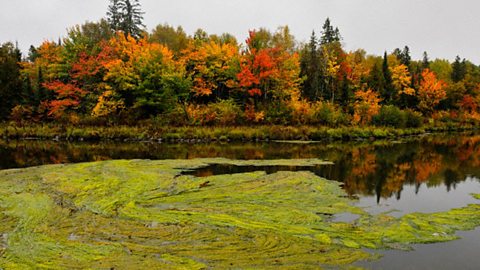
As the nutrient concentration of the freshwater increases, more algae are able to grow and their population increases rapidly. This is called an A marked increase in the population of algae in the waterways, usually caused by fertiliser runoff from surrounding fields. Turns the water green..
Algal blooms reduce light levels in the water, which in turn kills aquatic plants. Bacteria feed on the dead plants and algae, using up large quantities of oxygen and reducing the concentration of oxygen dissolved in the water. This means less is available to other organisms and can result in the death of fresh water animals and plants.
Genetically modified (GM) crops can be used to reduce the use of fertilisers.
