Shotlist and storyboarding
Shotlist
After finishing a script you need to consider how it will be broken down into individual shots.
The simplest way to do this is to write up a shotlist - a document which lists all of the shots needed for a production.
Storyboarding
A storyboard is a drawing designed to explain how a shot in a movie will look.
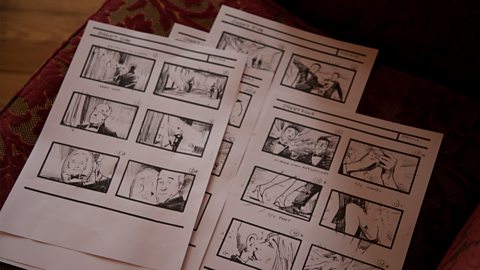
Storyboards are used by film-makers to map their films out shot by shot.
Making storyboards can help directors solve problems involving framing and shot selection before filming begins.
Storyboards can also be a useful tool for explaining visual ideas and action to performers and crew members.
Storyboards should:
- Follow a consistent panel shape. Comic-strips can change the size and shape of their pictures from panel to panel. Film storyboards, however, have to be the same shape as your filming format.
- Be labelled correctly. There should be text by each panel describing the type of shot and including any additional information.
- Be thorough. Every shot on your shotlist needs to be addressed in the storyboard.
Remember, you don’t need not be particularly gifted at drawing to create workable storyboards.
A storyboard is just a tool to help you make better films. A poorly planned but beautifully drawn set of storyboards is less useful than a set of less pretty but well thought out boards.
