Ferrous and non-ferrous metals
Types of metals and their uses
Metals are found naturally and are mined from the earth. Metals used in products are The process of obtaining a metal from a mineral, usually by reduction or electrolysis. from the natural A rock containing enough quantities of a mineral for extraction to be possible. using large heat furnaces. They are sold as A way to describe that a material is normally much thinner than it is long or wide., A solid shape that is longer in length than width., A solid cylindrical form., A hollow cylindrical form. and A roll formed strip of metal used in the building industry and for storage shelving involving the bending of a continuous strip of metal. . Most metals can be recycled, saving natural resources.
Ferrous metals
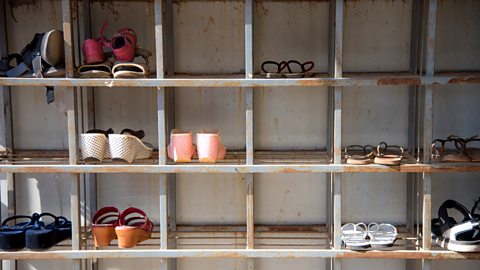
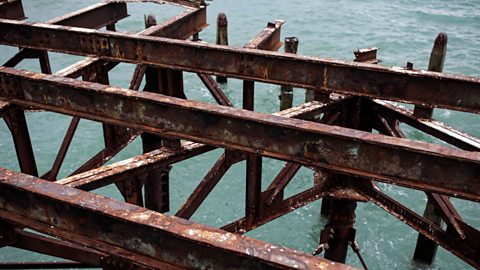
Metal containing iron. metals contain iron and are Able to be magnetised or attracted to a magnet.. They are prone to Iron oxide formed on iron or steel, orange coloured, flaky. and therefore require a protective finish, which is sometimes used to improve the aesthetics of the product it is used for as well.
| Ferrous metal | Properties | Uses |
| Cast iron | Brittle if thin, can be cast in a mould, strong compression strength, good electrical and thermal conductivity but poor resistance to corrosion | Manhole covers, pans and gates, vices |
| High-carbon steel (tool steel) | Hard but brittle, less malleable than mild steel, good electrical and thermal conductivity | Taps and tools, eg screwdrivers and chisels |
| Low-carbon steel (mild steel) | Ductile and tough, easy to form, braze and weld, good electrical and thermal conductivity but poor resistance to corrosion | Nuts, bolts, screws, bike frames and car bodies |
| Ferrous metal | Cast iron |
|---|---|
| Properties | Brittle if thin, can be cast in a mould, strong compression strength, good electrical and thermal conductivity but poor resistance to corrosion |
| Uses | Manhole covers, pans and gates, vices |
| Ferrous metal | High-carbon steel (tool steel) |
|---|---|
| Properties | Hard but brittle, less malleable than mild steel, good electrical and thermal conductivity |
| Uses | Taps and tools, eg screwdrivers and chisels |
| Ferrous metal | Low-carbon steel (mild steel) |
|---|---|
| Properties | Ductile and tough, easy to form, braze and weld, good electrical and thermal conductivity but poor resistance to corrosion |
| Uses | Nuts, bolts, screws, bike frames and car bodies |
Non-ferrous metals
A metal that does not contain iron. metals do not contain iron and are not magnetic. They do not rust.
| Non-ferrous metal | Properties | Uses |
| Aluminium | Light in weight and malleable but strong, a good conductor of heat and corrosion resistant | Drink cans, saucepans, bike frames |
| Copper | An excellent electrical conductor of heat and electricity, extremely malleable and can be polished, oxidises to a green colour | Plumbing fittings and electrical wires, professional chef's saucepans |
| Silver | A precious metal that is soft and malleable when heated, highly resistant to corrosion and an excellent electrical conductor of heat | Jewellery |
| Non-ferrous metal | Aluminium |
|---|---|
| Properties | Light in weight and malleable but strong, a good conductor of heat and corrosion resistant |
| Uses | Drink cans, saucepans, bike frames |
| Non-ferrous metal | Copper |
|---|---|
| Properties | An excellent electrical conductor of heat and electricity, extremely malleable and can be polished, oxidises to a green colour |
| Uses | Plumbing fittings and electrical wires, professional chef's saucepans |
| Non-ferrous metal | Silver |
|---|---|
| Properties | A precious metal that is soft and malleable when heated, highly resistant to corrosion and an excellent electrical conductor of heat |
| Uses | Jewellery |
Alloys
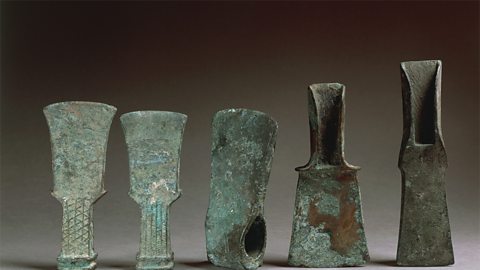
An alloy is a mixture of two or more elements, at least one of which is a metal. are mixtures of metal with an element to improve its properties or How something looks.. For example brass is a mixture of copper and zinc. Alloys can also be classified as ferrous or non-ferrous. Non-ferrous metal may require a protective finish. This finish is sometimes used to improve the aesthetics of the product it is used for.
| Alloy | Properties | Uses |
| Brass (alloy of copper and zinc) | Non-ferrous metal that is strong and ductile, casts well and is gold coloured but darkens when oxidised with age, a good conductor of heat | Taps, screws, castings, locks and doorknobs |
| Bronze (alloy of copper, aluminium and/or nickel) | Non-ferrous alloy, harder than brass and corrosion resistant, reddish/yellow in colour | Castings, bearings |
| Stainless steel (alloy of steel also with chromium, nickel and magnesium) | Ferrous metal that is silver when polished, hard and tough with excellent resistance to corrosion | Cutlery, sinks, saucepans, surgical equipment |
| Alloy | Brass (alloy of copper and zinc) |
|---|---|
| Properties | Non-ferrous metal that is strong and ductile, casts well and is gold coloured but darkens when oxidised with age, a good conductor of heat |
| Uses | Taps, screws, castings, locks and doorknobs |
| Alloy | Bronze (alloy of copper, aluminium and/or nickel) |
|---|---|
| Properties | Non-ferrous alloy, harder than brass and corrosion resistant, reddish/yellow in colour |
| Uses | Castings, bearings |
| Alloy | Stainless steel (alloy of steel also with chromium, nickel and magnesium) |
|---|---|
| Properties | Ferrous metal that is silver when polished, hard and tough with excellent resistance to corrosion |
| Uses | Cutlery, sinks, saucepans, surgical equipment |

