Primate behaviour
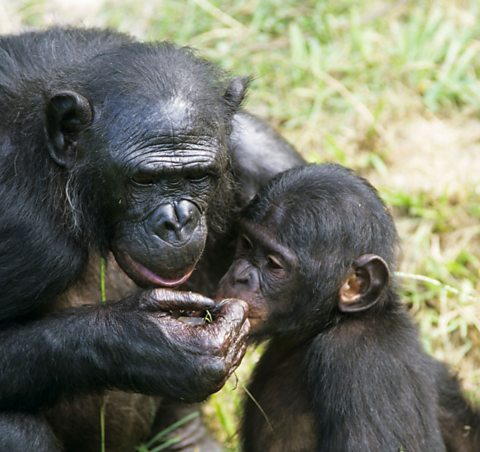
Primates (lemurs, monkeys, apes and humans) are animals that invest a great deal of parental care in their offspring. During this time, youngsters learn complex social behaviours essential for survival like communication, cooperation and sharing.
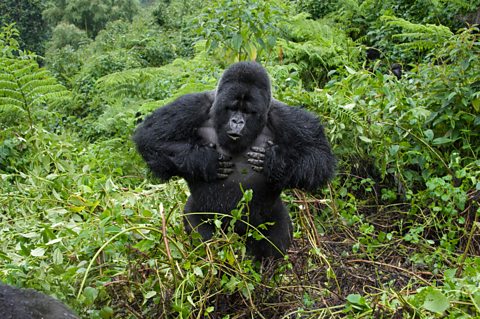
Within a group of primates, when two social primates are competing for a resource such as a mate, they are likely to exhibit a threat display to one another.
These are also known as ritualistic displays. This display makes them look larger and fiercer than normal and eventually one will concede defeat by displaying appeasement behaviours, eg grooming, certain facial expressions or body postures and sexual presentation.
| Primate | Features of ritualistic behaviour |
| Chimpanzee | Shoulders hunched, arms held out, mouth open, teeth covered by lips |
| Gorilla | Chest-beating, roaring, strutting walk, eyes staring |
| Vervet monkey | Head bobbing, mouth open, tail arched over body |
| Primate | Chimpanzee |
|---|---|
| Features of ritualistic behaviour | Shoulders hunched, arms held out, mouth open, teeth covered by lips |
| Primate | Gorilla |
|---|---|
| Features of ritualistic behaviour | Chest-beating, roaring, strutting walk, eyes staring |
| Primate | Vervet monkey |
|---|---|
| Features of ritualistic behaviour | Head bobbing, mouth open, tail arched over body |
Ritualistic displays and appeasement behaviours are important because they can reduce unnecessary conflict within a close-knit group therefore increasing the chance of survival.
Alliances often form between individuals which are often used to increase social status within the group.