Reducing heat loss from your home
Heat loss from a badly insulated home
Your home loses heat through the walls, windows, doors and roof.
The colder the outside temperature or the stronger the wind, the greater the amount of heat lost.
There are several ways to help reduce heat loss from your home, making it more comfortable and reducing energy bills.
| Area | \(\percent\) heat loss | Method | How it works |
| Roof | 25 | Insulate loft with mineral wool or fibre glass. | Trapped air between glass or mineral wool fibres reduces heat loss by conduction and convection. |
| Walls | 35 | Cavity wall insulation fills the cavity between the outside walls with mineral wool, polystyrene beads or foam. | Trapped air between fibres, beads or within foam reduces heat loss by conduction and convection. |
| Floor | 15 | Thick carpets on floors. Mineral wool beneath ground floor floorboards. For concrete floors rigid foam insulation can be used. | Trapped air between carpet threads, wool fibres and within foam reduces heat loss by conduction. |
| Windows, doors and unused chimneys. | 25 | Fit double or triple glazing. Heavy curtains on windows. Block up unused chimneys. Draught excluders around doors and windows. | Layers of glass reduce heat loss by conduction. Trapped air between the layers of glass reduces heat loss by conduction and convection. Curtains trap air reducing heat loss by conduction and convection. Draught excluders and blocked chimneys trap air preventing heat loss by conduction and convection. |
| Area | Roof |
|---|---|
| \(\percent\) heat loss | 25 |
| Method | Insulate loft with mineral wool or fibre glass. |
| How it works | Trapped air between glass or mineral wool fibres reduces heat loss by conduction and convection. |
| Area | Walls |
|---|---|
| \(\percent\) heat loss | 35 |
| Method | Cavity wall insulation fills the cavity between the outside walls with mineral wool, polystyrene beads or foam. |
| How it works | Trapped air between fibres, beads or within foam reduces heat loss by conduction and convection. |
| Area | Floor |
|---|---|
| \(\percent\) heat loss | 15 |
| Method | Thick carpets on floors. Mineral wool beneath ground floor floorboards. For concrete floors rigid foam insulation can be used. |
| How it works | Trapped air between carpet threads, wool fibres and within foam reduces heat loss by conduction. |
| Area | Windows, doors and unused chimneys. |
|---|---|
| \(\percent\) heat loss | 25 |
| Method | Fit double or triple glazing. Heavy curtains on windows. Block up unused chimneys. Draught excluders around doors and windows. |
| How it works | Layers of glass reduce heat loss by conduction. Trapped air between the layers of glass reduces heat loss by conduction and convection. Curtains trap air reducing heat loss by conduction and convection. Draught excluders and blocked chimneys trap air preventing heat loss by conduction and convection. |
Cavity wall insulation
Approximate cost and savings based on an average semi-detached house in Northern Ireland.
| Area | Approximate cost in £ | Approximate annual energy bill saving in £ | Approximate payback time in years |
| Roof insulation | 300 | 150 | 2 |
| Cavity wall insulation | 475 | 180 | 3 |
| Floor insulation | 700 | 45 | 16 |
| Double glazing | 3800 | 90 | 42 |
| Area | Roof insulation |
|---|---|
| Approximate cost in £ | 300 |
| Approximate annual energy bill saving in £ | 150 |
| Approximate payback time in years | 2 |
| Area | Cavity wall insulation |
|---|---|
| Approximate cost in £ | 475 |
| Approximate annual energy bill saving in £ | 180 |
| Approximate payback time in years | 3 |
| Area | Floor insulation |
|---|---|
| Approximate cost in £ | 700 |
| Approximate annual energy bill saving in £ | 45 |
| Approximate payback time in years | 16 |
| Area | Double glazing |
|---|---|
| Approximate cost in £ | 3800 |
| Approximate annual energy bill saving in £ | 90 |
| Approximate payback time in years | 42 |
Roof and cavity wall insulation are both relatively cheap and the savings gained mean you get your money back quickly.
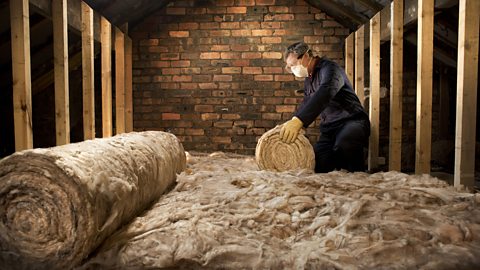
Insulating an attic space
