Mutation and variation
Extensive genetic variation is contained within any species. This is clearly visible in the domestic dog species.
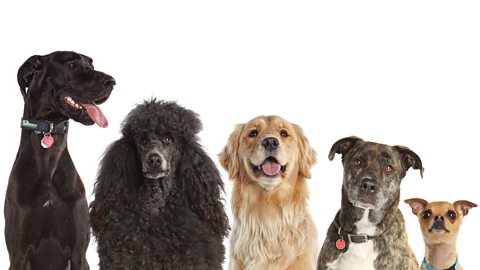
Variation within genes leads to different The alleles that an organism has for a particular characteristic, usually written as letters., and this can be seen by a different The visible characteristics of an organism which occur as a result of its genes.. Genetic variation and environmental variation can both cause these different phenotypes. All variation arises from A random and spontaneous change in the structure of a gene, chromosome or number of chromosomes. and most have no effect on the phenotype.
Mutations
A mutation is a change in a The basic unit of genetic material inherited from our parents. A gene is a section of DNA which controls part of a cell's chemistry - particularly protein production. or The structure made of DNA that codes for all the characteristics of an organism.. Mutations arise spontaneously and happen continually. A mutation rarely creates a new phenotype, but if the phenotype is changed as a result of a mutation and the new phenotype is suited to a particular environment, it can lead to a change in a species over time.
For example, if a mutation leads to a change in phenotype, such as feather colouring in birds, this change may allow those individuals to reproduce more frequently, due to them being more attractive and seen as a more desirable mate. This would result in the mutated gene being passed on more frequently than the original gene and would result in an increase in the proportion of birds with the new feather colour compared to the original feather colour. This is the basis of natural selection.
Natural selection
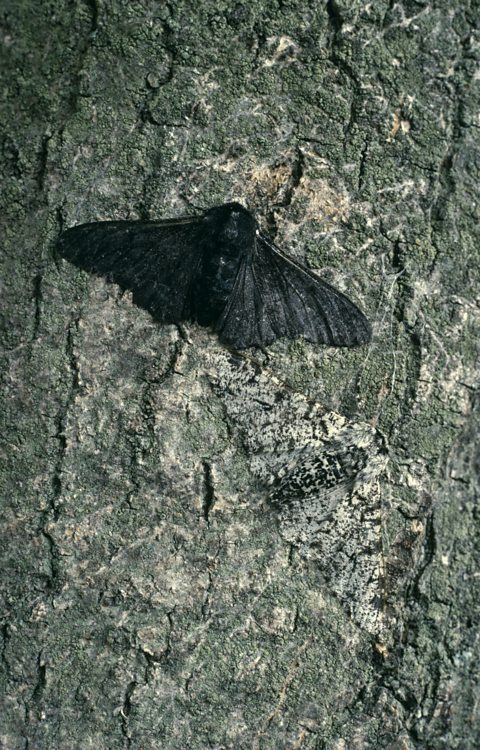
Natural selection describes how organisms that are better adapted to an environment are more likely to survive long enough to reproduce and pass on their genes. This process is called 'survival of the fittest' and is fundamental to the process of The process of change in the inherited traits of a population of organisms from one generation to the next..
Charles Darwin was a famous English naturalist, who during his life came up with the theory of evolution.
A famous example of natural selection is the peppered moth.
During the last half of the 1800s, airborne pollution in industrial areas blackened the birch tree bark with soot. Light coloured moths were no longer camouflaged and were eaten by birds. The dark moths were better camouflaged.
Note that this change was not due to pollution making the moths darker. The dark variety had always existed, but had an advantage when the environment changed.
As a result, dark moths had a greater chance of surviving long enough to reproduce and pass on their genes, including those genes that caused their dark colour. The proportions of the two types of moth changed over time. This led to a gradual increase in the proportion of dark moths, and light moths became very rare in industrial areas.
