Higher tier: Measuring the speed of sound using the flash-bang method
A person fires a starting pistol.
A distant observer stood 200 metres away (measured using a 20 m tape measure or trundle wheel) records the time between seeing the flash of light from the starting pistol and hearing the sound.
The sound takes more time to cover the same distance as the light because sound travels much more slowly than light.
The speed of sound can be calculated using the equation:
Speed = \(\frac{\text{distance}}{\text{time}}\)
The main source of error in this experiment is reaction time when starting and stopping the stop clock.
The error is reduced by repeating the timing ten times and calculating the average time.
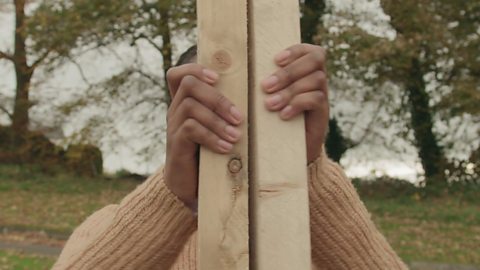
The starting pistol could be replaced by two blocks of wood as shown below.
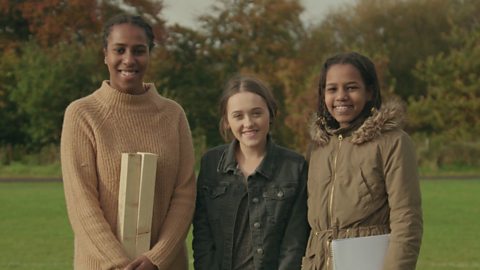
Image caption, Click to see a step-by-step guide to measuring the speed of sound
WHAT YOU NEED: Two or three people, two blocks of wood, a stopwatch, a notepad and pen, and a large, open space.
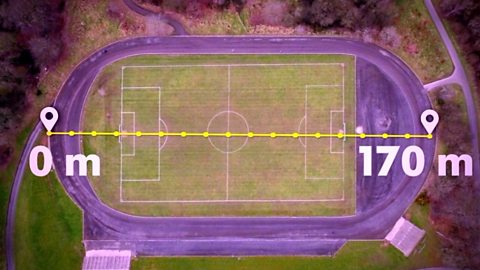
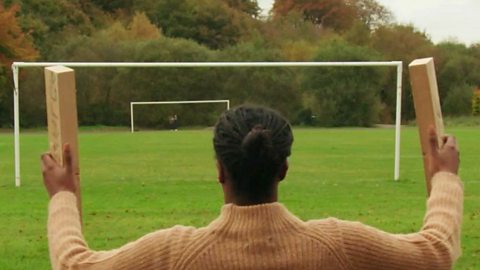
Image caption, Click to see a step-by-step guide to measuring the speed of sound
STEP 1 - MEASURE DISTANCE: Pick two points in the area that are at least 150 m apart, but within sight of each other. Measure out the distance between the two points using a measuring wheel or online map and make a note of it in your notepad.

Image caption, Click to see a step-by-step guide to measuring the speed of sound
STEP 2 - CLACK! One person should stand with the blocks at the first point, while another person stands at the other point with the stopwatch...

Image caption, Click to see a step-by-step guide to measuring the speed of sound
...and signal to the friend holding the blocks to clack them together hard!

Image caption, Click to see a step-by-step guide to measuring the speed of sound
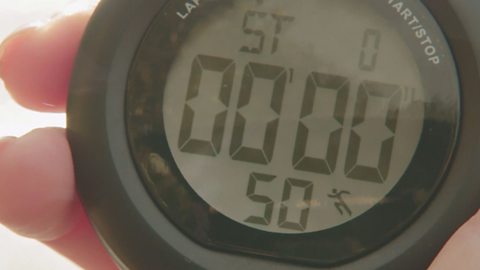
STEP 3 - TIME THE SOUND: The person at the other end should start the stopwatch when they SEE the two blocks hit each other. Then press stop when they HEAR the sound.

Image caption, Click to see a step-by-step guide to measuring the speed of sound
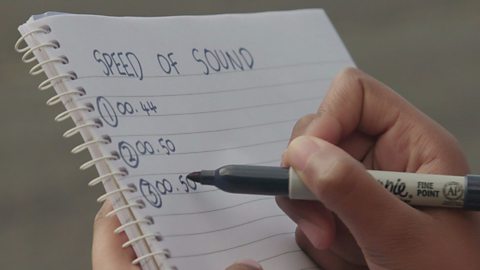
TIP: Your timings will probably vary slightly as reaction times vary. For a more accurate estimate repeat the experiment 10 times, making a note of each timing. Then add them all up and divide by 10 to find the average.

Image caption, Click to see a step-by-step guide to measuring the speed of sound
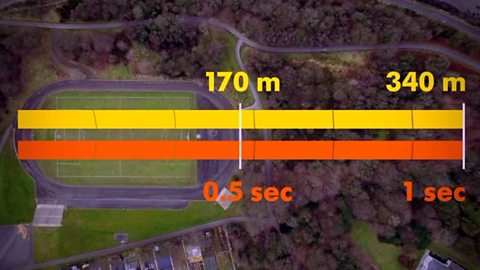
STEP 4 - CALCULATE. SPEED=DISTANCE/TIME. To work out the speed of the sound in metres per second, divide the distance in metres by the average time in seconds. For example 170 metres divided by 0.50 seconds = 340 m/s. You have calculated the speed of sound!
1 of 7
Example
Higher tier only: An observer 400 m away records a 1.2 s time difference between seeing the flash of a starting pistol and hearing the bang. Calculate the speed of sound.
Speed = \(\frac{\text{distance}}{\text{time}}\).
Distance = 400 m.
Time = 1.2 s.
Speed = \(\frac{400}{1.2}\)
Speed = 333 m/s.
The accepted value for the speed of sound in air is 340 m/s.
However, this experimental method is flawed because of human reaction time when using the stop clock.
This explains why the answer of 333 m/s is slightly below the accepted value for the speed of sound in air.