Key points about describing healthy habits and routines
Use the A verb that describes an action that is happening now or that happens regularly, eg I eat breakfast every day. to talk about your current habits and routine.
The Used to describe things in the past, actions that used to happen regularly or an incomplete action. can be used to talk about what you used to do.
Vocabulary – Talking about healthy habits and routines
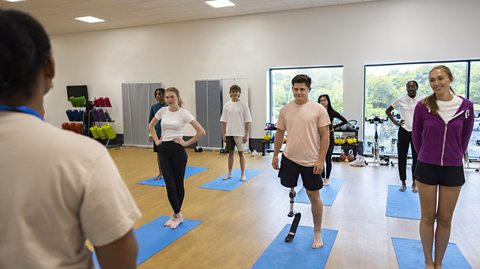
Useful phrases to help describe regular activities to stay fit, happy and healthy include:
| French | English |
|---|---|
| Je prends le petit déjeuner chaque matin. | I have breakfast every morning. |
| Je vais au collège à vélo tous les jours. | I go to school every day by bike. |
| Je joue au foot pendant la récré. | I play football at break. |
| Je fais un cours de danse le mardi soir. | I do a dance lesson on Tuesday evenings. |
| Je vais au centre sportif une fois par semaine. | I go to the sports centre once a week. |
| Je me couche avant 10 heures. | I go to bed before 10 o’clock. |
| On fait des promenades le weekend. | We go on walks at the weekend. |
| Le dimanche, je me repose. | On Sundays, I rest. |
For example:
Il est important de se reposer donc je dors jusqu’à midi le dimanche. - It’s important to rest so I sleep until midday on Sundays.
Je fais du sport regulièrement parce que c’est bon pour ma santé mentale. - I do sport regularly because it’s good for my mental health.
All Foundation Tier vocabulary listed in this guide can be found on the vocabulary sheet below.
Grammar – Using the present and imperfect tenses together
The present tense can be used to talk about things that happen regularly.
The imperfect tense can be used to describe something that used to happen or what someone or something was like in the past.
You can use these two tenses together to describe how your habits have changed.

For example:
Quand j’étais petite, j’étais assez sportive mais, maintenant, je n’ai pas le temps. - When I was little, I was quite sporty but now I don’t have the time.
Avant, je faisais de la natation chaque semaine. Cependant, je ne nage pas maintenant. - Before, I used to go swimming every week. However, I don’t swim now.
Forming the present tense of regular verbs
To form the present tense of regular verbs, take the ending off the infinitive and add the necessary endings for each person.
Click or tap on the Show more button to find out how to conjugate regular er, ir and re verbs in the present tense.
Regular er verbs
jouer – To play
| Conjugated verb form | English |
|---|---|
| Check your connection, refresh the page and try again. | I play |
| Check your connection, refresh the page and try again. | you play (singular, informal) |
| Check your connection, refresh the page and try again. | he/it plays |
| Check your connection, refresh the page and try again. | she/it plays |
| Check your connection, refresh the page and try again. | one plays/we play |
| Check your connection, refresh the page and try again. | we play |
| Check your connection, refresh the page and try again. | you play (singular formal/plural) |
| Check your connection, refresh the page and try again. | they play (masculine/mixed) |
| Check your connection, refresh the page and try again. | they play (feminine) |
Regular er verbs
choisir – To choose
| Conjugated verb form | English |
|---|---|
| Check your connection, refresh the page and try again. | I choose |
| Check your connection, refresh the page and try again. | you choose (singular, informal) |
| Check your connection, refresh the page and try again. | he/it chooses |
| Check your connection, refresh the page and try again. | she/it chooses |
| Check your connection, refresh the page and try again. | one chooses/we choose |
| Check your connection, refresh the page and try again. | we choose |
| Check your connection, refresh the page and try again. | you choose (singular formal/plural) |
| Check your connection, refresh the page and try again. | they choose (masculine/mixed) |
| Check your connection, refresh the page and try again. | they choose (feminine) |
Regular ir verbs
perdre – To lose
| Conjugated verb form | English |
|---|---|
| Check your connection, refresh the page and try again. | I lose |
| Check your connection, refresh the page and try again. | you lose (singular, informal) |
| Check your connection, refresh the page and try again. | he/it loses |
| Check your connection, refresh the page and try again. | she/it loses |
| Check your connection, refresh the page and try again. | one loses/we lose |
| Check your connection, refresh the page and try again. | we lose |
| Check your connection, refresh the page and try again. | you lose (singular formal/plural) |
| Check your connection, refresh the page and try again. | they lose (masculine/mixed) |
| Check your connection, refresh the page and try again. | they lose (feminine) |
For example:
Nous jouons au foot avec la première équipe. - We play football with the first team.
Je choisis toujours des passe-temps actifs. - I always choose active hobbies.
Ils perdent quand ils ne font pas d’effort. - They lose when they don’t make an effort.
Forming the present tense of irregular verbs
Many of the most common, high frequency verbs are irregular in the present tense including:
avoir - to have
être - to be
aller - to go
faire - to do/make
Click or tap on the Show more button to revise how to conjugate the frequently used irregular verbs.
Avoir - to have
| Conjugated verb form | English |
|---|---|
| Check your connection, refresh the page and try again. | I have |
| Check your connection, refresh the page and try again. | you have (singular, informal) |
| Check your connection, refresh the page and try again. | he/it has |
| Check your connection, refresh the page and try again. | she/it has |
| Check your connection, refresh the page and try again. | one has/we have |
| Check your connection, refresh the page and try again. | we have |
| Check your connection, refresh the page and try again. | you have (singular formal or plural) |
| Check your connection, refresh the page and try again. | they have (masculine or mixed) |
| Check your connection, refresh the page and try again. | they have (feminine) |
Être - to be
| Conjugated verb form | English |
|---|---|
| Check your connection, refresh the page and try again. | I am |
| Check your connection, refresh the page and try again. | you are (singular, informal) |
| Check your connection, refresh the page and try again. | he/it is |
| Check your connection, refresh the page and try again. | she/it is |
| Check your connection, refresh the page and try again. | one is/we are |
| Check your connection, refresh the page and try again. | we are |
| Check your connection, refresh the page and try again. | you are (singular formal or plural) |
| Check your connection, refresh the page and try again. | they are (masculine or mixed) |
| Check your connection, refresh the page and try again. | they are (feminine) |
Aller - to go
| Conjugated verb form | English |
|---|---|
| Check your connection, refresh the page and try again. | I go |
| Check your connection, refresh the page and try again. | you go (singular, informal) |
| Check your connection, refresh the page and try again. | he/it goes |
| Check your connection, refresh the page and try again. | she/it goes |
| Check your connection, refresh the page and try again. | one goes/we go |
| Check your connection, refresh the page and try again. | we go |
| Check your connection, refresh the page and try again. | you go (singular formal or plural) |
| Check your connection, refresh the page and try again. | they go (masculine or mixed) |
| Check your connection, refresh the page and try again. | they go (feminine) |
Faire - to do/make
| Conjugated verb form | English |
|---|---|
| Check your connection, refresh the page and try again. | I do/make |
| Check your connection, refresh the page and try again. | you do/make (singular, informal) |
| Check your connection, refresh the page and try again. | he/it does/makes |
| Check your connection, refresh the page and try again. | she/it does/makes |
| Check your connection, refresh the page and try again. | one does/makes, we do/make |
| Check your connection, refresh the page and try again. | we do/make |
| Check your connection, refresh the page and try again. | you do/make (singular formal or plural) |
| Check your connection, refresh the page and try again. | they do/make (masculine or mixed) |
| Check your connection, refresh the page and try again. | they do/make (feminine) |
For example:
Il a beaucoup d’énergie pour toutes ses activités. - He has a lot of energy for all his activities.
Je suis membre d’un club de natation. - I am a member of a swimming club.
Nous allons aux cours de danse. - We go to dance lessons.
Elles font un effort pour aller au lit tôt. - They make an effort to go to bed early.
Forming the imperfect tense
Imperfect tense verb endings
To form the imperfect tense of regular verbs, take the nous form of the present tense, remove the ons and add the following endings:
| er verbs | ir verbs | re verbs | |
|---|---|---|---|
| Infinitive | Check your connection, refresh the page and try again. (to speak) | Check your connection, refresh the page and try again. (to choose) | Check your connection, refresh the page and try again. (to lose) |
| nous (present tense) | Check your connection, refresh the page and try again. | Check your connection, refresh the page and try again. | Check your connection, refresh the page and try again. |
| remove ons | jou | choisiss | perd |
| je/j’ | Check your connection, refresh the page and try again. - I used to play/was playing | Check your connection, refresh the page and try again. – I used to choose/was choosing | Check your connection, refresh the page and try again. – I used to lose/was losing |
| tu | Check your connection, refresh the page and try again. – you (singular informal) used to play/were playing | Check your connection, refresh the page and try again. you (singular informal) used to choose/were choosing | Check your connection, refresh the page and try again. you (singular informal) used to lose/were losing |
| il | Check your connection, refresh the page and try again. – he used to play/was playing | Check your connection, refresh the page and try again. – he used to choose/was choosing | Check your connection, refresh the page and try again. – he used to lose/was losing |
| elle | Check your connection, refresh the page and try again. – she used to play/was playing | Check your connection, refresh the page and try again. – she used to choose/was speaking | Check your connection, refresh the page and try again. – she used to lose/was losing |
| on | Check your connection, refresh the page and try again. – one/we used to play/one was, we were playing | Check your connection, refresh the page and try again. – one/we used to choose/one was, we were choosing | Check your connection, refresh the page and try again. – one/we used to lose/one was, we were losing |
For example:
À l’école primaire, on jouait dans la cour. - At primary school, we used to play in the playground.
En quatrième, je choisissais toujours les frites pour le déjeuner. - In year 4, I always used to choose chips for lunch.
Malheureusement, on perdait souvent les matchs de foot. - Unfortunately, we often used to lose football matches.
Other useful verbs that are regular in the imperfect tense include:
avoir - to have
faire - to do/make
aller - to go

For example:
J’avais des clubs après le collège. – I used to have clubs after school.
Elle faisait plus d’exercice. – She used to do more exercise.
On allait à la salle de sport trois fois par semaine. – We used to go to the gym three times a week.
The only irregular verb in the imperfect tense is être (to be):
| French | English |
|---|---|
| Check your connection, refresh the page and try again. | I was |
| Check your connection, refresh the page and try again. | you were |
| Check your connection, refresh the page and try again. | he was |
| Check your connection, refresh the page and try again. | she was |
| Check your connection, refresh the page and try again. | one was / we were |
The present and imperfect tenses – Mini quiz
Choose the correct pairs of verbs to complete the following sentences.
Press Start to begin the activity.
Find out more about using these two tenses in the Present tense regular and irregular guides and the Imperfect tense guide.
Listening practice
Listen to a group of young French people talk about how their habits have changed. For each person, note one thing they do now and one thing they used to do.
Remember to listen out for time phrases that refer to the past (eg when I was little, before) and the present (eg now, at the moment).
Person 1
| One thing they do now | |
| One thing they used to do |
| One thing they do now | Play games online |
| One thing they used to do | Read novels |
Transcript
Quand j’étais petit, j’adorais lire des romans. Maintenant, je préfère jouer aux jeux en ligne.
Translation
When I was little, I used to love reading novels. Now, I prefer playing games online.
Person 2
| One thing they do now | |
| One thing they used to do |
| One thing they do now | Listen to music |
| One thing they used to do | Look at their social media |
Transcript
Chaque nuit, j’écoute de la musique pour me relaxer. Avant, je regardais mes réseaux sociaux. Ce n’était pas une bonne idée !
Translation
Every night, I listen to music to relax. Before, I used to look at my social media. It was not a good idea!
Person 3
| One thing they do now | |
| One thing they used to do |
| One thing they do now | Work towards their exams. |
| One thing they used to do | Do more sport |
Transcript
En ce moment, je travaille tout le temps pour mes examens. L’année dernière, je faisais plus de sport.
Translation
At the moment, I’m working all the time for my exams. Last year, I used to do more sport.
Person 4
| One thing they do now | |
| One thing they used to do |
| One thing they do now | Go swimming with their friends. |
| One thing they used to do | Play football with friends |
Transcript
À l’école, je jouais beaucoup au foot avec mes amis. Cependant, au lycée, on fait de la natation ensemble.
Translation
At school, I used to play a lot of football with my friends. However, at sixth form, we go swimming together.
Reading practice
Read this article from a French magazine about a professional footballer and decide which four of the following statements are true.
Ma vie sportive

Comme je suis joueuse de foot professionnelle, je dois rester en forme et manger sain. Quand j’étais plus jeune, je ne mangeais pas de légumes. Maintenant, j’en mange beaucoup avec du poulet ou du poisson.
Je fais beaucoup d’exercice donc je dors très bien. Chaque jour, je me lève tôt et je cours pendant environ une demi-heure. Avant, je me couchais après minuit. C’était trop tard et je trouvais les matins un peu difficile.
À neuf heures, il y a une réunion de l’équipe au stade et nous jouons un ou deux matchs par semaine. Trois soirs par semaine, je vais au centre sportif pour faire de la musculation*.
Pour me relaxer, je lisais un livre ou je regardais un film. Cependant, je n’ai plus le temps donc j’envoie quelques messages rapides à mes amis et je vais directement au lit.
Je dois travailler dur mais je suis très contente de vivre mon rêve. C’est mon emploi idéal!
*faire de la musculation – to do weights
Which four statements from the following options are true?
| A | She used to be a vegetarian. |
| B | She runs every day. |
| C | She used to go to bed late. |
| D | Her team meets at the sports centre. |
| E | They play a match three times a week. |
| F | She does weight training in the evenings. |
| G | She usually reads or watches a film to relax. |
| H | She messages her friends before bed. |
Answers
B, C, F, H
Click or tap on Show more to see a full translation of the text.
As I am a professional footballer, I have to stay fit and eat healthily. When I was younger, I didn’t used to eat vegetables. Now I eat a lot of them with chicken or fish.
I do a lot of exercise so I sleep very well. Every day, I get up early and I run for about half an hour. Before, I used to go to bed after midnight. It was too late and I found the mornings a bit difficult.
At nine o’clock, there is a team meeting at the stadium and we play one or two matches a week. Three evenings a week, I do to the sports centre to do weights.
To relax, I used to read a book or watch a film. However, I no longer have the time so I send a few quick messages to my friends and I go directly to bed.
I have to work hard but I am very happy to be living my dream. It’s my dream job!
Vocabulary sheet
Click or tap on the image below for a list of useful vocabulary to use when describing healthy habits and routines.

Higher Tier – Vocabulary – Healthy habits
Useful vocabulary includes:
| French | English |
|---|---|
| Je me relaxe en faisant du yoga. | I relax by doing yoga. |
| J’utilise une appli pour gérer mes inquiétudes. | I use an app to manage my worries. |
For example:
J’aime me relaxer en jouant aux jeux-vidéos. - I like to relax by playing video games.
All vocabulary listed in this guide can be found on the vocabulary sheet below.
Grammar - Higher Tier – The imperfect tense
To form the imperfect tense for nous, vous, ils and elles, take the nous form of the present tense, remove the -ons and add the following endings:
| er verbs jouer (to speak) | ir verbs choisir (to choose) | re verbs perdre (to lose) | |
|---|---|---|---|
| nous form of present | Check your connection, refresh the page and try again. | Check your connection, refresh the page and try again. | Check your connection, refresh the page and try again. |
| remove ons | jou | choisiss | perd |
| nous | Check your connection, refresh the page and try again. | Check your connection, refresh the page and try again. | Check your connection, refresh the page and try again. |
| vous | Check your connection, refresh the page and try again. | Check your connection, refresh the page and try again. | Check your connection, refresh the page and try again. |
| ils | Check your connection, refresh the page and try again. | Check your connection, refresh the page and try again. | Check your connection, refresh the page and try again. |
| elles | Check your connection, refresh the page and try again. | Check your connection, refresh the page and try again. | Check your connection, refresh the page and try again. |
Other useful verbs to know that are regular in the imperfect tense include:
avoir - to have
faire - to do/make
aller - to go
For example:
Ils avaient de meilleures habitudes quand ils étaient enfants. – They had/they used to have better habits when they were children.
Vous faisiez du vélo pendant l’été? – Did you used to go cycling during the summer?
Nous allions au stade pour les matchs. – We used to go to the stadium for matches.
The only irregular verb in the imperfect tense is être (to be):
| French | English |
|---|---|
| Check your connection, refresh the page and try again. | we were |
| Check your connection, refresh the page and try again. | you were |
| Check your connection, refresh the page and try again. | they were |
| Check your connection, refresh the page and try again. | they were |
Higher Tier - Vocabulary sheet
Click or tap on the image below for a list of useful Higher Tier vocabulary to use when describing healthy habits and routines.
Now you have revised the important vocabulary and key grammar points for describing healthy and habits and routine, why not have a look at the Describing where people live in French guide?
Careers advice and tips from BBC Bitesize
Future careers, further studies and the world of work - we're here to help with advice from experts and from young people who've found their path.

More on Healthy living and lifestyle
Find out more by working through a topic
- count1 of 4