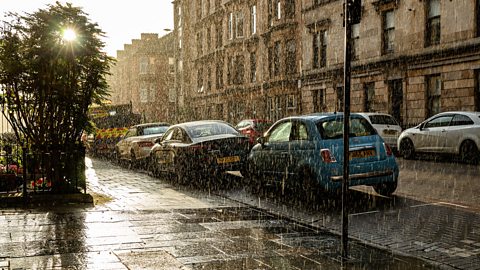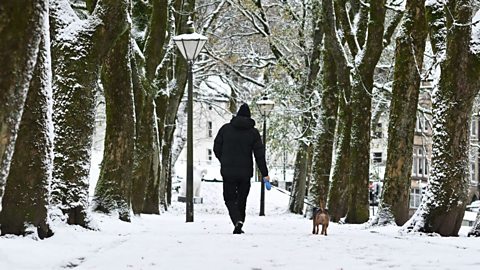
Call it a cold snap or just typical British weather. One thing is certain, the weather outside is frightful, freezing, and just really cold.
BBC Bitesize spoke to Dr Sylvia Knight, Head of Education at the Royal Meteorological Society to answer all your cold weather questions.

How cold does it have to be for snow?
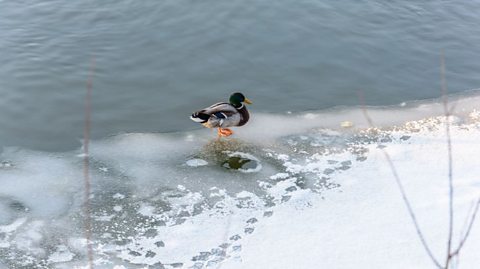
To get snow, there has to be enough water vapour in the air to make clouds, and it must be cold enough (0°C) that snowflakes will form and not melt as they fall through the atmosphere to the ground.
In the UK, we commonly get snow when the wind is blowing from the north or north east (for example, from the Arctic or Siberia). This air is then warmed from below as it approaches the UK, and rises further when it hits the coasts, hills and mountains.
Once the air gets high enough, it cools again until it reaches the point where there is more condensation happening than evaporation - this makes clouds.
As the UK is surrounded by sea, there is always plenty of moisture in the air for cloud to form.
“It’s never too cold to snow in the UK,” says Dr Sylvia Knight, Head of Education at the Royal Meteorological Society, “but it can be elsewhere in the world.”
“It can be too cold for snow in the centre of large land masses, such as Eurasia, Antarctica or North America, where the wind has not encountered enough water that can easily evaporate.”
Water vapour might be picked up over the oceans, such as the North Atlantic or Arctic ocean.
“The rate of evaporation from lakes and rivers, which may be frozen, is far slower than from oceans,” Dr Sylvia says. “The oceans change temperature far more slowly than the land does, and so are a source of water vapour all year round compared to places where there is a lot of frozen water.”
So, it's not too cold to snow in other places - it’s just too dry!
How to tell between a common cold and the flu?

While their symptoms are similar and they are both communicable viruses](http://bbc.co.uk/bitesize/guides/zcqs2nb/revision/1), colds and flu are quite different.
Flu is characterised by a sudden fever, aches, pains and nausea, and avoiding rest can worsen symptoms and slow down recovery.
Colds may make you feel lousy, but don’t always stop you from your day-to-day tasks and the symptoms should start to go away in the second week.
What you shouldn’t do is take antibiotics for either, as antibiotics fight against bacterial infections, they don’t treat viruses. It’s best to keep your fluids up for either, avoid sneezing on your hands, and eat if you can stomach it!
Why don't gloves work on touch screens?

You’re out playing in the snow and you need to check the Bitesize website - but oh no! Your woolly gloves act like a barrier between you and your phone screen. You can always get touch screen gloves - but how do they work?
A capacitor is a device that has the ability to store electric charge. Most phones and tablets have capacitive touchscreens - screens that have an insulator that is coated in a conductive material.
Capacitors work by detecting anything that can store an electric charge. This includes you (think about when you rub your feet on the carpet and then get a static shock).
When your finger comes into contact with a touchscreen, you create an electrical circuit between your body’s electrical field and the conductors in the screen. This ‘tells’ the conductors exactly where you’re touching.
Touch screen gloves have conductive wire woven into the fingertips (usually copper yarn), which completes the circuit and allows the touch screen to detect your electrical field. Now you can stay warm and revise!
Is it okay to wear a coat inside?

Some people say you must take your coat off indoors, or you won’t feel the benefit when you go back outside. But is this true?
When you wear a coat, you insulate yourself. This makes it harder for infrared radiation (heat) to escape from your body and be lost to the atmosphere. However, that coat also insulates you from heat coming in.
“If you put a coat on when you’ve been inside for a while, you may get a bit warm, but you’ll be fine when you go outside and start slowly losing some of that extra warmth to the atmosphere,” says Dr Sylvia.
However, she says you should take your coat off indoors for another reason. If you’ve been outside for a long time with your coat on, and are chilly when you come in, then the coat is also cold and will need to warm up. You’ll warm up far quicker without it on.
How to stay safe while driving in icy conditions in the UK?
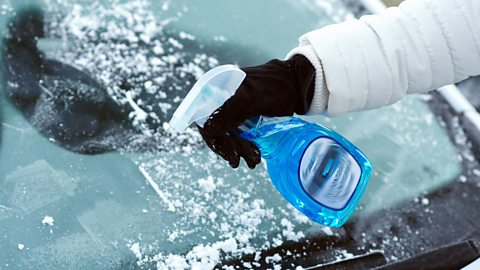
Using a de-icer is an important way to safe of the road. But how does it work?
There are many different solutions of windscreen fluid, but the key ingredient to typical de-icer is methanol. This can be in bottle form so you can de-ice a windscreen manually, or in the washer system of the car itself.
Methanol is a type of alcohol and is incredibly toxic to humans. It is diluted with water before it goes into the washer system, but it should definitely stay on the outside of the car and never be ingested.
Methanol freezes way below sub-zero temperatures, and, when mixed with water, creates a solution which lowers the freezing point of moisture already on the windscreen. Using only water to de-ice the windscreen is counterproductive as there will just be more moisture on the screen to freeze again.
Some cars have a washer system that heats the fluid before squirting it out. The methanol stops the warm water from freezing again on the windscreen. However, pouring boiling water over the windscreen can shatter the glass in cold conditions.
Some people use vinegar or rubbing alcohol as an alternative to methanol solution, as they both have lower freezing point than water and are effective glass cleaners.
The de-icer will always be more effective if you give the driver a hand in scraping their windows and windscreen first!
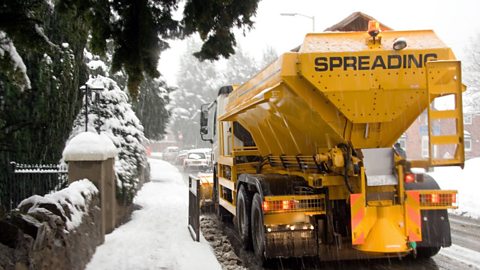
Grit saves the day, you might complain about getting stuck behind the winter service vehicles, but the school run would be an even bigger nightmare without them.
While it’s called grit, most gritters actually use halite, also known as rock salt. But halite doesn’t actually melt snow the way heat does.
Grit lowers the freezing point of moisture on the road surface, preventing snow from sticking in the first place.
The moisture on the road mixes with the salt and creates a saline solution preventing snow or ice from building up.
Technically you could use table salt to clear your driveway, but you’d have to get the timing and conditions right before too much ice builds up. Salting your drive before it’s too icy can help prevent slips and falls, but throwing salt at a pile of snow won’t work so well.
Table salt is not exactly the same as halite - it’s refined for eating, so is treated to remove any impurities. Rock salt is already mined whole and does not undergo this process.
This article was published in December 2019 and updated in November 2025

Why darkness causes low mood – and how to try and counter it
Shorter days can make us more tired and feel down - BBC Bitesize explores some of the things we can do to brighten the darkness

Top 10 rainiest cities in the UK. Do you live near one of them?
The UK is known for its wet weather, but where is the rainiest city in the UK? We take a look at Met Office data to find where it might be!