What is a fossil?
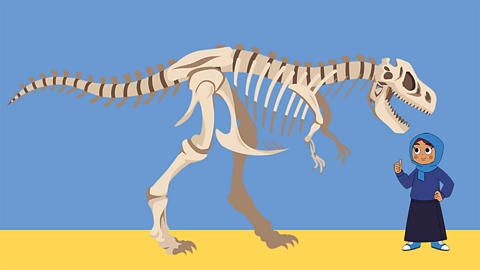
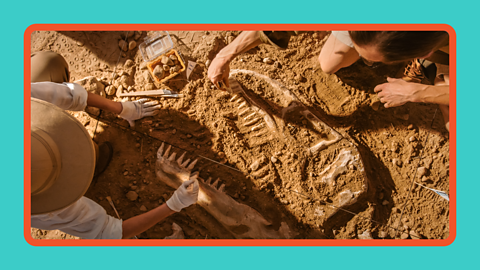
A fossil is the preserved remains or traces of a dead organism and they are usually found in rocks.
Fossils are formed through a process called fossilisation, which takes many, many years to happen and can only happen if the conditions are just right.
Most fossils that are discovered are from creatures that were alive millions of years ago, but fossils can be made of creatures that were alive more recently.
Fossils are useful to palaeontologists, scientists and historians as they help us to learn more about animals and plants that lived long ago.
How are fossils made?
Dig deep to uncover the facts about fossils.
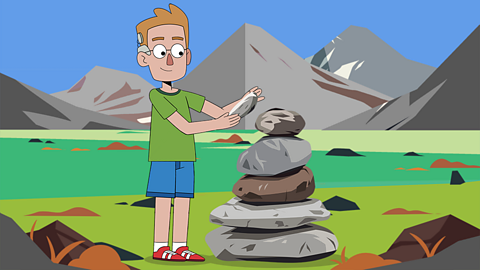
Greetings! Emmet here, and I'm about to witness an extremely rare event – a fossil being made!
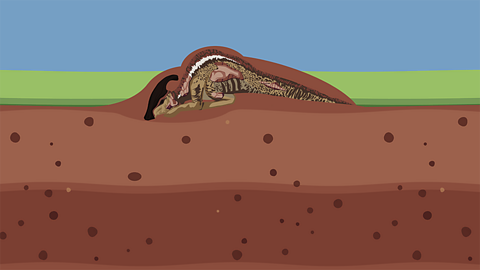
Some animals, many millions of years ago, were buried quickly after their death in substances like sand, volcanic ash or mud.
Did you see that? Fantastic!
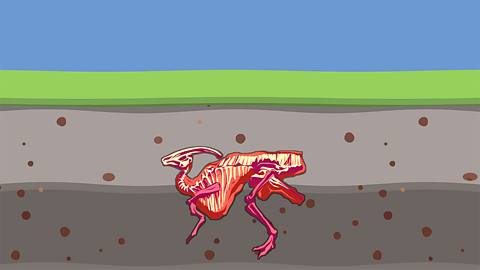
Usually the soft parts, like the muscles, rot away leaving the hard parts, like the skeleton, behind.
Then, over time, more layers of sediment cover the remains. That's why fossils are only found in sedimentary rocks.
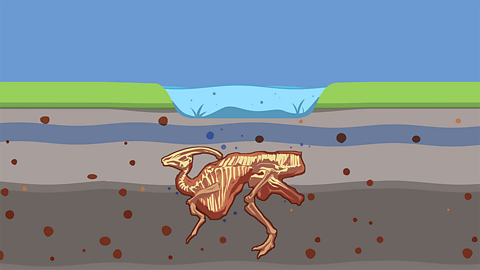
Now, this guy's been under a whole lot of pressure and, in that time, the sediments around the bone has compacted to form rock.Water has seeped into the bone and dissolved it completely.
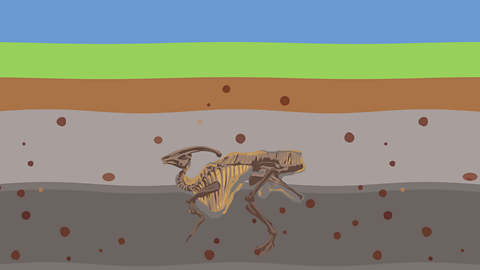
Minerals, in the water, are then deposited inside this mould and ta-da! Our fossil is made!
Then, over millions of years, the rock rises to the surface and is worn away by erosion.Man, I dig fossils!
Fascinating facts
Fascinating fossil facts!
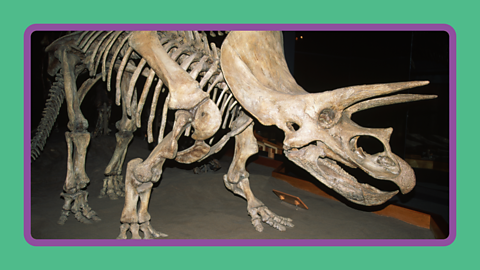
Dinosaur fossils have been found on every continent.
You can find fossils made from poo, these are called coprolites.
The word fossil comes from the Latin word fossilis, which literally means ‘dug up’ and from the word fodere, which means ‘to dig’.
Dinosaurs lived in many different environments and climates, from deserts to tropical forests.
Dinosaurs were reptiles.
Scientists believe that many species of dinosaurs had feathers, including the velociraptor.
Fossilsaren't actually bones, the bone is replaced by rocks and minerals over millions of years.
Fossilisation is a rare event, it only happens in unique conditions before the bones can decompose.
Fossilisation
How does fossilisation happen?
It is very rare for living things to become fossilised because when an animal dies its body usually rots away and nothing is left behind. This is the same with plants.
However, when the conditions are just right a fossil can form. The most common fossils found are of creatures that lived in the sea, because the sediment moves quickly in water and so any creatures that die are usually covered up quickly by layers of mud and sand.
This is why fossils are found in sedimentary rock.
Animal fossilisation
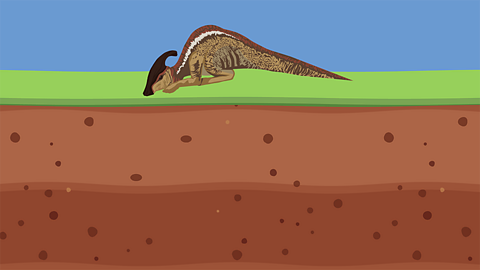
Image caption, 1. Death
The animal dies and falls to the ground. The soft parts of the body decompose or are eaten by scavengers. The hard parts of the body, such as bones and teeth, remain intact.
1 of 5
Plant fossilisation
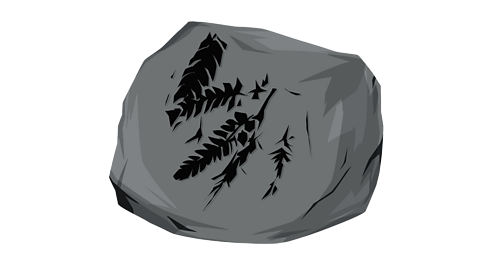
Plants don’t have a shell or a skeleton, so how can a fossil be made from a plant?
Some plants, such as trees, have a hard trunk or branches which can form fossils in the same way as an animal skeleton.
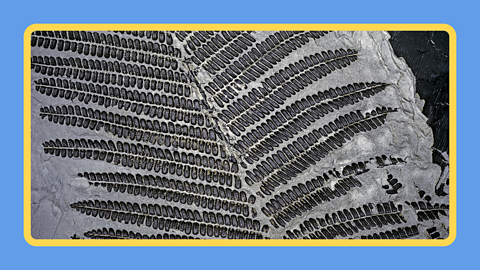
Fossils have also been found of leaves, roots and even the seeds of some plants.
Facts about fossils
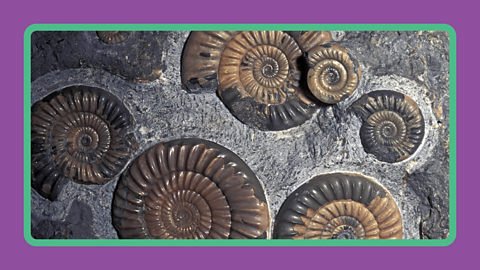
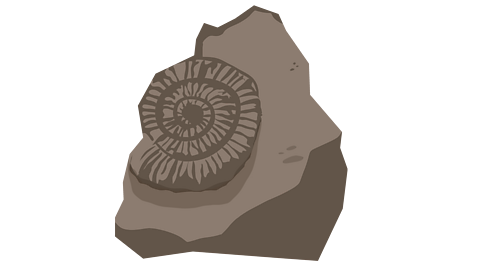
Image caption, Shells from living creatures can become fossils. The ammonites in this photograph were molluscs which lived in the oceans as long as 240 million years ago.
1 of 4
Did you know?
Fossils aren’t just made from a dead animal or plant.
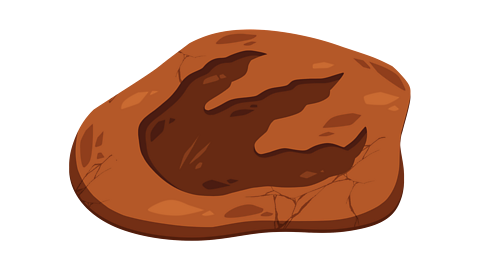
They can also be made from other things that an animal leaves behind, such as an animal footprint, eggs, their burrows and from their poo!
Important words
Decompose – To rot away. When something decomposes, it slowly decays and is broken down by natural processes.
Erosion – When materials like rock and sediment are worn away by natural process such as weather or by water.
Fossil – A fossil is the preserved remains or traces of a dead organism.
Fossilisation – The name of the process that organic materials go through over millions of years to become fossils.
Historian – Someone studying or an expert in history.
Organism – Any living thing, which includes insects, plants and animals, is an organism.
Palaeontologist – A scientist that studies animal and plant fossils to learn about life in the past.
Scientist – Someone who studies or works in science. A scientist learns about things by doing experiments or examining things very carefully.
Sediment – A solid material that can include rocks, minerals, plant and animal remains, and fossils.
Sedimentary rock – Rocks that are made up of tiny broken pieces of other rocks, crystals or minerals. Sandstone, chalk, and limestone are examples of sedimentary rocks.
Activities
Activity 1 – Order the fossilisation process
Activity 2 – Fossils quiz
Activity 3 – Draw a fossil
Get a pen and paper - it's time to draw!
- Draw a line down the middle of your paper.
- On one half, draw an animal's body on the day it is buried in the ground. On the other half, draw its fossil after two million years.
- Write one sentence to describe how the animal's body has changed.
- Write a second sentence to describe the type of soil that surrounds the body.
Activity 4 – Guided reading

New game! Horrible Science: Stinky Space. game
Join Pipette on her epic mission and learn some revolting facts about space along the way.

More on Rocks
Find out more by working through a topic
- count2 of 3
- count3 of 3