What is soil?
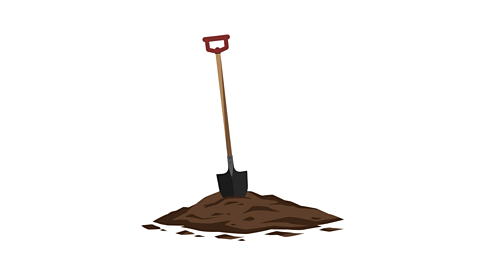
Soil is all around us – well actually it’s underneath us! Soil covers most of the land and is also sometimes called earth, dirt or mud.
Soil is important because it helps plants to grow by containing the nutrients that the plants need to grow strong and healthy.
Even though soil might look all the same there are actually six types of soil and each one has different properties because it is made of combinations of different things.
Types of soil
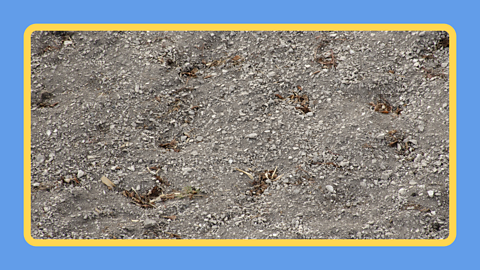
Image caption, Chalky soil
Chalky soil is a light brown soil. Water drains through it quickly and it doesn’t always contain all the nutrients that plants need to grow.
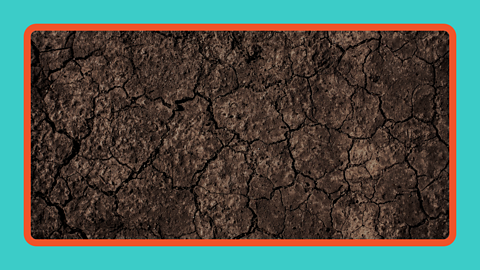
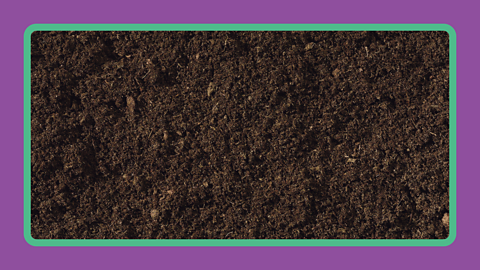
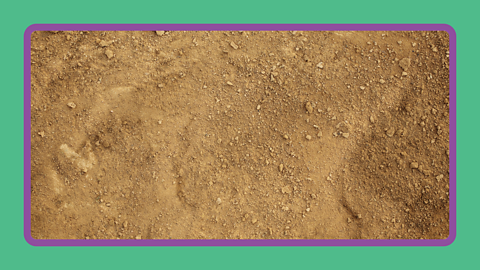
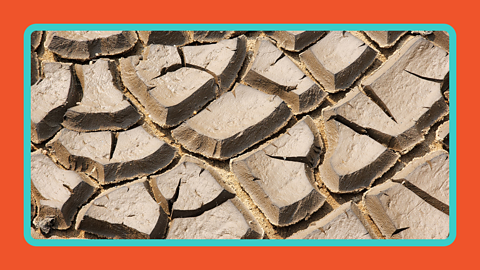
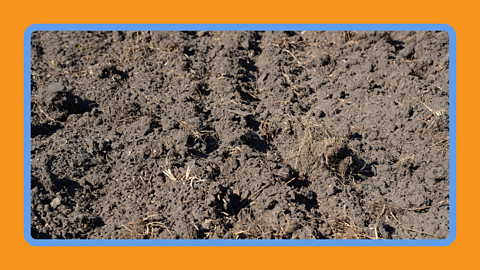
1 of 6
Did you know?
If you look closely at soil, you’ll see that it is made up of a mixture of things.
The reason why we get different types of soil is because some soil types contain more or less water and air, and different sized particles of rock, which changes what the soil is like.
Watch: What is in soil?
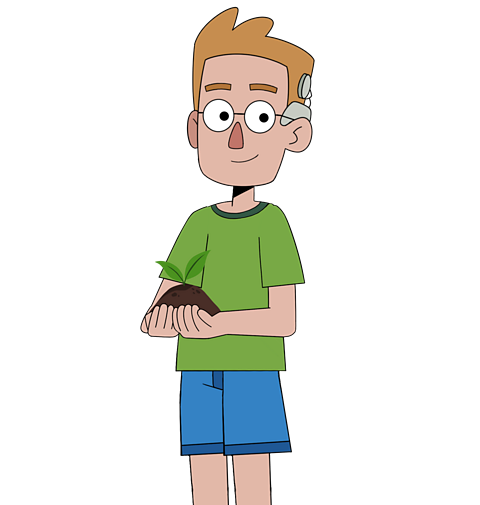
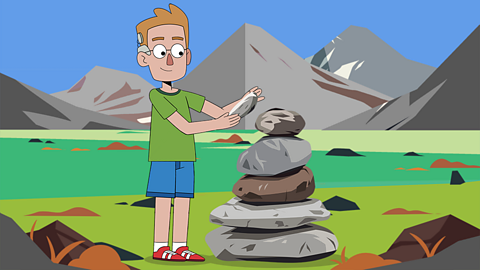
Greetings, Emmet here and I have something incredible to show you – soil!
Mmm. Soil is the thin layer of lovely mucky stuff that covers the land.
It's vital to all living things.
Oh, lovely. It's made from particles of rocks and humus which is decaying bits of plants and animals broken down by microorganisms and this is all mixed together by worms and bugs over many years.
Hello there!
Now, different soils have different properties.
Sandy soils have large particles.
Water drains through them easily making them dry.
But clay soils… They have much smaller particles and get muddy when wet.
Apparently people pay good money for this!
Fascinating facts
95% of the food that we eat comes from soil. Soil grows the plants that we eat, like crops, fruits and vegetables. It also grows plants for animals to eat, which humans then eat as meat. By making simple changes to the way we grow and farm we can protect it from being damaged so it can be healthy for growing in the future.
It can take up to 1,000 years to form just 1 cm of soil, so we need to look after it.
Soil is alive. It needs air and water to stay alive, just like all living things, and it is also constantly moving, changing and growing.
Soil is home to a massive variety of life. including lots of different plants, animals, microorganisms and fungi. All the different kinds of life that you find in one area is called biodiversity.
Some creatures living in soil are so tiny that up to a billion of them could live in a teaspoon of soil.
Soil is a non-renewable resource and needs to be carefully looked after.
Half of all species on Earth live in soil.
Soil stores more carbon than our atmosphere.
What can be found in soil?
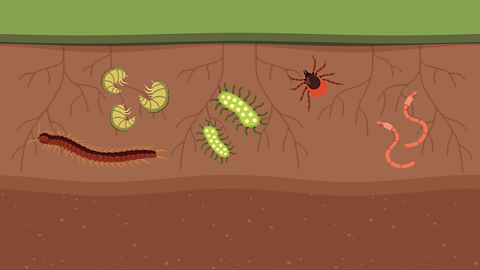
Soil is a mixture of tiny particles of dead, decayed and rotting plants and animals, rock, air and water.
Here are a few examples of what is in a mixture of soil:
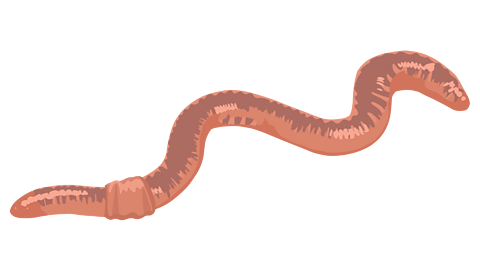
- Earthworms eat the dead plants and animals, and then poo out the nutrients which help new plants to grow.
- Tiny particles of rock are what soil is made from. Different types of soil are made of different types of rock which have been broken down into smaller and smaller pieces over time.
- The roots of plants help to bind the soil together.
- Parts of dead plants and animals are broken down by microorganisms that live in the soil, putting the nutrients back into the soil to be used again.
- Some soil types keep lots of water in them, and somesoil types are very dry**. But all soil has some water in it.
Important words
Decayed – When a living thing has died and begins to decompose or rot away; breaking down in a slow, natural process.
Nutrients – Plants need nutrients found in soil to live and grow.
Microorganisms – An organism of microscopic size like fungi or bacteria.
Particles – A particle is a tiny piece of matter, which we cannot see with our eyes.
Soil – Soil covers most of the land and is also sometimes called earth, dirt or mud.
Activities
Activity 1 – Identifying soil
Activity 2 – Soil quiz
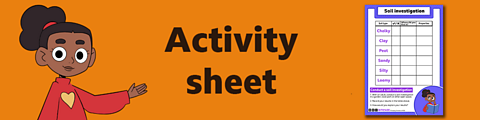
Activity 3 – Conduct a soil investigation
New game! Horrible Science: Stinky Space. game
Join Pipette on her epic mission and learn some revolting facts about space along the way.
More on Rocks
Find out more by working through a topic
- count3 of 3
- count1 of 3