Sign up to the BBC Bitesize newsletter! External Link
For home education news and stories plus updates on the latest Bitesize content, register for our newsletter today.

If you’re already home educating your child, or thinking of home educating them, worldschooling may also be on your radar.
It usually involves you and your child learning through travelling and experiencing the world, rather than being based at home or in school. However, there are many different approaches parents take towards worldschooling, so you’ll need to find what works best for you and your family.
What is worldschooling?
Worldschooling is an educational approach that involves children learning through travelling and experiencing ‘the world’ directly.
Dionne, who’s been worldschooling her five children and writing about it at meetthearshads, says it: “Blends academics with cultural immersion, allowing students to explore history, language, geography and social studies firsthand by engaging with different communities, environments and lifestyles.”
Your child could learn about the Indus Valley by visiting archaeological sites in India or Pakistan, or learn about conservation by rehabilitating endangered animals in Vietnam.
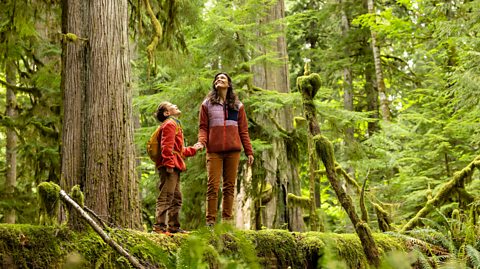
Some parents choose to ‘backpack’ or travel around different countries, others choose to live for a shorter or longer period of time in one country, and immerse themselves in that culture.
In terms of education, worldschooling can mean ‘unschooling’, usually involving no curriculum and children learning through their natural curiosity, or a combined approach to home education, such as: some formal or curriculum teaching by parents or online tutors, self-directed learning and experiential learning - learning through experiences.
How to start worldschooling
If you want to start worldschooling, you’ll need to follow similar steps to starting home education: decide on your educational approach, how you’ll pay for it, and deregister your child from school (if your child is already at a school).
You’ll also then need to plan your ‘trip’, including your budget, destination(s), type of accommodation, length of stay, etc. There’ll be a lot to think about, including any travel visas you may need and also considering the elective home education (EHE) rules in different countries: be aware that in some countries home education is illegal.
Dionne advises: “Unschool first. Always have a safety net to fall back on. Things can change, nothing lasts forever… go for it and enjoy every moment.”
Budgeting
Clare worldschools her two children and writes about their experiences at the website Be Nothing Like.
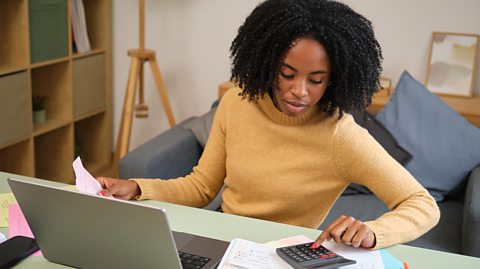
She advises saving as much as you can before you go, and having a buffer amount: “I like to have three months' savings just in case… having this buffer has been a lifeline for a month where we get paid less or a payment is delayed.” She and her partner both work online to earn money, usually early in the mornings and some evenings.
Different approaches to paying for worldschooling include:
- Saving up beforehand, often for years
- Selling a home, if you own one
- Renting out the family home (this can come with its own risks)
- Arranging house swaps and/or house and pet sitting
- Working remotely or through online work
- Setting up and earning passive income
- Working as you travel.
Some families travel and worldschool for shorter periods, e.g. three to six months, and re-register their child at school when they return. This depends on school place availability.
Resources
Think what you’ll take with you. Parents who blog about worldschooling trips recommend things like day backpacks for you and your kids, ‘bumbags’ for carrying valuables and essential items such as world travel adaptors.
Most parents recommend each child has their own pen and journal so they can write about their travels. It’s worth thinking about an e-reader instead of paper books, and a small laptop or tablet for online learning and lessons.
You can access BBC Bitesize internationally, but note that games, audio-video and animated content are geolocked to the UK.
Planning
As well as planning where you’ll go and what you’ll see, you’ll need to plan food, transport and accommodation. There are several worldschooling families running blogs with information about these practical aspects. You can also use Foreign Office travel advice.
Don’t forget healthcare and insurance. Decide how you’ll pay for these things if something unexpected comes up.
Education
Planning also includes deciding how your children will learn.
On the days when they’re not educating their kids while out and about, Clare and her partner Si split the learning day between them. They start with 20 minutes on a languages app, then do yoga and movement and a tricky Maths puzzle with dad.
Then they explore their own topics: “At the moment it’s Chernobyl, little one is interested in what happened there, which has led to learning about nuclear power, how a nuclear power plant works and a big 3D diagram which he presented to me and his big sister… honestly we had no idea ourselves!”
They’ll have lunch and outdoors time: “Usually a park or a swim or play centre, or a world school hub or family centre, which we find before settling in a place, or just a walk.” Then they’ll have meditation with mum and usually lots of, “interesting things booked in.”
On the other days they might use workbooks for English and maths, as well as BBC Bitesize.
How to worldschool
How you choose to worldschool will depend on your family’s approach and what you feel is best for your child. Read 'How to start home educating in the UK' for ideas and adapt them for worldschooling.
Clare says it took a while to figure out what works best for them, which in the end involved preparation on their part, and going at their child’s pace: “We typically plan our month ahead around the country we’re in. We create a 30-day lesson plan for that country to make it easy. We stick to this, but on some days something pops up that wasn’t on the list and we move things around.”
She says having this structure, “also forces us to get out and about,” to experience things where they are. “For example, in Chiang Mai our learning centred around learning and living among Buddhism, visiting temples, meeting and chatting with real monks… feeding elephants at a sanctuary, visiting tribespeople in the north…"
"These were all free activities, it’s just about reaching out and asking the questions to create rich learning experiences.”
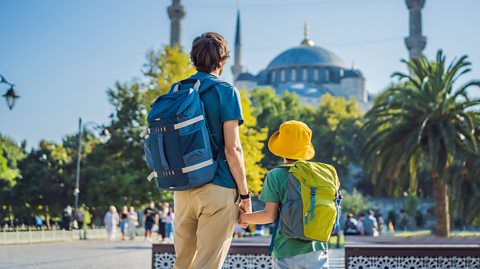
Depending on where you go, you could explore the food chain while visiting the African savannah, explore different types of renewable energy in the different countries you visit or learn about early Islamic civilisation in Spain or Egypt.
Clare says while they don’t tend to do ‘tourist’ trips, as they can get expensive, even something as simple as a city bus tour, “can provide rich learning experiences that, if you let it, spider off into a whole other month's worth of learning.”
In Bali, a volcano trek, “led onto so many topics around geology, geography.” They used acidity and alkaline strip tests on soil samples, comparing volcanic soil to normal soil, “which of course led onto a million more topics. The learning just spiders, and it’s mostly directed by the kids.”
At the moment they’re in Barcelona: “We’re deep in art, museums, Gaudi, architecture and monasteries… Last week we broke old tiles up and made artwork similar in style to Gaudi’s mosaic work.”
Her son made dinner: “He wrote out the recipe, we shopped for ingredients and he spoke in Spanish at the shop and paid the cashier himself, and we went home and he made dinner. A simple life experience but for a nine-year-old empowers him and makes him feel important in our family and in life.”
The pros and cons of worldschooling
“Start by finding community first. It will make all the difference.” – Dionne Arshad
Clare says some of the benefits for them include flexibility and not feeling ‘stuck’ in their life, as well as allowing their children to explore their creativity and interests. Their 16-year-old daughter is doing iGCSEs but in her own time and at her own pace.
She has also just set up an online business selling art clothing, which has involved learning things like: “Brand identity, writing a business plan, logo and concept creation, product development…”
Clare believes worldschooling allows her children a “voice and a choice” in their education. And they get a confidence boost from learning and achieving something for themselves.
Dionne says they decided to try worldschooling because: “Mainly we wanted a better work-life balance. We don’t dislike the school system but think it restrains people from living their best lives.”
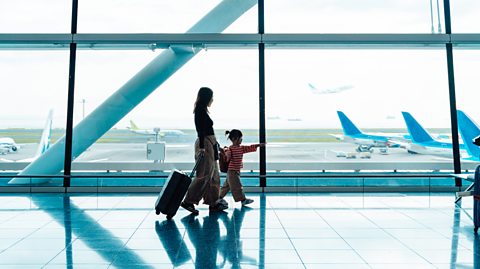
Clare says the harder aspects are the “time and planning” worldschooling can take: “I didn’t realise how much time we’d have to put into this to make it ‘work’… even though our approach is relaxed and freedom-based, a lot of planning and structure goes on behind the scenes to make flexibility ‘work’.
“It’s hard being a parent in general. And home schooling adds that extra 24/7 pressure onto parenting. But for the life it gives us, and the freedom we have and the things we see… Everything is a learning experience and we’re learning – as time goes on and the kids develop – to all be kind to ourselves.”
You may also want to consider things like how much you’ll see close friends and family, and how your children will develop or nurture closer friendships. Dionne advises: “Start by finding community first. It will make all the difference.” Many worldschooling parents mention ‘worldschooling hubs’ as a way to share learning and allow kids to play with one another.
Clare adds: “Co-parenting and sharing the kids' schooling is a game changer. When we started it was just purely me and I was frazzled, burnt out within days. That soon changed. Schooling for us is very much a time to be together and make ‘joy’ out of learning… This is how we can squeeze in the ‘boring hard stuff’, because learning has been so much fun that ten minutes on maths goes unnoticed.”
How to use Bitesize resources when worldschooling
With access to the internet, you can use BBC Bitesize with your child. Search by subject, such as English and maths, or by interest, whether it’s puppet making or planning science experiments.
You can also check out our guide to learning languages for home education, and helpful pieces such as: How to write a travel article, to encourage your child’s writing skills while you’re worldschooling.
Where can I find more support for home education and parenting?
The BBC Bitesize home education collection is designed to support you and your child’s learning at home with free downloadable resources, advice articles and videos for children aged two-to-five years old, five-to-11 years old and 11-to-16+ years old.
Bitesize Parenting is the go-to place for the whole parenting community to find stories, expert advice and fun activities.
If your child has special educational needs or disabilities, be sure to check out the Parenting SEND collection. Bitesize has a collection of Sensory Stories, an immersive video series of unique sensory adventures for children with additional needs.
For more information about home education, this BBC News article covers the rise in families deciding to educate their children at home.
