When you enter the Dialogue Express Café, the order board looks the same as most places, but this café is far different from anything you're likely to have encountered before.
For starters, you order in British Sign Language and if you don't know it the friendly barista's can teach you.
In this repurposed train carriage, deaf and hearing people throughout London come to experience this unforgettable interaction.
It was set up by Hakan Elbir, who first brought this idea to London six years ago, but before we get to his story let's start with some basics on ordering…

How to order a latte
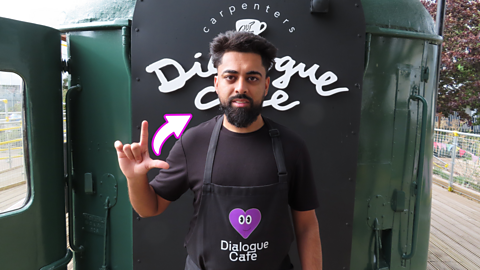
Image caption, Start by making an 'L' shape with your writing hand
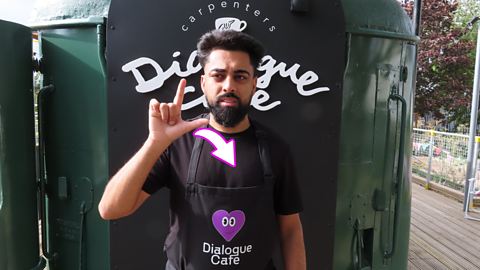
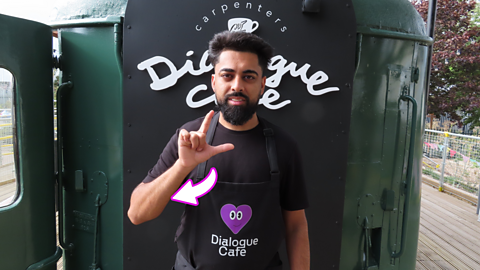
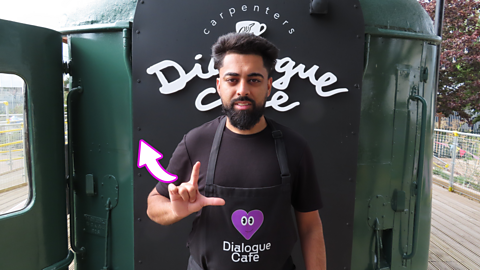
1 of 4
How to order an orange juice
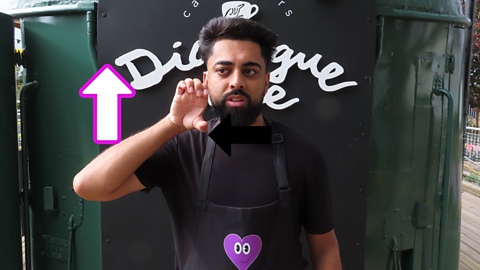
Image caption, Have your right palm open
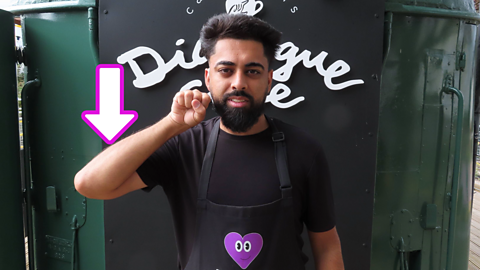
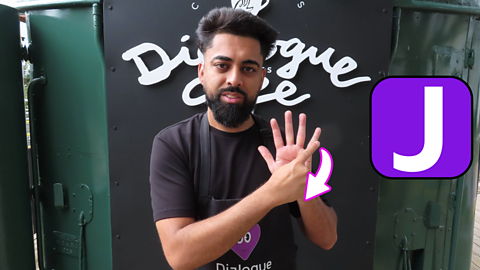
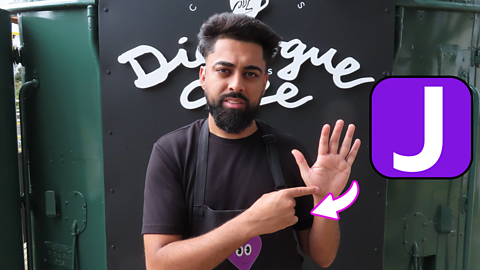
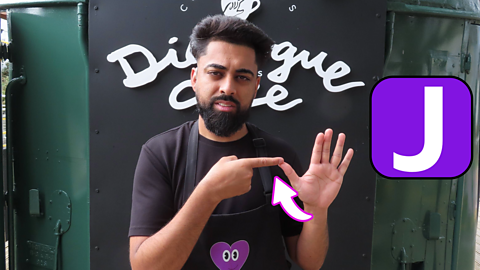
1 of 5
How to say please & thank you
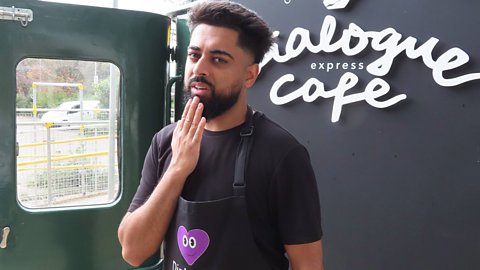
Image caption, With arm bent and palm flat, touch your chin with finger tips
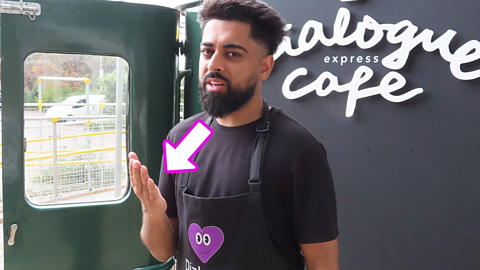
1 of 2
What was the inspiration behind the café?
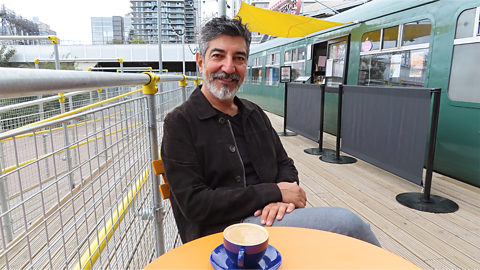
The guy behind it all is Hakan Elbir. He set up the Dialogue Hub as a social enterprise in East London six years ago, inspired by his experience of having close relatives who are disabled, he said: "I've seen first hand how those people were excluded and still are excluded from the society."
He felt it was important, not to tell people what to do, but create a platform where people can "break down the barriers between deaf and hard of hearing, and hearing people."
Hakan trains and employs people who are deaf and hard of hearing, he says to help “create an environment that is more accessible.”
To give you a better idea of the employment situation of deaf and hard of hearing people in the UK: Only 37% of people who report BSL as their main language are working, in comparison to 77% of people who are not disabled under the Equality Act.
How does the café work?
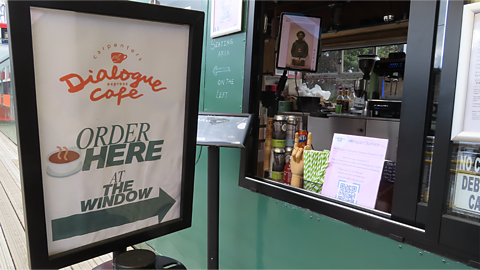
At the café, when a customer wants to make an order, they can look at the menu on the screen, and tap on the order they want. This takes you to a ‘how to’ video of signing the order in British Sign Language.
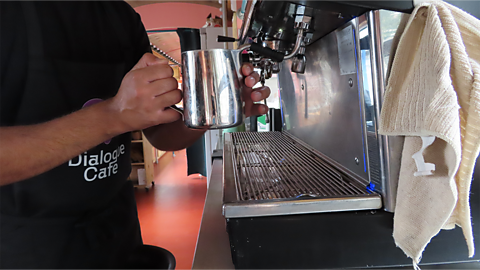
Hakan explains that deaf baristas have different methods of making coffee than those that can hear. For instance, he mentioned that with the milk-steaming process, a barista who can hear will hear when the milk is ready. But for baristas who cannot hear, they “feel the heat” and that’s how they know it’s ready.
“I'm using coffee as a tool to convey the message", says Hakan: “Because otherwise it's becoming one-way communication. But with the help of our concept, it becomes a two-way communication.” And he hopes, that’s how it will become an “unforgettable experience.”
All of the staff who are hired are deaf or hard of hearing and Hakan says it’s wonderful to see how much their confidence can improve.
He shared a story about one new recruit who was so shy when he started “he didn’t even look at the customer’s eyes.” But Hakan says: “After a month or so of being here his self-confident had increased and he was able to express himself.”
Hakan finds motivation from seeing this mutual learning happening between hearing and deaf people.
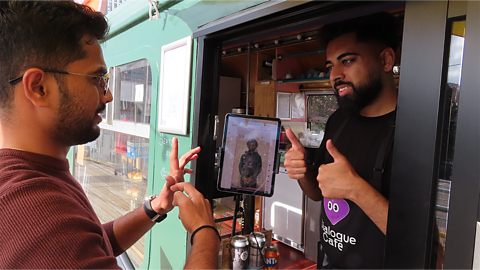
One of Hakan’s recruits is barista Furqan Shahzad. “I joined just two months ago”, Furqan said. “I was panicking a little bit but I learnt really fast.”
Furqan explained that he’s gained a lot of skills, including how to steam every milk you can think of “oat milk, cow’s milk, skinny milk, coconut milk”, as well as increasing his skills in Maths and preparing food.
What is it like working in the café?
“I’ve got a lot of good reviews.”
Furqan is clearly very proud of his role and what he’s achieved so far, he said: “People say that I've got a good smile and give good customer service.” He also thinks that part of the reason for the positive reviews is because he’s good at teaching customers how to sign “I'm deaf but I can talk - I can always show you and then teach you.”
Published in September 2025