If you’re the sort of person who starts the day with a cup of coffee, you’re not alone.
Around 98 million cups of coffee are drunk every day in the UK.
Visit cafes across the country and you'll find a huge variety of different drinks, flavours and trends, but where did our favourite coffee orders come from? And are the modern coffees quite as new-fangled as we’d think?
Pop the kettle on as BBC Bitesize takes a look.
Latte
If a latte isn’t your cup of tea, so to speak, then you might not know what one is – it’s generally a shot of espresso (a concentrated form of coffee, made by putting hot water through very finely ground coffee at high pressure) topped up with steamed milk and a layer of foam on the top.
While coffee has its roots in Africa and the Middle East, the concept of drinking milk with coffee was primarily a European invention, in practice since the 17th Century. According to the Oxford English Dictionary, the term caffè e latte (Italian for 'coffee and milk') was first used in English by the novelist William Dean Howells in 1867.
The latte story goes that coffee with milk was popular among American tourists in Italy who didn’t enjoy the bitter, rich flavours of Italian espresso and added large quantities of warm milk in order to make a sweeter drink.
It's said they took the recipe back home with them with the version of the latte we know today being standardised in Seattle, USA in the 1980s. It has gone on to become one of the most popular coffee types in the world – but a word of warning if you fancy ordering one in Rome or Milan.
Ask for a latte in Italy and, unless you meet an Anglophile barista, you may be served a glass of milk.
Cappuccino
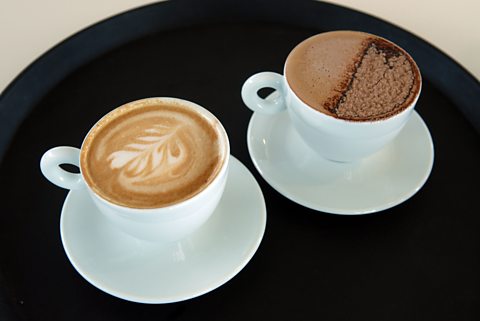
There’s not much difference between a cappuccino and a latte – both have the same ingredients, but it’s the quantities that change these drinks.
A cappuccino will have much more foamed milk than a latte and is considered a layered drink, often finished with chocolate or cinnamon powder on top.
While the name cappuccino comes from the Latin caputium, meaning hood or cloak, the drink’s origins actually come from Austria.
Coffee houses in Vienna pioneered the introduction of cream and sugar with coffee in the 18th Century. The colour of the coffee resembled the colour of the hooded robes worn by the Capuchin monks and nuns and the German/Austrian variation of kapuziner was taken as its name.
Cappuccino versions were served across Europe from the 1930s onwards – although the drink at this time was typically espresso topped with whipped cream. As coffee machine technology improved, the version we know today was standardised, initially in Italy, before becoming popular as a ‘long’ coffee drink, meant to last, around the world.
Americano
As the name might suggest, we may have Americans to thank again for the invention of the Americano – the UK’s third most-popular coffee.
The drink – a shot or two of espresso, topped up with hot water – is believed to have been popularised by soldiers posted in Italy during World War Two.
It's said that the American troops were looking for a different way to take their coffee. The local baristas came up with the option of diluting it with hot water in order to make the drink something they were more familiar with – the name Americano has stuck ever since.
The name Americano did appear in print some 20 years earlier though. Somerset Maugham's collection of short stories, Ashenden: Or the British Agent, refers to his titular hero drinking an Americano in Naples, although we never find out what exactly the drink was.
Mocha
While the word mocha is now synonymous with chocolate, particularly in coffee, it wasn’t always the case.
The name was taken from a variety of coffee grown in the Middle Eastern country of Yemen. The beans were named after the local Mokha port that they were shipped from.
People noticed an unusual chocolate taste to the coffee. As chocolate became more common in Europe, it began to be added to coffee to give it a sweeter taste and the mocha name was used.
Modern mochas come in many different varieties, ranging from latte-style coffees with chocolate powder or syrup added, to hot chocolates with a shot of espresso added.
Iced coffee
Of course, not everyone likes their coffee steaming hot.
Iced coffees and cold brews are becoming more and more popular around the world. A traditional iced coffee is brewed hot and poured over ice or very cold milk while a cold brew does as the name suggests – and is prepared entirely cold for a different flavour.
But an iced coffee isn’t a new thing – they’ve been around for almost 200 years.
Described as the original iced coffee, mazagran is another drink with an armed forces heritage. Created by French soldiers in Algeria at the town of the same name, mazagran is a cold sweetened drink made with coffee syrup and iced water.
Upon the troops’ return to Paris, the drink was introduced in local cafes and served in a tall glass – modern versions now typically consist of a shot of espresso, rather than syrup, topped up with cold water.
So whether it’s hot or cold, black or white, short or long - whatever your next coffee order is, remember that it just might be more traditional than you think.
This article was published in September 2020 and last updated in September 2024

How are taste and smell connected?
We've asked some experts to find out.

The bittersweet history of confectionery
How sugary treats and sweets went from a luxury linked to slavery to part of everyday life
Pumpkin spice: How did it all begin?
The smell of pumpkin spice is an autumn classic, but where does this blend of flavours come from?