Until the 20th Century, travelling to, let alone living in space was the domain of science fiction. Nowadays, life on Mars feels genuinely within our grasp.
The biggest challenge facing people who want to settle on the red planet has always been getting there in the first place. Any rocket launching from Earth needs to do so when both our planet and Mars are aligned in orbit, and therefore the distance to travel is at its shortest. But that doesn’t mean it’ll be quick - the most recent rover to go to Mars, Perseverance, took seven months to get there.
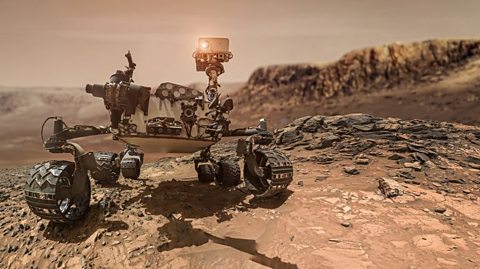
But space travel is developing at such a pace that it’s possible human missions to Mars will start happening in the next few decades. So if and when we get there, what else do we need to think about if we want to make it our home? We spoke to two scientists to find out.
Blood, sweat and tears
The first thing that needs to be sorted when building a settlement on Mars is exactly that - building the settlement. As Dr Aled Roberts from the University of Manchester explains: “One of the big challenges to living on other planets and travelling in space is there's a lot of radiation.”
Radiation is extremely damaging to your health. On Earth, we’re shielded from this radiation by our thick atmosphere and the planet’s magnetic field, but travellers to Mars will need to build things with thick enough walls to keep them safe.
Flying materials to Mars is too expensive, so any construction on the planet will need to be made out of things they can find there. Luckily, he says the dust that covers the surface of Mars is good at shielding from radiation, but without anything to bind it together, it’s pretty useless.
Inspiration struck when Dr Roberts was working on a different project, trying to make synthetic, protein-based glues. These kinds of glues have been made all throughout history, from egg whites, cheeses, and animal parts, including their blood.
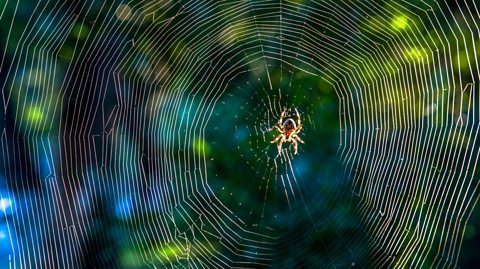
Dr Roberts and the team were looking in particular at spider silk – a very strong material. They compared it to a common protein found in cow blood, which they weren’t expecting to be as sticky, but it turned out to be even more so.
Of course, as Dr Roberts explains, “it's not really feasible to take cows to Mars.” But he had an idea: why not try and get the protein from humans that are going to be there anyway? After mixing a protein in human blood with Mars dust, voila! Astro-Crete – a concrete-like substance that can be made on the Red Planet – was born.
The reason it’s so strong is because of the amount of an attraction between a hydrogen atom in one polar molecule and another small electronegative atom it contains. The team later realised the main component in urine after water also has many hydrogen bonds, so they added that to Astro-Crete and made it even stronger.
However, Dr Roberts says that the health and safety risks in extracting the protein are too great to produce the material on a large scale. In its current form, he thinks it could be used as an emergency building material, if any future Martian settlement was damaged.
Food, glorious food
Food is another big issue that needs to be tackled. Earth has everything we need for food growth - soil, sunlight (but not too much), and rain. However, the conditions on Mars aren’t quite as friendly to crops, as planetary geologist Kevin Cannon explains: “The main challenge is that nothing can be grown or produced outdoors because it’s simply too cold and the atmospheric pressure is too low. All food will have to be produced indoors in a heated and pressurized environment."
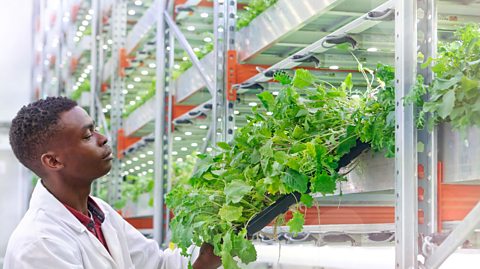
Our diets will also likely look a little different to what we’re used to, although Cannon says “we should be able to produce most of the same foods we eat on Earth.” For example, animals won’t be able to be reared for meat in the same way as they are on Earth, so any meat we eat will have to be lab grown. We might also be eating more insects, as they don’t take up nearly as much room and are very nutritious.
Soil is an other big challenge, as the surface of Mars is very different to Earth, and therefore doesn’t contain the same nutrients that plants we eat need. If we rely on soil, it would involve transporting a lot of it from Earth to Mars, which is time-consuming and expensive.
Instead, Cannon says he would look at soil-less solutions like a way of growing plants without soil, or growing plant tissues from cells as opposed to growing whole plants.
Five things we get wrong about space
Forget everything you thought you knew about space
Do other planets have seasons?
From snow on Mars to hurricanes on Jupiter - extraterrestrial seasons can get pretty wild.
How did we discover the planets in our Solar System?
Explore the stories behind our planetary neighbours.