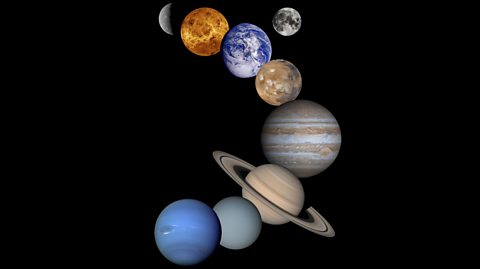
From snow on Mars to hurricanes on Jupiter - whatever the weather, extraterrestrial seasons can get pretty wild.
Dr Sylvia Knight, head of education at the Royal Meteorological Society, spoke to us about the seasons of outer space.
It’s all in the tilt
“To get seasons, a planet needs to have a tilted axis,” Dr Sylvia says.
All the planets in our solar system have a tilted axis, which means all our planets have seasons - however, the seasons vary greatly in length, diversity and severity.
“The greater the tilt in the axis, the more extreme the seasons are.”
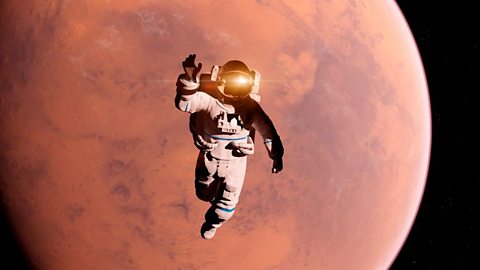
Take Mars, for example: Mars has a tilt of 25.19 degrees compared to Earth’s 23.44 degrees, and its winters can be as cold as -153ºC. To put this into perspective, the lowest temperature ever recorded in Antarctica to date was −89.2 °C. Brr!
“This is cold enough for carbon dioxide to condense, forming clouds and snow around its pole,” says Dr Sylvia.
But unlike the Earth, snow doesn't settle on Mars's surface, but stays in the atmosphere about four kilometres above. However there is ice at its pole, and its polar ice cap melts in the spring and replenishes in the winter.
Mars has an elliptic (oval-shaped) orbit which does make the planet colder when it’s further away, but that tiny tilt still makes an astronomical difference in its seasonal variation. Spring is the longest season in Mars’s northern hemisphere at seven months, and winter the shortest at four.
I’m your Venus, I’m your fire
Just because a planet has little variation in season, it doesn’t mean the heat can’t be extreme.
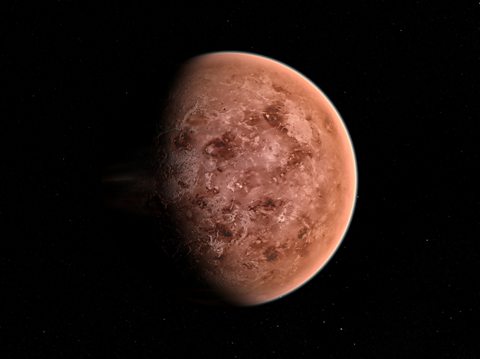
Venus is the hottest planet in our solar system, despite being only second-closest to the Sun and a similar size and weight to the Earth. This is because atmosphere traps UV radiation from the Sun’s rays and creates a huge greenhouse gas effect. While the temperature does change slightly as it spins, the nights are as warm as the days. Temperatures all over Venus can reach a scorching 462ºC. That’s hot enough to melt lead!
Venus’s axis is almost upright at 3.39 degrees, meaning there are virtually no seasonal effects - a Venus spring is almost indistinguishable from a Venus autumn. So if you removed its fiery atmosphere, you could expect balmy weather all year round - and it would be a long year, as one day on this slow-spinning planet is the equivalent to 243 Earth days.
Storm season for centuries
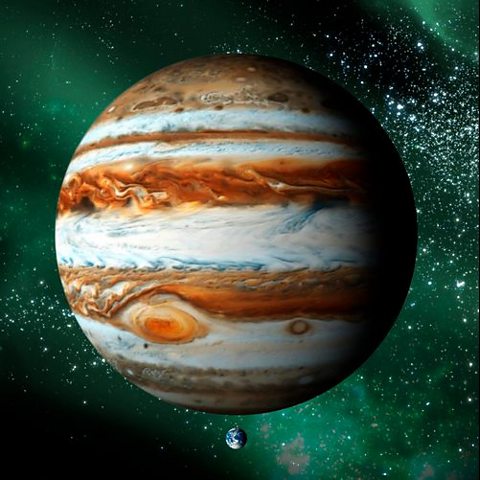
Jupiter might look like one big patterned marble, but it’s basically a giant cloud full of hurricanes. It has no firm ground surface (that we know of) and is the largest gas giant in our solar system. Dressing for Jupiter weather can be a nightmare, as temperatures can range from a potential 24,000ºC near the core to a freezing -145ºC towards the exosphere.
Jupiter’s mass is composed almost entirely of hydrogen and helium. The 1% of other gasses are what cause Jupiter’s beautiful swirls and whirls. These windy clouds are made of varying levels of ammonia, water, sulphur and methane and float in the atmosphere. While some of these clouds are very cold, they would probably cause chemical burns if you walked through them. Makes a cloudy day on Earth seem a bit more desirable!
It doesn’t stop there - the Great Red Spot on Jupiter’s surface is a storm three times larger than Earth which has raged for hundreds of years. It’s located south of the equator in a region where pressure and temperature is higher, and NASA’s Juno probe is trying to determine how deeply rooted in the planet’s interior it is. It’s a burning hot storm despite reaching the stratosphere, and the reason for its heat and the source of its red colour are still unknown.
Closer to home
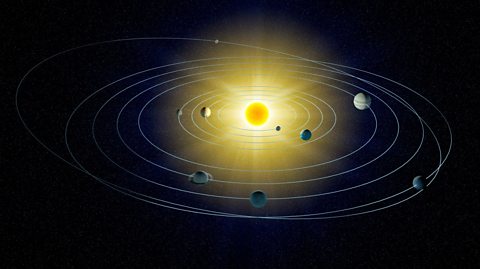
Uranus has four seasons similar to Earth - but the length and intensity of its seasons are far more extreme. For nearly a quarter of each Uranian year (84 Earth years), the Sun shines directly over each pole, which makes for a long hot summer. 21 years long to be exact - meanwhile the other half of the planet is plunged into 21 years of dark winter.
Neptune trumps this, however, as the icy planet has an 165-year long orbit and 40-year-long winters. Saturn has a larger tilt than Earth (27 degrees), a more circular orbit than Mars and is a gas giant like Jupiter, so each season is pretty consistent and lasts seven years.
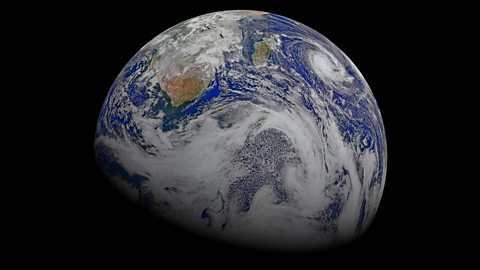
As for the Earth, you might know that the seasons below the equator are the opposite to above it, but did you know that they’re more extreme in the southern hemisphere?
Dr Sylvia says it’s not just to do with the tilt, but the shape of the Earth’s orbit: “Because the Earth’s orbit around the Sun is not completely circular, we’re closer to the Sun in southern hemisphere summer than in southern hemisphere winter.”
This basically means that while the near-circular orbit has little effect on the planet’s climate, the seasons below the equator are more severe. Luckily it’s still far more circular than other planets’ orbits, so the seasons stay pretty consistent no matter where you are in the world.
Poles apart
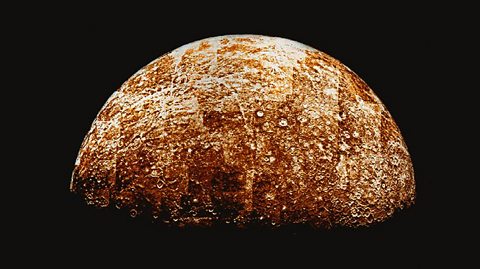
Mercury’s seasons are difficult to determine. This is because it has virtually no tilt (0.03 degrees), but a highly elliptic orbit. This creates an approximation of summer and winter as the planet slingshots away from the Sun. When it’s at its closest to the Sun, the surface can reach temperatures of 427°C during the day, but when it’s furthest away it can be as cold as -127°C. Mercury also has a bizarre rotation, spinning three times (every 53 Earth days) over two rotations around the Sun, making it impossible to tell when one season begins and one ends.
On the other side of the orbital plane and going to the other extreme, Pluto has a tilt of 119.5 degrees. This means that Pluto’s north pole is almost upside down compared to Earth’s, so one half of the planet will experience months of the midnight sun and then months of darkness. However its seasons can last over a century, as it takes 248 Earth years to orbit round the Sun.
The super-hard Solar System quiz
Blast off into a learning journey with this mind-bending quiz.
Ten things you didn't know about our Solar System
You'll be a star student once you've read this!