The history of the Nobel prize
This December, the 2025 Nobel prize ceremony will take place, celebrating the people deemed to have brought the most benefit to the world in the fields of Physics, Chemistry, Medicine, Literature, Peace and Economic Sciences.
The awards were created in the early 20th Century, and have become one of the highest honours a person can achieve in any of the chosen fields. In anticipation of the official ceremony, we've put together this helpful guide on all things Nobel prize. From what they are, to how they originated, to who is taking the awards this year!
What is the Nobel prize and where did it originate?
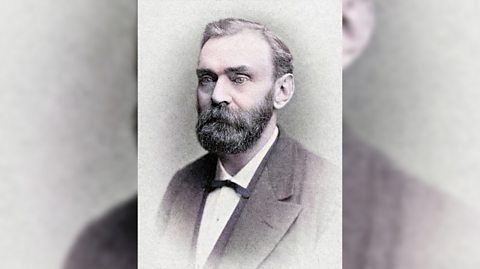
First awarded in 1901, a Nobel prize is one of the highest achievable honours in the fields of physics, chemistry, medicine, literature, and peace. The prize was created by Alfred Nobel, the Swedish inventor of dynamite, name checked in Christopher Nolan's 2023 film 'Oppenheimer'.
Nobel was an inventor, scientist, businessman, and a writer of poetry and drama, with the award categories reflecting his wide array of interests. Nobel's accomplishments in a variety of fields brought with them wealth and reward, with the inventor holding around 355 patents (a licence that means others can't copy an idea) for his various inventions.
Upon his death, Nobel wished for his fortune to be used to reward "those who, during the preceding year, shall have conferred the greatest benefit to humankind". Some five years after his death, the first Nobel prizes were awarded, in each of the fields Nobel made his name.
In 1969, an additional award was added, the Sveriges Riksbank Prize in Economic Sciences. This is given out for achievements in the field of economics, and is awarded on the same night as the Nobel prizes, though does not technically count as a Nobel prize.
How do you win a Nobel prize?
In order to become a Nobel prize winner, you need to be nominated by an eligible nominator. People aren't allowed to nominate themselves for a Nobel prize, and most nominations are by invite only, meaning nominators must fulfil the criteria set out by the awarding institutions.
All eligible nominees will then be considered by the prize awarders, who will make their selection for the eventual Nobel prize winner.
Who exactly gets nominated for a Nobel prize is a well-guarded secret, with nominations only allowed to be made public at least 50 years after the nomination has taken place.
How much money do you get from a Nobel prize?
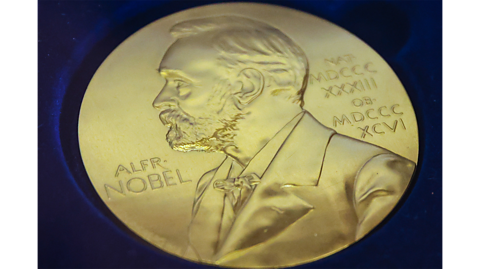
Winners of a Nobel prize receive a gold medal, a personal certificate, and a cash prize worth 11 million Swedish kronor.
If two or more people win the prize, the money is shared between them, with this year's award equivalent to around £820,000.
Winners are given the title of 'Nobel Prize laureate', as a reference to laurel wreaths, awarded to victors as a sign of honour in Ancient Greece.
In order to earn the cash prize, winners must also deliver a lecture.
Who's won a Nobel prize?
In total, 663 Nobel prizes have been awarded since the prize's inception, with many famous faces taking home awards across all categories.
Four US presidents have been awarded the Nobel peace prize, these being Theodore Roosevelt, Woodrow Wilson, Jimmy Carter and, most recently, Barack Obama.
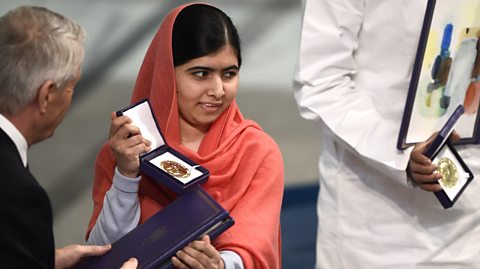
Malala Yousafzai made history as the youngest ever recipient of a Nobel prize, earning the 2014 Nobel peace prize at just 17 years old. The oldest winner, in contrast, was John B. Goodenough who won the Chemistry prize in 2019 at the age of 97.
The first female winner of a Nobel prize was Marie Curie, who won the Nobel prize for Physics in 1903. She shared the award with her partners Pierre Curie and Henri Becquerel, for their work in developing the theory of "radioactivity". Curie also became the first person to win a second Nobel prize, taking home the Chemistry award at the 1911 ceremony.
Other notable winners include Martin Luther King Jr., Nelson Mandela, Albert Einstein, and American musician Bob Dylan.
Who won the Nobel peace prize in 2025?
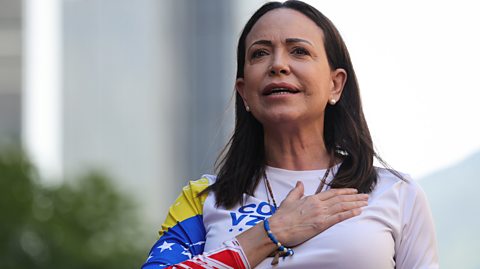
The 2025 Nobel peace prize was awarded to María Corina Machado, Venezuela's opposition leader.
The Nobel committee described Machado as "one of the most extraordinary examples of civilian courage in Latin America in recent times", celebrating her campaign against the current Venezuelan President Nicolás Maduro Moros.
According to Nobel chairman Jørgen Watne Frydnes, Machado was recognised for her "struggle to achieve a just and peaceful transition from dictatorship to democracy".
Machado recieved the award ahead of a possible 338 candidates, whose names won't be revealed for another 50 years, as per Nobel tradition.
When is the Nobel prize award ceremony 2025?
The Nobel prize ceremony will take place on 10 December 2025, the anniversary of creator Alfred Nobel's death. The main ceremony will be held at Stockholm Concert Hall, Sweden, where the awards for Physics, Chemistry, Physiology or Medicine, Literature and Economic Sciences will be handed out.
The Nobel peace prize will be awarded in a separate ceremony, at the Oslo City Hall, Norway. Despite being held in a different location, the Nobel peace prize ceremony will also take place on 10 December 2025.
This article was published in December 2025
