The Mandela Effect explained
Everyone misremembers things from time to time, be it a loved one's birthday, the location of your keys or the name of someone you just met. But what about when lots of people, all around the world, misremember the same thing?
Well, this is known as the Mandela Effect - a memory phenomena that's taken the internet by storm. So, here at BBC Bitesize, we've pulled together some notable examples to look at what the Mandela Effect is, what causes it and where it comes from.
What is the Mandela Effect?
The Mandela Effect is a memory phenomena, and refers to situations where large numbers of people all share the same false memory.
Examples can range from misquoted movie lines to vast, sweeping historical changes. The term first came to prominence on the internet, and has fascinated scientists and online communities ever since.
Where does the Mandela Effect come from?
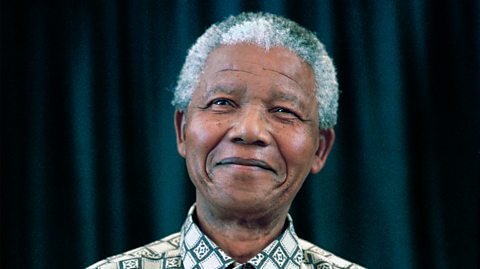
The term was originally coined by paranormal researcher Fiona Broome in the late 2000s. Broome came up with the phrase after finding she and many others shared the same false memory about Nelson Mandela.
In 2009, Broome discovered that she and hundreds of others shared the belief that Nelson Mandela had died in prison in the 1980s, when, in reality, Mandela was released in the 90s and became the South African President later that decade.
Mandela didn't actually die until 2013, yet people had vivid memories of his 1980s death - recalling news reports, reactions and footage of a funeral. Broome, fascinated by the spread of this false memory, began a website where people could discuss their experiences. And thus the Mandela Effect was born!
Famous examples of the Mandela Effect
From films to cereal to historical figures, examples of the Mandela Effect can be found anywhere! So let's take a look at some of the most famous examples, and what might be behind them!
1. Examples of the Mandela Effect in history
The most famous example of the Mandela Effect is, no surprise, the death of Nelson Mandela. Despite actually occurring in 2013, the wide spread belief he had died in prison in the 1980s continues to fascinate people across the internet.
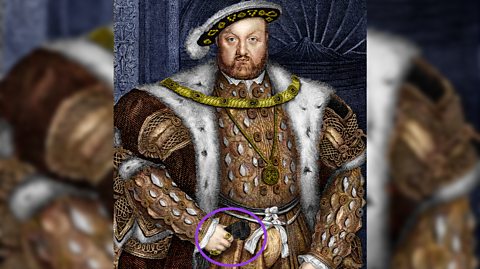
Mandela was far from the only historical figure to fall foul of this phenomena, however. Another famous focus of the Mandela Effect was Henry VIII, who is sometimes remembered as standing in portrait holding a turkey leg - despite the fact no such painting exists!
Alongside the death of Nelson Mandela, the canonisation of Mother Theresa (the process someone goes through to become a saint) is oft remembered as occurring in the 1990s, despite the fact it didn't take place until 2016!
2. Examples of the Mandela Effect in pop culture
Far from content in muddying the waters of historical memory, the Mandela Effect has also stretched over into pop culture!
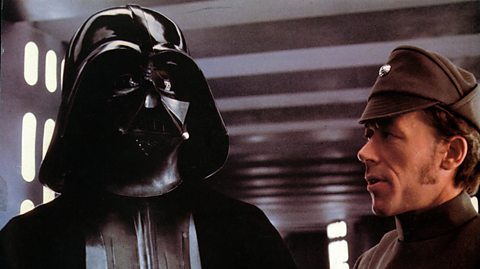
Perhaps the most famous moment of the Star Wars saga is (spoilers!!) Darth Vader telling Luke Skywalker that he's actually his father. But no matter how iconic this moment has become, that hasn't stopped it being widely misquoted. The line is generally repeated as "Luke, I am your father!" - but that isn't actually Vader's line! The actual line is "No, I am your father", and serves as only one example of a wide spread movie misquote.
Another prominent misremembering comes from the original Snow White, and the Evil Queen's iconic line "Mirror, mirror on the wall, who's the fairest of them all?" Well, we wouldn't go muttering that in your mirror hoping for an answer, because it's the wrong line! The Evil Queen actually says "Magic mirror on the wall…" in what must go down as one of the most famous misrememberings of all.
Any fans of Star Trek out there will also know "Beam me up, Scotty" is one of the original show's most iconic lines. There's just one issue with that, though - no one ever said it! 79 episodes of The Original Series aired and not a single one contained those words in that order.
Some other examples include the Wizard of Oz, in which no witches, green or otherwise, utter the line "Fly my pretties, fly". And iconic 1940s classic Casablanca, which does not feature the line "Play it again, Sam."
3. Examples of the visual Mandela Effect
The visual Mandela Effect refers to wide spread mistaken memory related to images, in particular logos and mascots.
Curious George is frequently misremembered as having a tail, which he doesn't. Kit Kat is often remembered as containing a hyphen, which it doesn't. And some assume Fruit of The Loom's logo contains a cornucopia when, you guessed it, it doesn't!
Arguably the most famous example of this comes in the form of the Monopoly Man. You'd think a cartoon with his face plastered atop board game boxes across the land would be pretty easy to remember - but think again! Many on the internet seem to remember the Monopoly Man as sporting a monocle, in addition to his top hat and cane - but in reality, he never has!

Researchers have suggested a few reasons for this. One is that people are conflating the Monopoly Man with Mr Peanut, another famous company mascot. Additionally, it's been suggested by scientists at the University of Chicago that people misremember the Monopoly Man's monocle because they expect him to have one, due to his supposed wealth and status.
Examples of the visual Mandela Effect expand beyond logos and mascots, however! You may recall C3PO and his fully golden frame in the original 1977 Star Wars movie, but did you know he actually had a silver leg? Or what about Pikachu, who's tail is completely yellow, despite many on the internet claiming to remember a black marking on the very end.
4. Why does the Mandela Effect happen and what causes it?
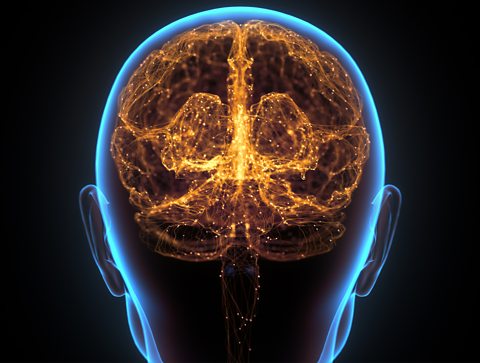
There's a lot of theories about what could possibly cause the Mandela Effect, with scientists, researchers and almost anyone with a keyboard putting forth their best guess.
The most frequently expressed, is simply that people sharing their own mistaken memories has altered the memory of others. For example, the phrase "Luke, I am your father" is shared so frequently online, that it's probably just seeped into people's memories over a long period of time - replacing the memory of the original line.
Another common explanation for the Mandela Effect is confabulation, which is a process where the brain fills in missing gaps in your memory with incorrect information. Scientists at the University of Chicago did find some evidence for the causes of the visual Mandela Effect, but ultimately determined the phenomena couldn't be pinned down to one specific cause.
Other people on the internet have come up with theories of their own, from beliefs rooted in science to total flights of fantasy. One theory is that the Mandela Effect serves as evidence of alternate realities, with details slipping through from one to the other causing wide spread false memories.
