It’s that time of year again: January is approaching, and you might feel that itch to turn over a new leaf.
Maybe you’re looking to wake your brain up from the winter slump, or work up to some more exercise post-holiday stuffing – but it doesn’t have to be a chore. Here are a few fun, healthy and challenging ideas to help inspire a new you in 2022.
If you have…
15 mins: Decorative shoe lacing
Not only is tying shoes quickly and securely a useful practical skill, but decorative lacing can add flair to any old pair. There are hundreds of ways to tie your shoes and picking a creative pattern is a quick way to add a personal touch to your style without spending any money.
Did you know competitive speed-tying is also a thing? The fastest time to lace a shoe is 15.51 seconds, a Guinness World Record set by Álvaro Martín Mendieta in August 2020. Álvaro has also achieved Guinness World Records titles for “Most shoelaces tied in a bow blindfolded in one minute” and “Fastest time to tie three pairs of shoelaces in a bow”.
Bows are a great place to start – try mastering the neat ‘bow tie’ lacing style first and move onto more intricate patterns as a challenge.
One day: British Sign Language alphabet
Learning any language has been proven to be good for the brain as well as your CV, and more importantly it can increase the amount of people you can communicate with. British Sign Language (BSL) is often overlooked when we think of language learning, but it’s been recognised as an official language of the UK since 2003. Learning to sign comes with the extra benefits of improving visual perception skills as well as other spatial abilities such as mental rotation – so why not spend the day learning the alphabet and a few key phrases? Get started here with Charlie Raine.
WATCH: Charlie Raine shows you how to sign the letters A-G in BSL
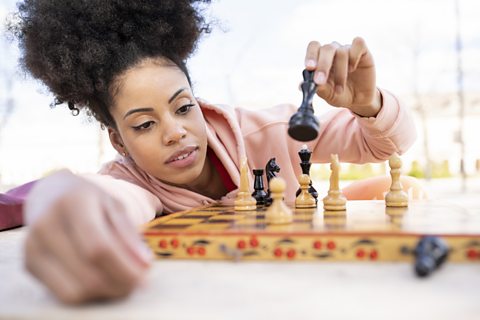
One week: Simple chess strategies
In 2020 Anya Taylor-Joy showed us just how exciting the world of chess can be in the historical series The Queen’s Gambit – making the game more popular than ever (you certainly don’t have to be a prodigy or a maths whiz to learn!).
Chess is great for developing critical thinking and problem solving, as you have to consider your opponents’ next moves as well as your own. But it’s not just about moving pieces willy-nilly – there are strategies you can learn to win a game in a set amount of moves, and techniques to counter those strategies. First have a go at learning the names of the squares as this will help you memorise strategies. Then focus on centralisation (controlling the centre of the board) and more advanced techniques such as the Danish Gambit or the Sicilian Defence.
One month: Hula-hooping
Did you know hula-hooping is a fantastic way to get fit? Performing the hip roll motion while keeping the hoop at the torso requires abdominal and oblique strength. These are big core muscles that we all need to stand and sit upright, so keeping them strong can help with posture, endurance, and body awareness.
If you've never tried hula-hooping before, here are some simple steps to get you started. Don't forget to clear the area you're practising in!
- Hold the hoop in both hands at waist-height and stand with your legs about shoulder-width apart, one foot forward. Keep your knees slightly bent and relaxed as possible, as rigid legs will throw off your hoop's momentum.
- Keep your spine straight as leaning will cause the hoop to drop - imagine balancing an apple on your head!
- A common mistake is moving the hips in a circular motion. You will actually need to make a back-and-forth motion to keep the hoop spinning, transferring your weight from foot to foot.
- Start with the hoop touching your lower back. Rotate the hoop to one side slightly and then give it a good push in the opposite direction. Shift your weight, paying attention to where you need to push to keep the momentum going.
- Keep practising! Push forward when the hoop is touching your back, and push back when the hoop is touching your belly.
- Tip: Changing which foot you have forward might help you control the hoop, depending on what you find comfortable. Experiment on both sides and make sure to practise spinning in both directions to help your brain get used to the motion. And don't forget - it's not a competition, so it's totally fine if it's not your thing!
There are lots of seated activities you can do using a hoop too, and once you've mastered a few of these techniques you can create your own personalised flow. You could start by moving the hoop from one hand to the other, then move to 'palm spins', which is when the hoop spins on your open hand. You can also use the hoop as a dancing prop to create beautiful choreographies. The possibilities are endless!
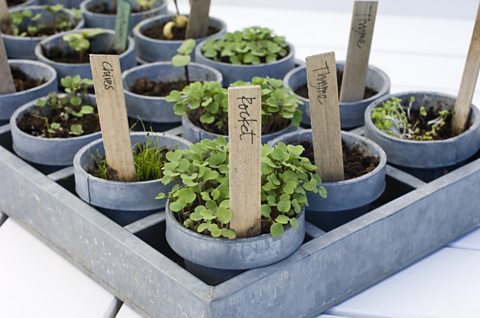
One year: Growing herbs
Herbs are some of the easiest plants to grow as they don’t require much upkeep, often have little insect damage and are a great introduction to horticulture and vegetable gardening.
Not only are they a sustainable way to improve home cooking, but they can be grown all year round – indoors or out. They’re also easy to cultivate, meaning a little cutting can be re-potted and given away as an eco-friendly gift.
Improve your knowledge of sequencing by learning how long each plant takes to grow and which seasons they thrive most in. If you started in late January, for example, you could have your own basil supply by later on in the year!
Most herbs are aromatic, which makes them irresistible to butterflies, bees and other important pollinators. Keep them outside or on a window sill to encourage spring wildlife to visit your plants.
Why do we find it so hard to wake up in the mornings?
Many of us dread the sound of the alarm - but what is it that makes getting up such hard work?

'We learned how to 'pop' in our wheelchairs' - a ballerina's story
Kate Stanforth is a dance teacher who appears in TV commercials
Does willpower really exist?
There may be more behind keeping - or ditching - those new year resolutions