In 2008, Planet Earth went missing. One key detail lead the Doctor and Donna Noble to finding and saving the world: that the bees were disappearing.

In the episode of Doctor Who called ‘The Stolen Earth’, the Doctor deduced that the bees were sensing great danger and returning to their home planet. They tracked their escape backwards to find the Earth.
In reality, some species of bees are in fact disappearing, and while they may not be aliens, their loss could potentially spell quite a lot of trouble.
How do they bee-nefit us?
To understand why losing them is such a problem, we need to understand what bees do for us in the first place.
Of course we know that some species produce honey, without which the world would be a much bleaker place, but they are also one of the planet’s most prolific pollinators.
Pollination is a process that fertilises plants and allows them to produce seeds, meaning more plants grow and we get more delicious food or beautiful flowers. While bees aren’t Earth’s only pollinators, they’re considered to be among the most effective. This is because, while beetles, moths and even some animals like lizards all pollinate, they only feed enough for themselves, whereas bees take more so they can bring it back to their nests and hives. This means they visit a great many more plants than other pollinators and so carry more pollen between them.
Dave Goulson, bee expert and professor of Biology at the University of Sussex, says that 87% of all plant species on the planet need animal pollination. Not only does this allow for biodiversity in our wildlife, but this is extremely important for crop growing. Though grain crops rely mainly on wind to pollinate, it’s estimated that a third of the crops that produce the food we eat rely on animal pollination.
What happens if they all buzz off?
This isn’t a hypothetical situation anymore - it’s happening now. A global study in January 2021 (led by the Institute for Research on Biodiversity and the Environment at the National University of Comahue in Argentina) found that a quarter of all bee species in the world haven’t been seen since 1990. Not only that, but in the UK, a third of our wild bee species are rapidly declining.
There are two main reasons for this. The first is that wildflowers in the UK are on the verge of disappearing altogether - it’s lots of bee species’ preferred habitat, but according to Kew Gardens, 97% of the country’s wildflower meadows have been eradicated. The other is that large scale use of pesticides in farming are extremely harmful to the bees that pollinate those particular crops.

So what would happen if they were to all go? For starters, our diets would be severely restricted. We wouldn’t lose all of our harvests but crops that rely on bees to pollinate will yield far less than we’re used to, which would have a huge impact on our food supplies. There are also some fruit and veg we’re used to eating that would completely disappear from our supermarket shelves, and honey would become a thing of the past.
Not only that, but as Prof Goulson explains, if non-food related plants that bee pollinate disappeared, there could be further problems: “All the wildflowers we see in the countryside would disappear [without bees], which would have knock-on effects for the things that eat those plants and so for the whole ecosystem.”
But there are things we can do to help. For starters, environmental groups and the UK government are urging people to not make their gardens too neat. One way of doing that is to let wildflowers grow.

Changing the way we see some weeds may also help - dandelions and other lawn weeds provide lots of food for bees.
But if you don’t have a garden, Prof Goulson says that the choices we make when we’re buying food in the supermarkets can also have a massive impact - by eating less meat and more organic fruit and veg, he says we can inadvertently help bee populations in a big way, and the more people that do it, the more of an effect it will have.
On a very micro level, you can also help bees that look like they’re struggling in hot weather. If you see a bee on the ground moving very slowly, chances are it’s extremely dehydrated. Depending on where you are, you can place a spoonful of sugar water near to it for it to drink. The bee will hopefully revive in no time!
For more inspiration on how to save the bees, check out Radio 2's Big Bee Challenge!
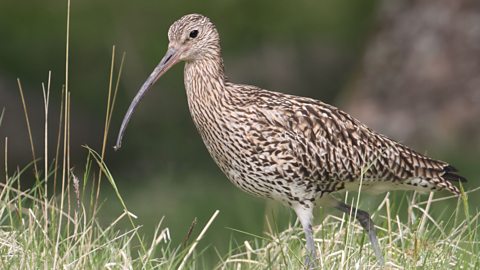
Five rare birds to look out for this summer
Keep 'em peeled for these difficult to spot feathered friends
Comforting science facts to get us through hard times
Science has the capacity to inspire, give hope and make us feel amazing. Here are some examples of how.
Four things you didn’t know you could do with food waste
Before you chuck it out, read this!