Key points
A force can be a push or a pull. When a force is exerted on an object it can change the object's speed, direction of movement or shape.
Pressure is a measure of how much force is acting upon an area.
Pressure can be calculated using the equation pressure = force ÷ area. Therefore, a force acting over a smaller area will create more pressure.
Watch the video to learn the difference between force and pressure.
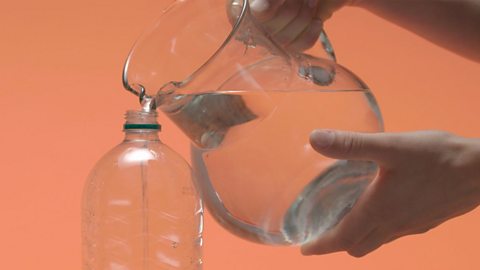
Try this experiment

Image caption, Click to see a step-by-step slideshow.

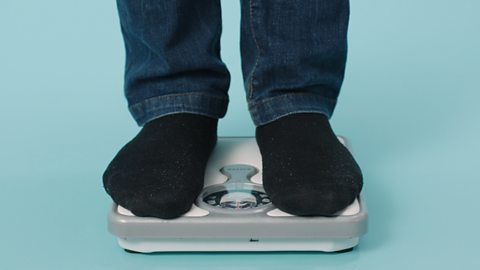

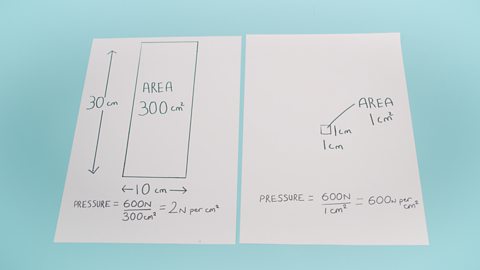

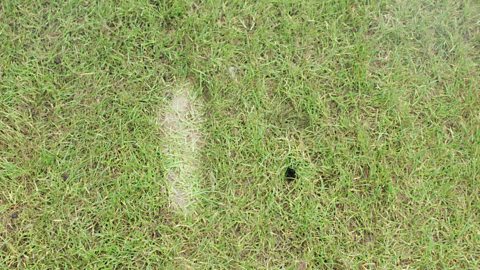
1 of 7
How do we measure pressure?
Mass is a measure of how much matter there is. Gravitational force is the pull of the Earth's gravity on that mass. Each kg of mass is pulled down by the Earth with a force of 10 N.
Everything has a mass (kg). To convert this to force (N) on Earth, we multiply the mass by 10.
We can then calculate pressure using: pressure = force ÷ area.
If you stand on one foot (rather than both feet), the pressure exerted would be twice as great because it is spread over a smaller area. Similarly, a stiletto heel creates far more pressure than a normal shoe.
Did you know?
A person wearing a stiletto can exert more pressure on the ground than an army tank! This is because the army tank uses caterpillar tracks to spread its weight (and therefore force) over a larger area, in order to reduce the pressure. If it didn't, it would sink into the ground and wouldn't get very far!
Test your knowledge
Solve the Story!
An exciting new series from the Other Side of the Story, designed to help young people strengthen their media literacy skills.

More on Forces and movement
Find out more by working through a topic
- count15 of 16
- count16 of 16
- count1 of 16
- count2 of 16