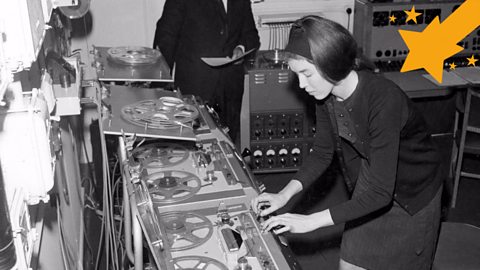
After a week of staying indoors for the safest of reasons, your favourite tunes and artists will have racked up even more plays than usual.

You never, ever, want to get bored of the soundtrack to your life by listening to it too often. So, to keep the music going, why not make your own?
We’re here to show you how to do just that, and all from the comfort of your own home.
Who knows? You may compose this summer’s biggest hit without even leaving your bedroom.
Use your voice
Not all music requires a sung vocal but when it does, it can be rather special. Think of the goosebumps you get from Queen’s Bohemian Rhapsody or one of Adele’s soaring ballads.
The voice is one of the easiest ways for you to make music. It requires no equipment, it’s absolutely free and can really allow you to unleash your creativity. That can be through singing, rapping, or even doing some clever things with the spoken word and a backing track.
If you need a little help to get started, check out how established artists have made music over the years. Our article on British Pop Music features plenty of classics. If you need a bit more time to think before getting creative, try our quiz which tests your UK pop knowledge.
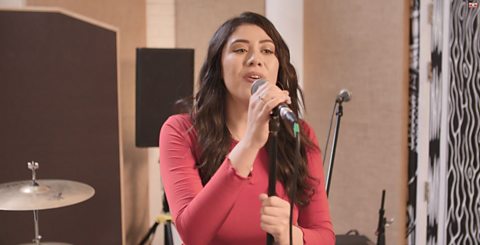
Songs rarely emerge fully formed. They are built up from different parts which need to work together to make the end result worthwhile. Two components that really make a memorable composition are the lyrics and the melody.
These can be inspired by anything, from what’s going on around you to your favourite story, or even a poem that inspires you.
This article about writing your own melodies includes a simple step-by-step tutorial, as well as some insight on how pros like Ed Sheeran, Lewis Capaldi, Dizzee Rascal and Camila Cabello use it in their music.
Find your best beat
Although a song is built up of different components, the same elements don't always have to be present to make a composition work. For example, not every love song you hear will have a stand-out beat or rhythm, but it will probably have a memorable melody.
By comparison, rap doesn’t always need a melody, but it does require a good beat. You can find examples of a beat online, or just create your own by clapping your hands to a rhythm, or with percussion.

The beat can help you write lyrics, and make the right words fit your composition.
The beauty of lyrics is that they can be about absolutely anything you like; romance, animals, an evironmental message, or even your love of Brussel sprouts. It’s entirely up to you.
Find out more about writing lyrics here, with advice from stars on how they pair words with their music.
If rap is more your thing than a power ballad, rapper C Cane has the lowdown on getting started.
Don’t forget, your vocal chords are packed with so much potential. They can help you sing, rap, and can even mimic what other instruments sound like.
Beatboxing is a popular performance style where performers imitate the sounds of percussion instruments, often on the spot.
Click here for some improvisation and beatboxing tips and read about how Stormzy, Sarah Vaughan and Bobby McFerrin use improvisation in their music.
Junk percussion
Did you know that you can build a drum kit using the things in your house?
Not with your mum’s best tea set (that won’t end well, ever), but you can use empty plastic tubs of different sizes to make drums of different pitches. Try hitting them with your hand or an improvised drumstick to see which ones sound the highest. Then it’s case of arranging them into your very own percussive powerhouse.
Rice is an important part of the larder at the moment, but if you are able to spare a handful, it can go into an empty bottle or tub. With the lid secured, you have your very own shaker to move with the beat of the music. Find more ideas like this in our article on percussion, drums and beats.
Digital DJ
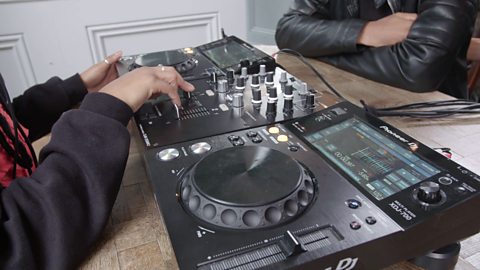
By this stage, you could be close to having your own home-made orchestra but if your heart belongs to the dancefloor, you can try DJing from your own home too.
There are free apps you can use on a computer, tablet or smartphone that are almost the same as being in the booth.
Import a few of your favourite tracks and beats and see how you can bring in DJ skills such as mixing, cueing and scratching - find out more here.
Found sounds
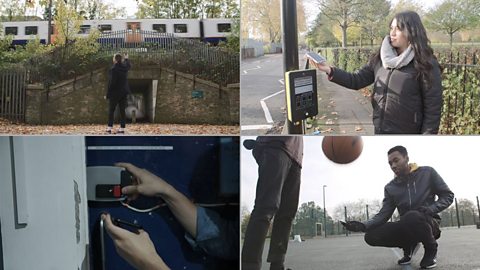
Everyday life has a soundtrack. Birds singing, wind blowing, traffic passing by: music of a kind is all around us, all of the time.
You could make a truly unique track by recording the sounds you hear, then mixing them with editing software. Most mobile phones have a sound recorder built in, and you can find free music editing software online.
To find out more about using found sounds to make music and how some examples have turned up in popular music, take a look here.
And who knows? One day your found sound creation could be just as popular too.