When is Mother's Day and why do we celebrate it?
In the UK, there are so many annual dates, festivals and celebrations that it can be hard to keep up with them all. But one that always feels like it comes around quickly after the New Year is Mother’s Day.
Every family will have its own traditions, but it’s a celebration that’s been around for a long time and has looked very different throughout the generations. But why do we celebrate Mother’s Day?
Here, BBC Bitesize takes a closer look at the history of Mother’s Day in the UK, from its early origins to how it has changed over time. You can also find out more about how the holiday is celebrated worldwide below.
What is Mother's Day?

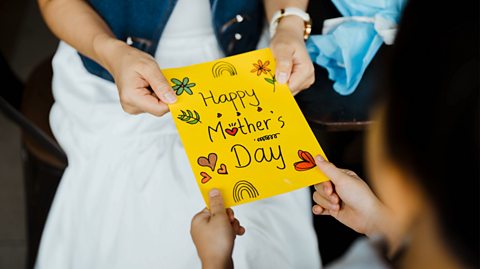
As its name suggests, Mother’s Day is an annual celebration honouring mothers and all that they do for us throughout the year. But it is much more than that and not confined to celebrating only mothers.
Mother’s Day is also a time to celebrate all maternal bonds and the strong women in our lives who have influenced us and who mean the most to us. It is a day to honour our nans, aunties, sisters, stepmums, teachers, carers and many other inspiring role models and female figures.
Today, Mother’s Day usually involves gift-giving, cards, and family gatherings, as well as other family traditions. But it hasn’t always been that way.
Why do we celebrate Mother's Day?
Mother’s Day has been celebrated in various ways around the globe for centuries – and looks quite different to how generations know it to be today. Its origins in the UK are said to date back to the Middle Ages and the celebrations were less focused on mothers and more about their homes and “mother churches.”
Centuries ago, it was tradition for people who had moved away to come back to visit their home and the churches they were usually baptised or used to visit on the fourth Sunday of the Christian festival of Lent. This was known to many as Mothering Sunday.
A later custom also saw domestic servants and live-in apprentices get the day off to visit their mothers, family and local churches. But many say Mother’s Day evolved into the celebration we know today through the influence of American Mother’s Day over a century ago.
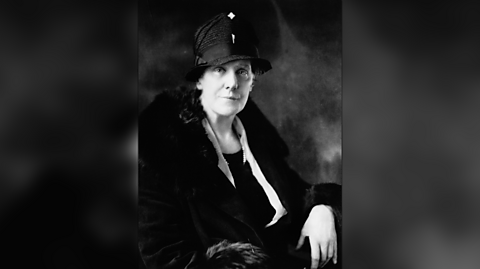
The American Mother’s Day was founded back in 1908 by Anna Jarvis in West Virginia. She campaigned for the special day to celebrate mothers following the death of her own mother, Ann Reeves Jarvis, who had long wanted the work of mothers to be recognised.
Following this, in the 20th-century, the American holiday also saw commercial success, with many countries since adopting the tradition of buying cards, flowers and going for family meals. However, the commercialisation of Mother’s Day is said to have horrified Anna Jarvis, who at one point campaigned to have the day rescinded.
When is Mother's Day 2026?

In the UK, Mother’s Day is celebrated annually – but doesn’t always fall on the same day each year. This is because the centuries-old Christian tradition, also known as Mothering Sunday, is tied to the lunar calendar which changes every year.
Mother’s Day in the UK is always celebrated on the fourth Sunday of Lent – three weeks before Easter Sunday – which usually falls in March or early April. In 2026, Mother’s Day will be celebrated on 15 March.
When is Mother's Day celebrated worldwide?

Mother’s Day is held on different days every year around the world - usually due to religious traditions or national dates that have been in place for generations. Some celebrate on the same day it falls on in the UK, but different cultures and countries also celebrate Mother’s Day and have their own traditions on a separate day.
For example, Nigeria and Ireland are among those that celebrate Mother’s Day on the fourth Sunday of Lent like the UK. But International Mother’s Day is widely celebrated on the second Sunday in May by countries like Australia, USA, Canada, Germany, China and Japan.
Several countries also celebrate Mother’s Day on 8 March, which coincides with International Women’s Day. This includes the likes of Albania, Azerbaijan, Bulgaria, Moldova, Montenegro, Uzbekistan and more.
Other countries celebrate Mother’s Day on the first official day of spring every year, which symbolises the nurturing nature of mothers and renewal. This includes Egypt, which has continued this tradition since 1956.
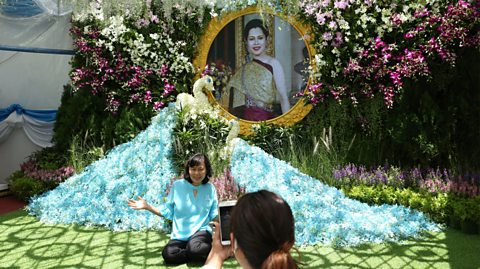
Since 1922, Mexico has celebrated Mother’s Day on 10 May, whereas in Thailand, it is celebrated annually on 12 August to coincide with the birthday of Queen Sirikit, who was honoured as mother of the nation. In France, Mother’s Day is celebrated on the last Sunday in May, unless it coincides with Pentecost (Whitsun).
There are so many more to mention with fascinating stories behind them. And similarly, not all nations celebrate Father’s Day on the same day every year, or the same day as other areas around the world.
What Mother's Day traditions are there?
As mentioned earlier, in the UK and around the globe Mother’s Day usually involves gift-giving, cards, and family gatherings to mark the occasion. There are so many to mention – but here, we look at just a few of the unique traditions worldwide.
Coinciding with the birthday of Queen Sirikit, in Thailand, it is tradition to to wear light blue – the Queen’s colour – as well as to give mothers white jasmine flowers, which symbolise purity and enduring love. In Japan, Mother’s Day falls on the second Sunday of May and it is tradition to gift red carnations, which also symbolise love.
In Mexico, families gather on 10 May for meals and often hire mariachi bands to play songs such as Las Mañanitas. The celebration is known as Día de Las Madres. In some countries, it is instead celebrated through a festival.
In Ethiopia, mothers are celebrated during a three-day festival called Antrosht, usually held in early autumn. In Serbia, Mother’s Day, known as Materice, is celebrated on the second Sunday before Christmas as part of a three-week holiday focusing on family unity – consisting of Children’s Day, Mother’s Day and Father’s Day.
What if you don't feel like celebrating?
Depending on your situation or circumstances, you and your loved ones might not feel like celebrating Mother's Day - and that's OK. Here, we have some more articles that might help.
