Welcome to The Regenerators.
The natural world is full of wonder.
The natural world is full of wonder. The oceans, plants and animals work together to help give us the food we eat, the air we breathe and shape the places we live in. But nature isn’t just wonderful because it’s useful to us – it’s incredibly unique, rich in life and we are part of it.
Biodiversity is all the different kinds of life on the planet – it’s everything that’s alive. The loss of biodiversity can affect our lives as well as the living things around us, so the more we look after nature, the more it will look after us.
No matter what space you have, you can give back to nature. Hear from Amy Bray, founder of environmental charity Another Way, and her friends who are sharing their tips on how you can rewild your home and local area.
How can rewilding help nature?
Join these young people as they learn how rewilding can help the environment, and discover what you can do at home.
Amy: I love the natural world and it was spending time in nature that inspired me to do more to protect our environment.
We have lost 60% of the world's biodiversity since 1970 and habitat loss and destruction is the number one threat facing our planet today.
But luckily, there's lots that we can do to protect nature. It's as simple as going out and spending some time reading a book under a tree or going for a walk in your local park to connect to nature and inspire you and us to care more about protecting it.
Simeon: We're here at KNEPP to find out more about how rewilding can help the environment.
Ivan de-Klee: Rewilding can address climate change in a load of different ways. And if you're focussing on biodiversity conservation, helping natural processes restore this landscape, what you get is habitat creation shaped by the big herbivores creating homes for insects, birds, mammals, but also have carbon being drawn down from the atmosphere, slowing down climate change.
Simeon: So 20 years ago, I heard this was actually a farm. Like how did that change to this?
Penny Green: The farming was sort of put to one side as a result, we got this amazing habitat that's come up.
Noah: I think it's amazing that all this has happened in just 20 years.
Penny Green: I think it's given us all hope really, that you can turn around a landscape pretty quickly. You can go from a landscape devoid of life to something really just absolutely stuffed full of life and species turning up that we could never have even dreamed of.
Zaqiya: Okay, so I'm going to be having a go at making a bird box out of an old milk carton.
Amy: Two years ago, my charity planted 1700 native trees in this field with local schoolchildren, the local community, landowners and partners.
It was really brilliant to see children hands on planting a tree that they can come back and visit in 10 years time. The trees here in this woodland will help to reduce flooding, bring back biodiversity and they will also help to improve soil quality.
Noah: We're planning to do a little bit of rewilding on this field near our house. They've just dug this pond, which will encourage biodiversity different species of animals. We're just planning to sort of let nature take over a little bit more and you can just see like, there's so many more animals.
Zaqiya: In London, despite there being lots of green space, you don't really know much about the specific things that you can do for rewilding in those spaces. A lot of the time it's for quite a lot of recreational use.
Amy: So anything that you can do to give a little bit of space back to nature, whether that's creating a pond, whether it's planting some flowers and talking to your teachers about maybe planting some trees at school or growing some vegetables, because that will help your friends to get involved in nature as well and it can be so good for our own well-being.
It could make us happier, and it can give back some space to nature.
Learn about a local rewilding project
Have you heard of rewilding before? The purpose of rewilding is to protect an area and return it to its natural state by bringing back plants or animals that used to live there.
See if you can find a rewilding or conservation project near you. You can ask an adult to help you look this up online. They may have activities you can participate in or there may be opportunities for you to volunteer for the project.
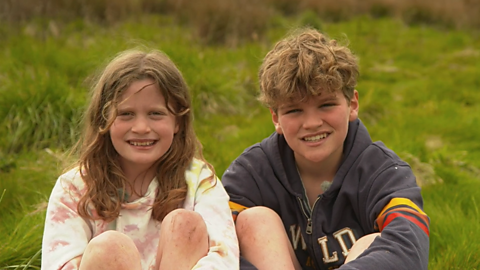
Simeon and Noah, who featured in our short film above, visited Knepp Castle Estate near West Sussex to find out how rewilding has transformed a farm into a home for a wide range of species.
Rewild your own home
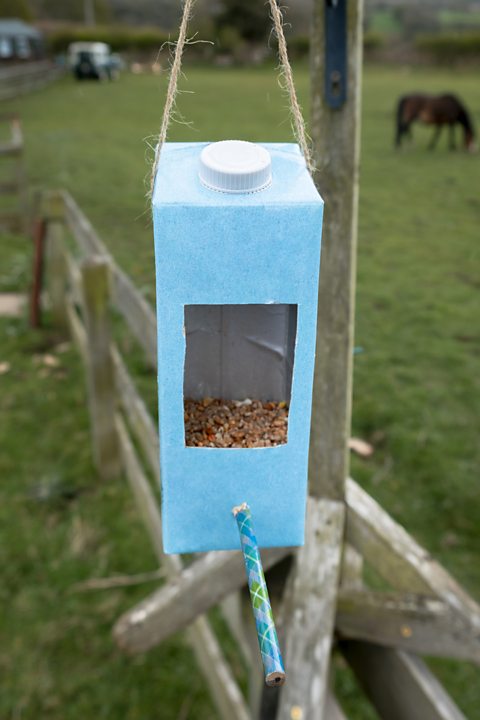
You can provide shelter and food for some animals by building a bird box, a bug hotel or planting bee-friendly flowers.
To create a bird box, you can use an old cardboard box. Make sure it’s sealed properly and cut up a hole for the entrance. Place it somewhere sheltered from the wind. If you want to go a step further, make sure there are bird feeders or there is bird food around nearby to attract the birds.
Rewild your neighbourhood
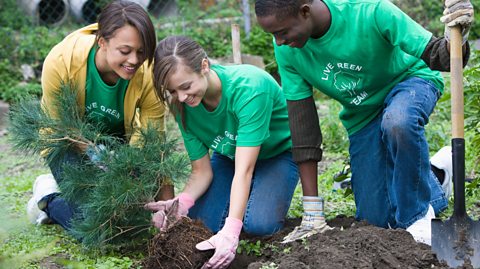
Thinking of planting trees in your garden or a green space near you? It’s a great idea, because trees are incredible – they give us oxygen and help combat global warming by removing carbon dioxide from the atmosphere.
If you’re planting them in a public space, make sure you have permission to do so.
The Woodland Trust suggests you choose your planting location carefully – think about it in relation to the surrounding buildings. You want to make sure that as the tree grows, the roots or branches don’t cause damage to any of the buildings. You can get an adult to help you to plant your tree.
It’s for everyone
Anyone can be involved in rewilding activities, and it can be as simple as allowing a small patch of your garden to grow wild, creating a pond or planting plant species that attract bees or insects on your windowsill.
Whatever space you have, try sharing it with nature. Because the more you give back to nature, the more you’ll get in return.
Make a difference
Discover more about the planet and how to protect it with the BBC.
Five ways to eat well for you and the planet
THE REGENERATORS
Can your hobbies be kinder to the planet?
THE REGENERATORS
Return to the homepage
Back to The Regenerators
BBC BITESIZE