Welcome to The Regenerators.

Food, glorious food.
We cook it. We eat it. We create new memories with it. It’s loved by people all over the world.
Yet food waste is still such a huge problem. According to the Food and Agriculture Organisation (FAO), if food waste were a country, it would be the third biggest greenhouse gas emitter in the world.
This is because it takes time and energy to produce and transport food, so wasting food means wasting these resources. More importantly, when food waste is dumped in landfill, it rots and degrades – releasing harmful greenhouse gases that can contribute to climate change.
How can our food be good for us and the planet?
Hear from Amy, founder of environmental charity Another Way, and other young people to find out how our food can be good for the planet.
Amy: I love food, we all love food. But food has a massive impact on our environment.
Food waste accounts for a massive percentage of greenhouse gas emissions and the food that we eat accounts for a quarter of our individual carbon footprint.
So what can we do to reduce the impact of the food that we love eating?
Charlotte: Making a shopping list to make sure that we don't buy any unnecessary food items gone through our cupboards, we know exactly what to add to our shopping list. It turns out we've got a lot of tomato sauce.
Also had to think about how we want to store our food to make it last as long as possible? Saved all our leftover sauce for our meal plan tomorrow.
Amy: So here we have some vegetable beds that my family and I built.
In this first bed we've got some French beans, which we've been enjoying the last few weeks. And the lettuce is really easy to grow you can just grow that in a trough if you have a really small garden.
Here I've got some carrots, which have grown really nicely. And then over there we've got some runner beans, which are my favourite. You don't have to know everything to start growing a few fruit and veg yourself.
Look up some online videos or read a book and it can be as simple as planting some tomatoes or strawberries or herbs in a pot on your windowsill.
Alicia: If anybody that knows me, I love my chicken.
So this is a bit scary for me I'm not going to lie to you, but we're going to make an attempt, jerk spiced lentil Bolognese. I'll see you on the other side.
If you close your eyes, it looks like mince.
Believe it and it will be. It smells nice though. Any vegan cheese?
Man: Buon appetito. I'll be the judge of this. It looks beautiful, I like the combination of lentils.
Alicia: Yeah, thank you. My first time, you know my first time making this.
Man: She done very, very well, actually.
Alicia: Yes, yes, I'll do it again.
Amy: Because you've grown it yourself, you're quite proud of it. So you definitely won't want to be chucking that away and I guess it gives you a value for food because you know all the effort that's gone into growing it.
Charlotte: It definitely changed the way I like shop. We didn't just use a shopping list because we made like a meal plan, we were buying things we were actually going to use. First of all, it was like a lot cheaper and like, second of all, like it was actually really useful having stuff that was specifically bought for a meal made the meals a lot nicer.
Alicia: I realised that I don't actually have to use meat for everything to eat there are alternative ways to still have a tasty meal. I haven't eaten mince since, literally because it was that good.
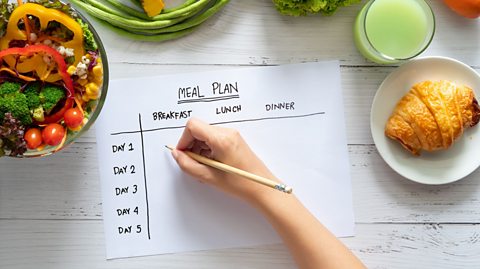
Plan your meals
This might sound boring, but it actually means you get to eat more of what you like! Suggest to your parents or carers what food you’d love to eat and help them create a shopping list based on the recipes. Don’t forget to check what you’ve got in the cupboards or fridge before you go shopping to make sure you’re not buying items that you already have. Planning what you want to eat can help you reduce waste and avoid buying items you don’t need.
Try plant-based meals
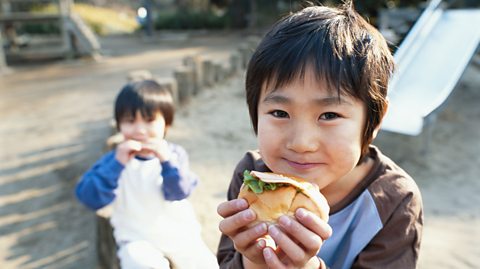
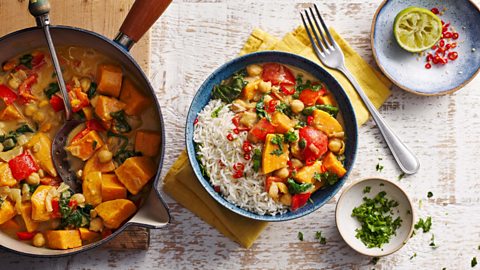
Try having one plant-based meal per week as they are low in greenhouse gas emissions. A plant-based meal is one that doesn’t include animal products.
If a plant-based diet isn’t for you, that’s okay! Try speaking to your parents or carers about buying meat and dairy from the UK because they have a lower carbon footprint than the global average.
Buying fruit and vegetables in season can also help to reduce the environmental impact of your food. You can tell if something in season by the label on the packaging – it will usually say where the food comes from. If you buy fruits or vegetables that are out of season, they might have been flown into the UK and could have a carbon footprint similar to meat.
Nothing beats home-grown food
There’s loads of stuff you can try to grow at home, whatever space you have.
- In the garden, you can use a peat-free compost to grow vegetables such as lettuce, broad beans, beetroots, or courgettes.
- On your windowsill, you can plant herbs such as mint and basil, or fruits like strawberries or raspberries.
Use your freezer more
Did you know that you can freeze bread, bananas, milk and… eggs? That’s right, most things can be frozen! It’s super easy to do and can help to reduce waste.
Check out these tips from BBC Food.
- Bread can keep for up to three months in the freezer. Put it in a plastic bag or freezer bag and make sure it’s sliced before you pop it in the freezer, then just defrost in the toaster or oven.
- Bananas can keep for up to six months in the freezer. Peel them and cut in half (or into smaller chunks), and they’re ready to be added to your smoothie or breakfast tomorrow.
- Eggs can keep for up to three months in the freezer. Don’t freeze them in the shell though! Crack an egg open into a resealable container lined with a cling film or beat it and pour into a box.
- Milk can keep between three and six months in the freezer. You can pour it into an ice cube tray and, once frozen, just pop one of the ice cubes into your tea.
Make a difference
Discover more about the planet and how to protect it with the BBC.
Can your hobbies be kinder to the planet?
THE REGENERATORS
How your wardrobe could help protect the planet
THE REGENERATORS

Back to The Regenerators
BBC BITESIZE