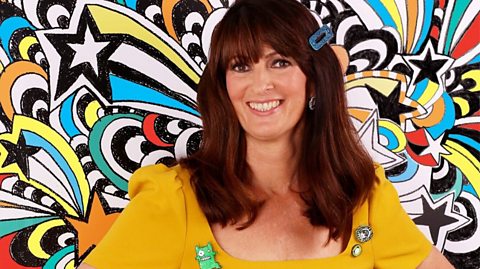
Author and illustrator Liz Pichon has sold over 16 millions copies of her Tom Gates books worldwide.
Liz told BBC Bitesize she was really bad at spelling in school but loved drawing - it was only when her young son was diagnosed as dyslexic that Liz realised that she was too.
She told us her aim is to create books she would have loved as a child - full of pictures, doodles and vibrant text. So we asked Liz how she comes up with her ideas and for a list of 5 books she found inspiring to read.

Liz Pichon's five reading recommendations
- Beano and the Phoenix comics (Bunny vs Monkey by Jamie Smart came from him working on the Phoenix comics too)
- Captain Underpants by Dave Pilkie
- Grimwood by Nadia Shireen
- Silly Verse for Kids by Spike Milligan
- Revolting Rhymes by Roald Dahl
Plus a special mention for a wonderful book that is out of print but you might find at the library, The Bad Speller by William Steig who wrote Shrek.
Want to write but don't know where to start?
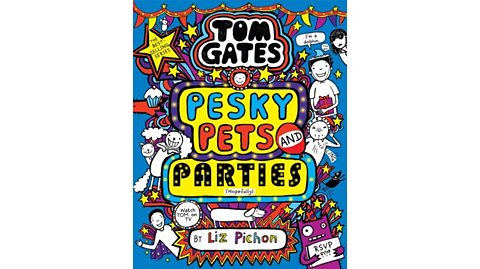 Image source, Liz Pichon
Quite often, Liz says, she’ll start with a title for a book because “it gives you a bit of a structure”. Even though her books have been translated in to 47 different languages and the 24th one in the Tom Gates series, Pesky Pets and Parties, is released October 2025, Liz still feels a mild panic before starting to write. “I think Tom's pretty much done everything," she explains, "but if you can think of a fun title that quite often sparks off ideas”.
Tom’s latest adventure is a perfect example: “Straight away you're thinking, okay pesky pets and parties, what could happen?” Liz says she’s always collecting little ideas, “a funny article or a picture or I hear somebody's conversation”. She then stores that in a notebook or creates little pictures.
These scenes help Liz start writing. For the latest book, a post on Instagram gave her a great idea: “A lady was talking off camera saying ‘unfortunately my car's broken down, which would be fine if I didn't look like this…’ The camera spun round and she was dressed completely as a Smurf. Blue face. All blue.”
This inspired Liz to thinking Tom could go to a party dressed up as a dolphin. She explains how she builds more fun into the story by making him go to the party on the wrong day and paint his face with old blue face paint he can't quite get off.
Liz then builds up more layers. What if his parents can’t come and get him straight away? “So you see how you just start off with one little picture or an idea. Then you start thinking about all the ways that things could go wrong and how to solve a problem,” she says.
Liz also work with words and pictures at the same time: “A bit like a comic, where I'll just put these little boxes down of all these different things and then you start gradually looping them together until they make a story.”
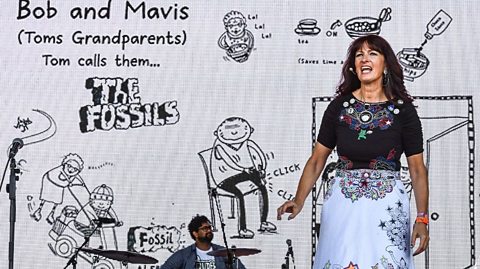
Creativity? “It’s absolutely vital”
“Because I’m dyslexic,” Liz says, “I think about things very visually and everything helps to tell the story”. Liz fills her books, Tom Gates, Shoe Wars and The Mubbles graphic novels, with pictures, music, poems and characters creating things. "I really wanted to put all the things in the books that I loved as a kid,” she says. Liz also uses fonts, doodles, drawings and page-turning moments to keep readers reading.
Liz says one of the ways she learned how to draw when she was a child was to copy her favorite characters from books or comics.
“Kids get very worried about making a mistake and doing things wrong, but actually just being able to put pen to paper,” she says, is key.
More in common:
Humour and everyday life are important to Liz when writing. Her books are about the small, funny details young people have in common: “Sibling rivalry, teachers, pets and school dinners. Some things are different, obviously, but lots of things are the same.”
Liz says: “I think that's one of the reasons why children all over the world enjoy them, because they can put themselves in the books.”
Five tips from Liz Pichon to help you enjoy reading:
- Choose your own stories. It can be books on insects or how to cook. If you like a sports star, find a book about them or their childhood, anything that hooks you in.
- It doesn't matter if it's got pictures in it. It doesn't matter if it's a graphic novel. It's the process of finding a book and enjoying it and loving it.
- Audio books are brilliant especially if you’ve got the book in front of you and can listen to the story at the same time. Audiobooks are also great for in the car, something you can all enjoy.
- If you love a TV show that's based on a book or a comic, that can be a great way to discover new things to read.
- Don’t worry about reading the same books over and over again. It's that physical thing of picking up a book, looking at it and spending a bit of time on your own, getting into that habit.
And some tips for budding writers...
For those of you who’d like to try writing Liz has this advice: “Every one of you have got stories that you can tell. You have to get them out of your head and onto a piece of paper in some way.”
Liz suggests keeping a little notebook to write things down or a diary: “I still have scrapbooks I used to make during the holidays, letters and little cards. A lot of that stuff has found itself filtering into the Tom Gates books.”
She smiles and adds: ”I say this quite a lot, but nobody's having more fun than I have, I'm still making drawings on shoes. Can you believe this is my job?”
For further inspiration and advice about writing, head over to the BBC's 500 Words competition, inviting you to 'Write a story you would love to read'.
Here, TV Chef and children's author Jamie Oliver shares his advice for writing a 500 Words story with dyslexia.
Plus, other famous faces share their top tips on finding inspiration for a great story, including Leigh-Anne Pinnock, Olly Murs and Sara Cox.
This article was published in October 2025
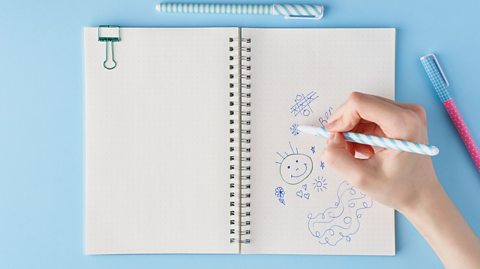
Doodling - what are the hidden wellbeing benefits?
BBC Bitesize explores the hidden wellbeing benefits of picking up a pen and doodling
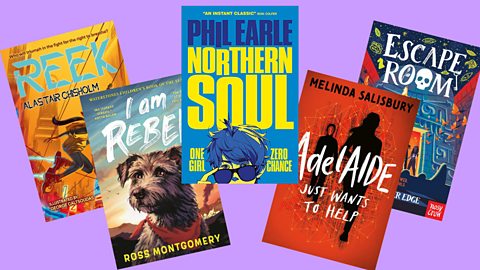
Bitesize Recommends: Five books for reluctant readers
BBC Bitesize brings you five great summer books - recommended by best-selling author Chris Bradford - to help make sure you love what you pick up and read over the holidays.
What is dyslexia and how can I help my child?
To offer advice on the best way for you and your child to approach it, Parents' Toolkit has spoken to the British Dyslexia Association and to Professor Maggie Snowling