What is gardening?
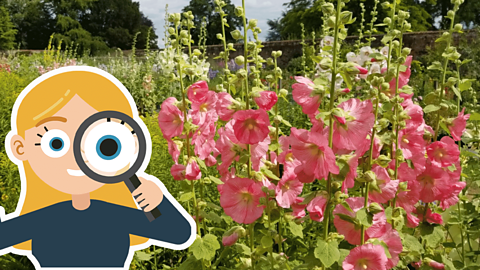
Gardening is when people grow flowers, plants, and even food, like fruits and vegetables, in an outdoor space.
Gardens come in all sorts of shapes and sizes. They can be big or small and they all look different.
Gardening is fun because you can watch plants grow, see colourful flowers and spot animals, like birds, bees, and butterflies.
Science

Plants grow all over the world, in gardens and in the wild.
Lots of people like to plant flowers in their gardens to make them bright and colourful.
Here is some more information, along with some videos and activities you could try.
What do plants need to grow?
Plants need certain things in order to grow well and look their best:
- water
- light
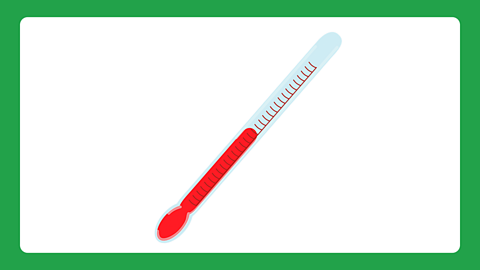
- the right temperature
- air
- time
Have a look at this slideshow to find out more about what plants need to grow and stay healthy.
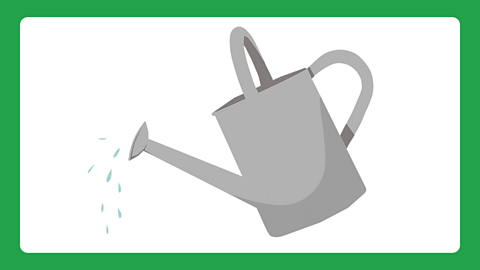
Image caption, Water
Plants need just the right amount of water to grow. Without enough water the plant won’t be able to make enough food inside its leaves. If a plant has too much water then the roots will rot, which means they won’t be able to take up any water.
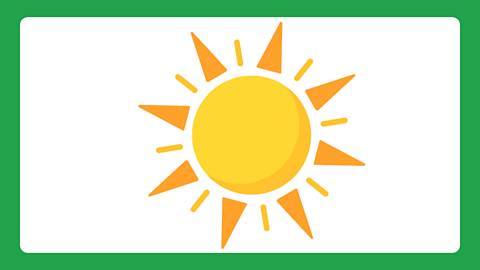


1 of 5
Minibeasts
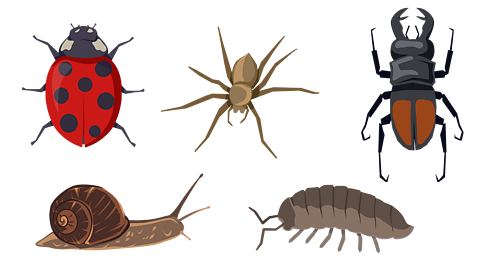
Gardens and green spaces are not just full of plants and flowers, they are home to many tiny creatures such as:
- insects, like ladybirds and beetles
- crustaceans, like woodlice
- molluscs, like slugs and snails
- arachnids, like spiders and mites.
You can find them hiding under stones and logs, in leaf piles and in the ground, even under plant pots.
Activity - Minibeast hunt
Go on your own minibeast hunt with this fun activity sheet.
With an adult, explore your garden, park or green space and see which minibeasts you can spot!
Discover more on KS1 Science
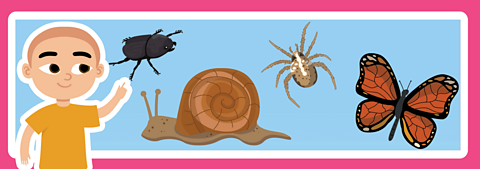
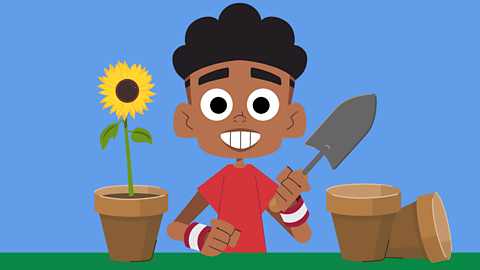
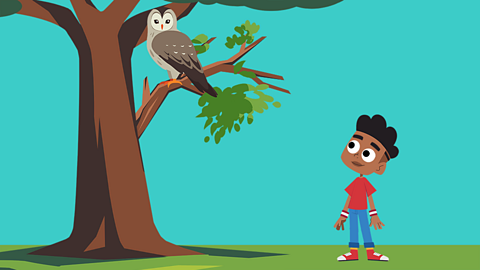
Take a look at these articles to learn more about plants and animals you might see in a garden or outdoor space.
Geography

As well as flowers and plants, you can grow fruit and vegetables in a garden.
Different fruits and vegetables need certain conditions to grow.
Why not have a look at the information, videos and activities below to find out more?
Growing food around the world
Countries around the world grow different types of fruit and vegetables.
This is because some countries are dry and hot, while others are cooler and wetter. For example:
In the UK, fruit such as apples grow well, because the weather is colder in the winter and warmer in summer.
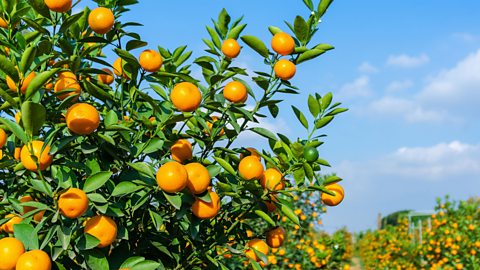
In Spain, oranges grow well because it is warm and sunny for long periods of time.
Activity - Regrow some vegetables
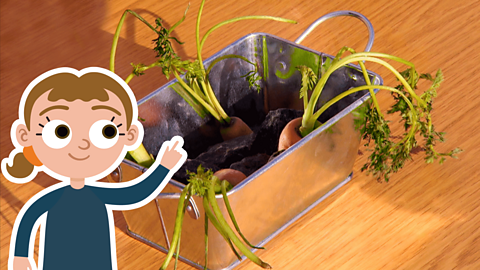
Did you know it's possible to regrow the vegetables you buy in the shops?
You don't even need lots of space. You can grow your own salad on your windowsill!
You will need:
- some carrot tops or other vegetables, such as beetroot or celery
- a dish
- some stones
- some water
Make sure to ask an adult for help and remember to wash your hands afterwards.
Discover more on KS1 Geography
Follow these links to learn more about the UK and different countries.
What is the UK?
KS1 Geography
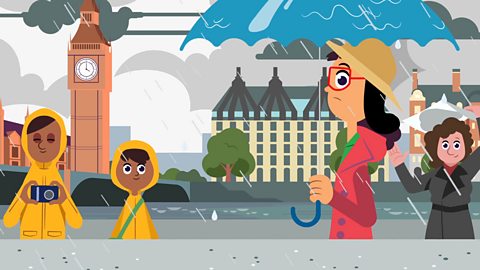
UK weather and seasons
KS1 Geography
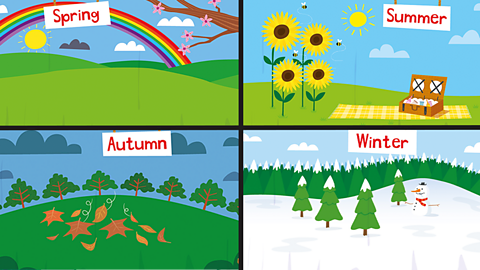
Exploring locations - the seven continents
KS1 Geography
English

People often write about what they see in their gardens or local green spaces.
They use lots of interesting words to describe them.
Here is some more information and activities for you to learn more.
What is vocabulary?
Vocabulary is the collection of words that we use.
We can use vocabulary to describe the things we see in a garden, such as:
- colourful flowers
- prickly bushes
- crunchy leaves
Have a look at this slideshow to learn some interesting words that describe what we might find in the garden.
Image caption, Try growing your vocabulary now!
Let's grow!
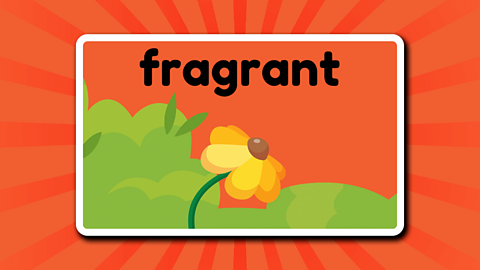
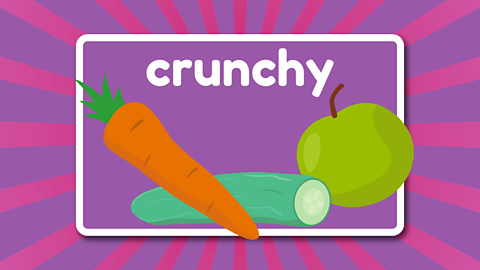
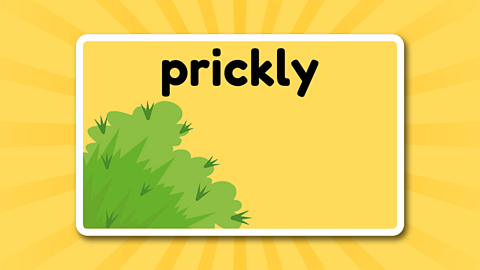
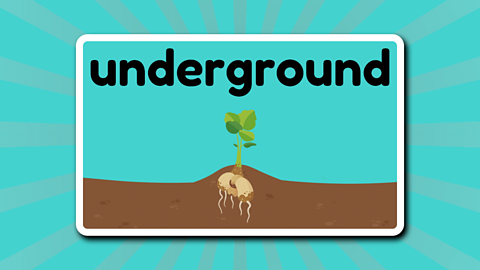
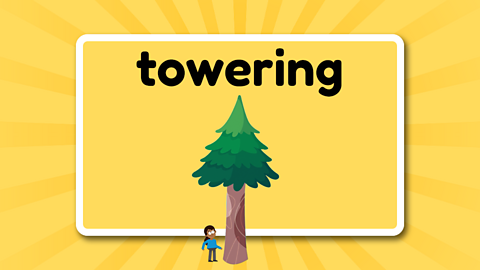
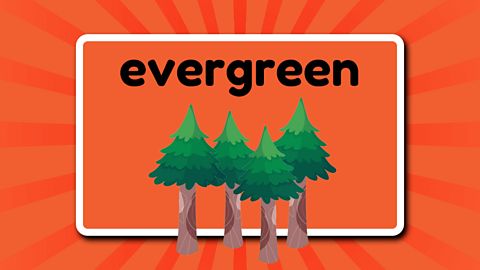
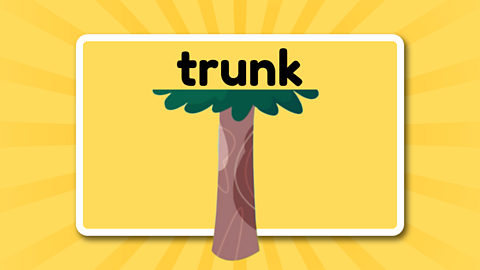
1 of 8
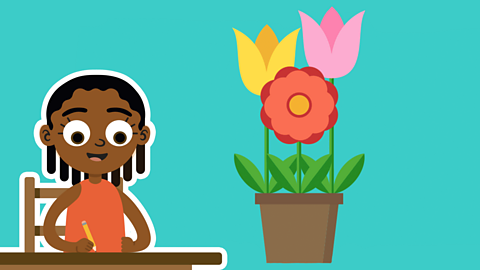
Activity - Write a poem
Why not write a poem about the things you see in a garden, local park or green space?
- What can you see?
- What can you hear?
- What can you smell?
Maybe you will see some tall trees, slimy slugs or smell some fragrant flowers!
Discover more on KS1 English
The links below will help you to practise your writing skills and make your poem even better!
Art and Design

People have been making pictures of things they see in a garden for many years.
Sometimes they paint, draw or even create collages with paper.
Have a look at the information and activities below to learn more.
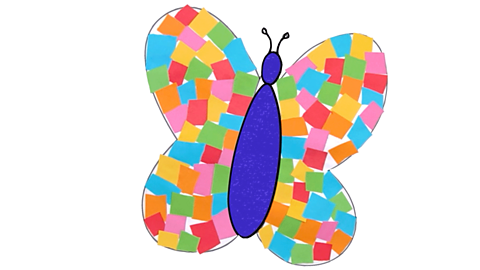
What is a collage?
A collage is a picture usually made up of lots of different pieces of paper, photos and other materials.
Collage artists arrange the materials and try out different ideas before sticking them onto a surface.
They tear or cut materials before sticking them together.
Activity - Make a nature collage
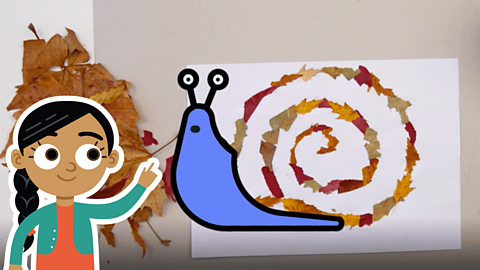
Make a collage using things you find in the garden. You could create a snail, a flower or even a bird.
You could use things like:
- fallen leaves
- twigs
- grass
Draw your shape onto a piece of paper, then use a glue stick to stick down your items.
Make sure to ask an adult before you pick anything up and remember to wash your hands afterwards.
Discover more on KS1 Art and Design
Look at the links below to practise your art skills and learn more ways to create art.
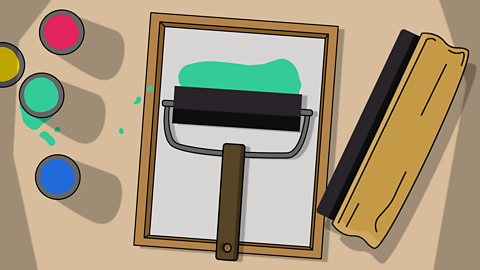
What is printmaking?
KS1 Art and Design
What is drawing?
KS1 Art and Design

Drawing textures
KS1 Art and Design
Quiz - Spot the difference
Our garden flowers are in full bloom.
Can you spot the five differences between the two pictures?
More resources from the BBC
You can find many more amazing resources from around the BBC.
Follow the links below for more ideas on gardening.
Where next?
Play BBC Bitesize educational games! game
Fun, interactive games for children aged 4-11, with maths, English, science, history and many more subjects.