Gifts, food, parades and fireworks - just some of the ways that the Lunar New Year has been celebrated, and this year is no different.
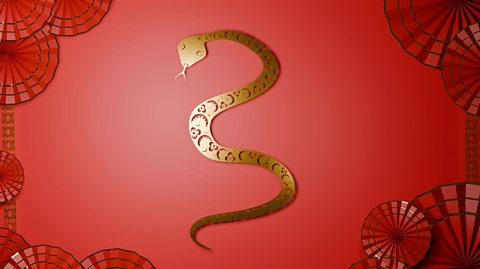
On 29 January, communities from across the world will usher in the Year of the Snake. But what exactly is the Lunar New Year and what does the snake represent?’
BBC Bitesize spoke to Dr Xuan Wang, a senior lecturer in Chinese studies at Cardiff University, to learn more about the festival.
What is Lunar New Year?
The Lunar New Year, also known as the Spring Festival, is estimated to be celebrated by two billion people. It takes place over a 15-day period, and this year it culminates with the Lantern Festival on 12 February. The holiday is observed by many countries including China, Vietnam, Malaysia, Singapore and Indonesia, and people from those communities who live across the world
The exact date of the Lunar New Year varies each year, as it is linked to the start of a new moon. This differs from the Gregorian calendar typically used in the UK, which begins on 1 January.
Why is the Lunar New Year observed?
With almost one quarter of the world’s population marking the event, you may be wondering why the festival is celebrated in the first place.
The Lunar New Year signals the traditional start of the agricultural season and its origins can be traced back thousands of years. As well as welcoming prosperity and luck for the New Year, it is also traditionally a time to honour ancestors and deities.
But Dr Wang reminds us that observing the start of a new calendar year isn’t unique to the Spring Festival. “I think celebrating New Year is of great significance in all cultures, not just people who use the lunar calendar,” she told us.
“Marking the New Year represents people’s longing for something better, for prosperity, for certainty, for progression and health for family.”
How is the Lunar New Year celebrated?
The Lunar New Year typically falls between 21 January and 20 February, but some festivities take place in the build up to the holiday.
“Leading up to the New Year's Day, there is already a sort of countdown,” Dr Wang explains.
“For instance, there is a festival called Laba, in the month immediately before the New Year. It is like a warming up month.”
Laba Festival is a traditional Chinese holiday that takes place on the eighth day of the 12th month in the lunar calendar. While the festival celebrates winter, it is also a time for people to prepare for the main event.
Once the first day of the first lunar month does arrive, it is marked in a number of ways.
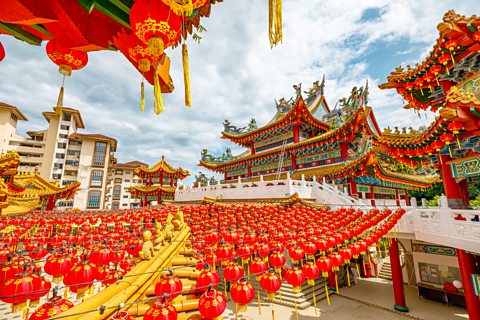
As an event observed by so many people with different languages and cultures, celebratory customs of the Spring Festival can sometimes differ quite drastically. But often it is celebrated with special food, fireworks, new clothes, gifts and parades with friends and family.
While the festival honours its ancient roots, Dr Wang acknowledges that the way that some people celebrate the occasion has changed with time.
“Using fireworks has been a practice in China for thousands of years […] but is becoming less encouraged because people are more aware of the environmental impact,” she told Bitesize.
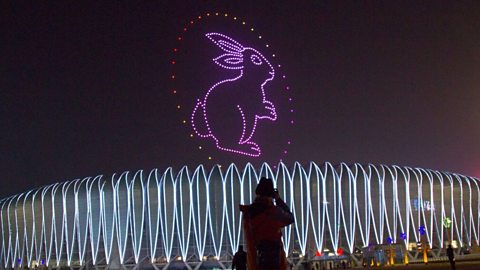
This has resulted in more people attending organised firework shows, opposed to individual household displays, as well as professional drone displays.
Other examples Dr Wang highlights includes becoming more conscious of not wasting food and sending digital, instead of physical, red packets containing money.
What is the significance of the snake?
In the Chinese zodiac, the snake is the sixth of the twelve-year cycle of animals and represents those born in 1941, 1953, 1965, 1977, 1989, 2001 and 2013. There are also five zodiac elements - wood, fire, earth, metal and water. This year is the Year of the Wood Snake.
There are some differences in the zodiac across Asian countries. For example, in Myanmar, your zodiac animal is determined by the day of the week you were born, as opposed to the year.
The last Year of the Snake took place in 2013. But the last Year of the Wood Snake took place in 1965, meaning that 2025 will complete the zodiac’s 60-year cycle.
Rich in both symbolism, the snake is represented across Chinese mythology, literature and art. One unique figure in Chinese culture is Nüwa, a mother goddess who is credited with creating humankind. A very important deity, she is depicted as a supernatural creature with a human face and a snake’s body.
Dr Wang highlights that the snake, like all zodiac symbols, has both positive and negative connotations. She explained, “For a snake, it would mean they are intuitive, because they quickly sense risk. They’re very mysterious, but also very smart and so on.
“But as you can imagine, a snake would also represent cunning and danger, which is seen as the dark side.”
But regardless of which zodiac sign you fall under, she explains that the zodiac isn't used as a way to define an individual or their attributes.
“People don’t just believe that if they were born in the Year of the Snake that’s all they are. They make use of these symbols to help them, to recognise themselves. But very importantly they use this zodiac sign to look at the year ahead,” Dr Wang said. She explains that zodiac signs can be used, "to navigate through different things that may cause uncertainty and help them to realise their hopes and dreams in the New Year.”
This article was published in January 2025
How much do you know about New Year's folk traditions?
From burning straw bears to hanging toast in trees, test your knowledge of the UK's New Year folk traditions.

How to try and eat seasonally in 2025
Try new dishes and eat more sustainably with the BBC Bitesize guide to seasonal eating.
Five things that turn 100 in 2025
From the New Yorker magazine and The Great Gatsby to Rotherham United FC