Eating with the seasons can help you be more environmentally-friendly as well as encouraging you to try a greater variety of vegetables.
By choosing locally-grown produce, the vegetables on our plates don’t have to be imported from around the world. It makes our diets more sustainable and supports local farmers.
Join BBC Bitesize as we discover which vegetables are in season when, in the UK. We've even included some BBC Food recipes to help inspire you.
Before you start cooking, make sure you have a responsible adult with you to help out, especially if you're using sharp utensils. It's also a good idea to check that whoever you are cooking for, and with, has no allergies to the ingredients. And remember to follow good hygiene rules, like washing your hands.
What vegetables are in season in winter?
When there’s frost on the ground and a sharp chill in the air, we find ourselves craving cosy food. At this time of year, rows of knobbly stalks of Brussels sprouts can be spotted in the fields, and root vegetables come into their own as earthy accompaniments to a main course or an ingredient in soups and curries.
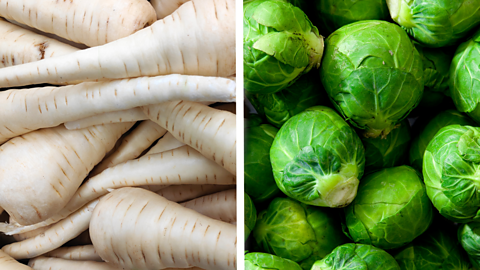
Parsnips
Parsnips aren't just for Christmas dinner! These pale root vegetables pair as well with sweet ingredients as they do with sour so you shouldn’t get tired of them. In fact, it's their soft texture and sweetness that has made them a common ingredient in baby food.
Rich in both soluble and insoluble fibre, parsnips offer numerous benefits to the digestive system. The soluble fibre helps to lower blood A waxy, fat-like substance which can be found in cells, where it is used for hormone production, cell building and repair levels, reducing the risk of Relating to the heart and the blood vessels.disease (CVD), and it can help with managing A condition that causes a person's blood sugar level to become too high. by controlling blood sugar levels.
This parsnip rosti makes a delicious alternative to potato. Meanwhile, this creamy parsnip and apple soup is a yummy winter warmer.
Brussels sprouts
Pity the poor sprout - unloved by so many. Yet those who like them, really like them. They’re actually very versatile, and you can eat them cooked or raw.
Brussels sprouts are packed full of a group of nutrients known as antioxidants. These help prevent oxidation, a chemical reaction that occurs in the body, by destroying Highly reactive atoms that have one unpaired electron.. Whilst they're naturally produced by the body, free radicals can damage cells.
For an additional vitamin boost, sprouts can be mixed with other seasonal vegetables such as carrots or squash to make a winter vegetable curry.
To contrast with the sharp, green flavour of the sprout leaves and introduce a different texture, some salty ingredients like chestnuts and pancetta can be added.
Other vegetables in season in winter: celeriac, turnips, red cabbage, carrots.
What vegetables are in season in spring?
After the long, dark nights of winter, spring bursts on to the scene in an explosion of frothy blossom and vigorous green leaves. Everything, everywhere suddenly seems to be alive and growing.
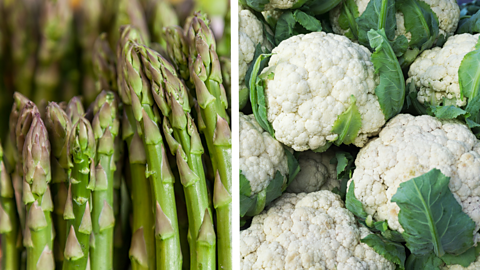
Asparagus
These bright green spears have been called the Usain Bolt of the vegetable world due to their fast growing speed - they can grow up to 10cm (3.9 inches) per day. The British growing period lasts just eight weeks though - from April to June - so you have to be quick if you want to taste them at their very best.
Rich in vitamins C and K, asparagus also contains soluble fibre. Vitamin K is incredibly useful, as it helps with blood clotting, helping to prevent excessive bleeding and enabling wounds to heal faster. In fact, it got its name for the German word for coagulation — Koagulation.
As well as green varieties, you can find white and purple asparagus.
A simple asparagus soup recipe should preserve the freshness of its flavour, as it contains just five ingredients as well as seasoning. The vegetable also goes well with chicken, which won’t overpower its tender taste.
Cauliflower
In recent years, this vitamin C-packed vegetable has moved from an over-cooked, unwelcome side dish to the star of the menu.
Large slices have taken the place of burgers and steaks for vegetarians and vegans, and this take on cauliflower has become popular with meat eaters too. Roasting cauliflower brings out nutty and caramelised flavours, whether it’s coated with a spicy paste - like in this whole roast cauliflower recipe - or sprinkled with lime juice.
Vitamin C plays a vital role in keeping our immune system healthy. Without it, our body finds it harder to fight off illness, such as gum disease and scurvy. It also helps our body to absorb iron, particularly non-haem iron which is found in plants, and is more difficult for the body to absorb.
Other vegetables in season in spring: spring cabbage, spring onions, spinach.
What vegetables are in season in summer?
Summer is a time of intensity - vivid colours, strong flavours and, depending on the weather, bright sunlight. In the vegetable garden, if you brush past a tomato plant you can smell the heady scent of the ripening fruit. Beans dangle in groups from twisty stems, and the courgettes threaten to bolt into enormous marrows if you don’t catch them at the right time for picking.
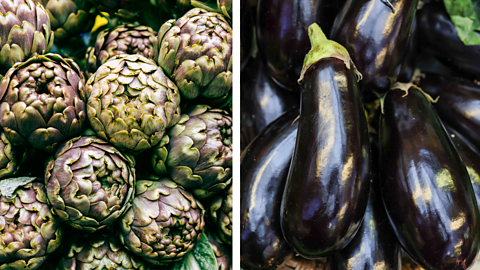
Artichokes
These globe-shaped clusters of flower petals resemble a large thistle, but they have a delicate, nutty flavour. Most commonly boiled or steamed, they are rich in dietary fibre, potassium and vitamin C.
Potassium is a mineral that helps with all of the body's functions but it plays a key role in keeping the balance of fluids inside cells just right, helping to manage blood pressure and dehydration. It also influences how our muscles contract, including maintaining the regularity of our heartbeat.
To avoid the flavour of an artichoke overpowered, they can be boiled in water laced with lemon juice and serve with a dip of smoked bacon mayonnaise.They also make a tasty pizza topping, like in this vegan recipe.
Aubergines
The spongy texture of the aubergine makes it great for soaking up, and intensifying, flavours in a dish. Aubergines - or eggplants – were first domesticated in India and China but are now grown in many European and Asian countries. Technically, they are actually a fruit, specifically a very large berry.
Aubergine's get their distinctive purple colour from colour pigments called anthocyanins. Found in plants, these pigments have antioxidant properties and so help to prevent diseases which are linked to cell and tissue damage caused by oxidation.
These aubergine roll-ups in Parmesan sauce are a speedy take on the Italian dish Parmigana. Cumin is the main spice in this spinach, aubergine and chickpea curry, which takes less than 30 minutes to make.
Other vegetables in season in summer: courgettes, beetroot, French beans, sweetcorn.
What vegetables are in season in autumn?
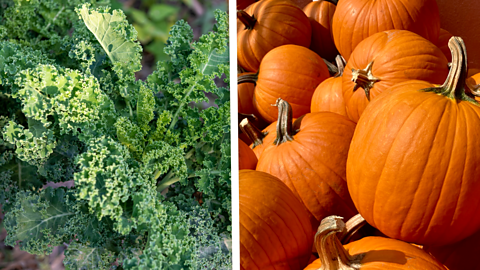
The leaves are starting to turn to ruddy hues of orange and red and the vegetable aisle at the supermarket is no different. Bright pumpkins jostle for space with yellow butternut squash, bright against the dark green kale.
Pumpkins
Anti-food waste charity Hubbub estimates that millions of pumpkins are thrown away after Halloween in the UK alone. Yet every bit of these squash - apart from the stringy membrane holding the seeds in place - is edible. So check out these delicious recipes and help cut down on food waste in autumn.
This sticky pumpkin and sweet potato traybake makes use of the seeds, which are roasted to bring out their flavour.
They can be used in baking too, such as these savoury muffins flavoured with rosemary.
The bright orange colour of a pumpkin comes from the pigment beta carotene, which the liver is able to convert into vitamin A. This vitamin has an important role to play in our immune system and helps keep our eyesight and skin healthy.
Kale
This highly-nutritious leafy, green vegetable with its distinct peppery, bitter taste can be steamed, roasted, stir-fried, eaten raw and even blended up into smoothies.
Kale contains high levels of vitamin E, another antioxidant. It's also a good source of calcium, which is required for maintaining strong bones and teeth. A lack of calcium in someone's diet can increase the risk of developing osteoporosis later in life, a condition which weakens the bones and causes them to break more easily.
It makes a tasty accompaniment, such as in this mussel and saffron risotto recipe, which deep-fries kale into crisps that bring a crunch to an otherwise creamy dish.
To keep costs down, the vegetable is used as an alternative to basil in this kale and peanut pesto spaghetti (with peanuts replacing pine nuts).
Other vegetables in season in autumn: leeks, potatoes, fennel, spinach, runner beans.
This article was published in December 2024
Looking for quizzes, amazing stories and fun facts?
Bitesize Topical has it all!

Five things to learn in 2025
From sewing a tote bag to latte art, BBC Bitesize takes a look at five things to learn in 2025

Quiz: Fruit, veg or something else?
Test your botanical knowledge of fruit and veg with this quiz.
How do you make a new flower?
Making the perfect flower can take over ten years, and lots of failed attempts.