What is context?
Coram Boy is set in the 18th century between 1741 and 1750.
It is important to know about the context of 18th century England in order to better understand the book.
Context can refer to what was going on in society at the time, certain life events that might have influenced the author or thoughts about how an audience might have responded, then and now.

Remember
In your exam you will need to explore the question in relation to the context.
The best contextual comments are:
- Linked closely to the text
- Relevant to the points being made
- Relevant to the question you have been asked.
18th century society
In the 18th century, society was organised around a strict class A way of organising society in a triangular structure. There are fewer people higher up the triangle but they have more power, wealth or responsibility.. The wealthy few were very powerful and life was difficult for the working class.
Class and power
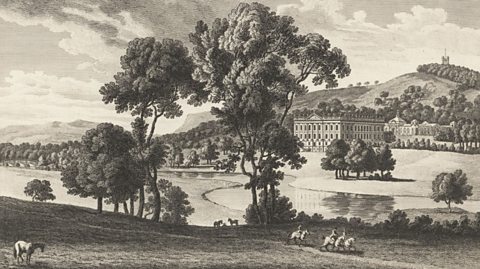
In the 18th century, power was in the hands of wealthy landowners like the Ashbrooks.
These families often owned large estates, which were passed down the generations.
There was an expectation that sons would follow fathers, so the Ashbrooks expect Alexander to take over the Ashbrook estate, even though this is not what he wants.
Poverty
For poor people in the 18th century, charity was often the only help available.
Some people in the upper classes believed that poverty was caused by laziness and argued that supporting those in poverty would encouraged this.
Gavin shows this attitude through Admiral Bailey who thinks that a successful orphanage will encourage people to have more children that they cannot care for.
Pregnancy outside of marriage
In the 18th century, women who became pregnant without being married brought disgrace on their families.
Giving a child up for adoption or sending them to an orphanage were usually the only options for these women.
In the Coram Boy, Otis Gardiner takes advantage of this desperate situation and exploits these mothers by promising to take their babies away, for a fee.
Mini quiz
18th century childhood and education
Like most other aspects of life in the 18th century, experiences of childhood and education depended on class.
Upper class childhood and education
Education in the 18th century was usually only available to wealthy, upper-class children.
Many wealthy families employed tutors or governesses to educate their children at home. The Ashbrooks employ Melissa’s mother, Mrs Milcote.
Thomas is only able to attend the Cathedral school because he wins a scholarship.
Lower class childhood and education
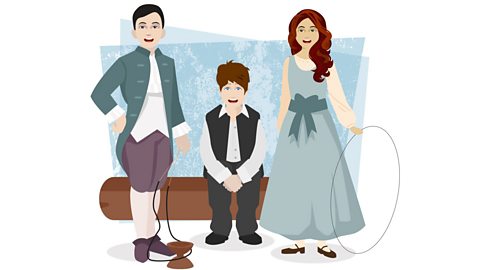
Very few poor families could afford to educate their children and often sent them out to work at a young age.
Many families struggled to feed their families and some children were sent to orphanages even if their parents were still alive.
In the novel, Lady Ashbrook is shocked by the terrible conditions in the parish orphanage.
Mini quiz
Decide if you think each experience of 18th century childhood is from an upper class or a lower class child.
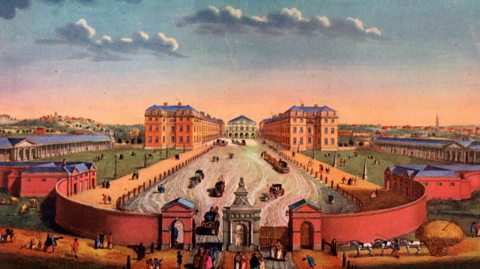
The Coram Hospital
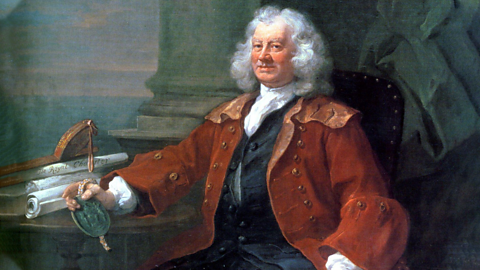
Captain Thomas Coram (1668 – 1751) was a successful sea captain. After he retired from life at sea, he lived near London and was shocked to see neglected and abandoned children in the streets.
He decided to use his money and influence to improve life for these children. It took him many years to raise enough money and support, but in 1739 the Foundling Hospital, also known as the Coram Hospital, was opened in London.
Facts about Coram Hospital
Much of the early support for the hospital came from upper class women, similar to Lady Ashbrook.
The first children were admitted into the Coram Hospital in 1741, meaning that Aaron and Toby would have arrived in the first few years of the hospital.
The composer, George Frideric Handel, was a famous supporter of the hospital, and in the novel he is the person who notices Aaron’s musical talent.
Other famous patrons of the Coram Hospital included the writer Charles Dickens and the painter William Hogarth.
The Gothic genre
Gothic literature is a genre of fiction which first became popular during the 18th century. Famous Gothic stories include Frankenstein, Dracula and The Woman in Black.
Video
Watch this video to learn about the features of the Gothic genre.
A video about the conventions in theme and character found in gothic literature
Gothic literature evokes an atmosphere of mystery, fear or terror.
The gothic genre was really popular during the 1800s with Frankenstein, Wuthering Heights and Dracula. But there were stories with Gothic elements before and there have been plenty since. So could you survive the dark world of a gothic novel?
Setting
First up, you’ll need to wrap up warm. There aren’t many tropical beaches in gothic fiction. Expect wind, rain and thunderstorms and things that go bump in the night. Night time settings appeal to reader’s instinctive fear of the dark - and under the cover of darkness things often aren’t quite as they seem.
Writers typically set their stories in abandoned or isolated locations like crumbling castles, windswept moors, places of decay and death. Places with seemingly no escape. But where there are also plenty of secrets with underground passages and hidden doors. This all adds to the sense of mystery and danger.
Themes
Typical gothic themes are the supernatural, science, revenge, religion, breaking societal norms and the battle between good and evil. These themes and impending bad fortune are often hinted at in the gothic novels through ominous warnings or symbolic omens, such as a full moon or a raven.
Characters
Gothic literature often contrasts different types of characters: victims and predators, good and evil. They are full of strange and often supernatural characters like ghosts, vampires and werewolves. Or sometimes it’s humans that seem to have something different about them, they might have special senses or abilities.
These settings, themes and characters combine to create creepy worlds and nasty narratives that send a shiver down the reader’s spine.
Eek! Good luck.
Coram Boy contains many of the features of the Gothic genre. For example:
Meshak experiences fear and terror in the forests when he is sent by Otis to dispose of the babies. He experiences supernatural sounds and visions – most notably the angels that he sees in church.
Death runs throughout the novel, from the prologue where the mother drops dead with shock when her six children appear, to the end where Thomas dies protecting Alexander.
Alexander breaks with societal norms when he chooses music over the Ashbury estate. He also falls in love with, and eventually marries, Melissa who is from a lower social class than he is. Meshak’s character doesn’t act or think in a way considered ‘normal’ by society either.
You can learn more about the Gothic genre on Bitesize English.
Mini quiz
Read the statement and match it to the Gothic element.
The transatlantic slave trade
The transatlantic slave trade is the name given to the forced enslavement and movement of people from Africa to the The name given to the grouping together of the Caribbean, North, Central and South America..
Approximately 12 -15 million people were forcibly transported from their homelands in Africa to A territory which has been taken over and is under the control of a European nation. and plantations between 1500 and 1870. Some historians suggest the number of people transported may have been higher.
The Another word for work. Enslaved labourers were workers who were enslaved. of People forced into enslavement. was used in the Americas to produce goods such as tobacco, cotton, sugar and indigo dye. The exploitation of enslaved people made many Europeans, including the British, extremely wealthy.
It is estimated that British slave ships made around 10,000 voyages across the Atlantic, transporting approximately 3.4 million people, of whom only 2.6 million survived the journey.
British involvement in the slave trade increased in the 1700s after the Treaty of Utrecht (1713) gave them the right to sell enslaved people in the Spanish Empire.
By 1770, British ships were involved in the transportation of around 42,000 people a year.
Learn more about the transatlantic slave trade on Bitesize History.
Question
Where is slavery or the slave trade referenced in the novel?
| Chapter | Reference | Quote |
|---|---|---|
| 11 | Otis buys Toby from the docks as a baby because he thinks that he will be able to make money from him in the future. | He considers Toby as a "long-term investment". He believes there is "nothing a wealthy family in society liked more than to have a little Black boy as a plaything". |
| 16 | Toby suggests going to America to find his mother. | Aaron tells him to stay, saying "you can be a free man here". Slavery was not legal in England, whereas in America Toby would be at risk of enslavement. |
| 19 | Toby is sent to work for Phillip Gaddarn. | The Coram housekeeper says Toby is "privileged indeed to be taken into the house of one of the most esteemed gentlemen in London" but he is treated badly. |
| 21 | Phillip Gaddarn threatens to send Toby away to be sold as a slave. | Gaddarn says that he will "ship him to Virginia" when he has no more need for him, meaning he will sell Toby as a slave to work on the plantations there. |
| 31 | Meshak and Aaron are locked in a room. | They are locked in "the room through which Mr Gaddarn sent children into slavery." |
| 31 | Toby is determined to escape the boat at the end. | He says "They’ll put me in chains; they’ll make me a slave. No, no!" |
Quiz
Test your understanding of the context of Jamila Gavin's novel Coram Boy by taking this quiz.
GCSE English literature revision podcasts. audio
Whether you're at home or on the go, listen to these podcasts by Bitesize and BBC Sounds to refresh your memory of key texts.

More on Coram Boy
Find out more by working through a topic
- count5 of 5

- count1 of 5
- count2 of 5
- count3 of 5