What is Halloween?
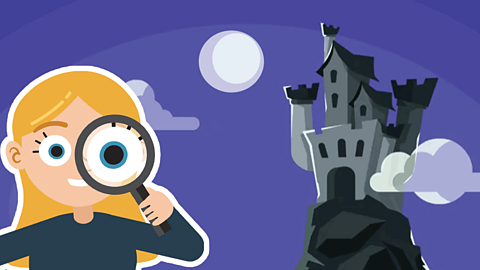
Halloween is celebrated in many parts of the world every year on 31 October.
It is a day where people celebrate all things spooky and mysterious.
The name Halloween comes from All Hallows’ Eve. That’s the day before All Hallows’ Day, a Christian holiday also called All Saints’ Day.
Children and adults often celebrate by dressing up in spooky costumes and going trick-or-treating.
History
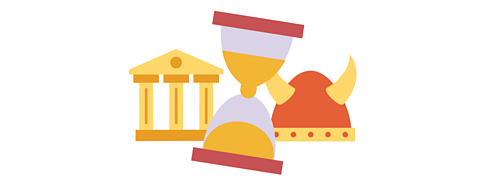
The origins of Halloween can be traced back hundreds of years to the pagan festival of Samhain (pronounced Sow-in), celebrated by the Celts of ancient Europe to mark the end of the harvest season and the beginning of winter.
Have a look at the information, videos and activities below to learn more.
Watch - The origins of Halloween
[NARRATOR]Halloween.
Every year, on the 31st of October, people in countries all over the world celebrate the spookiest day of the year – Halloween.
Today, we know Halloween as a day filled with scary costumes, decorations, and sweet treats.
But did you know that Halloween is actually one of the world’s oldest celebrations?
It dates back thousands of years to the ancient Celtic festival of Samhain.
The Celts were a group of tribes who settled in areas in Western Europe – including Great Britain and Ireland.
The Celts celebrated their New Year in autumn, on a day which marked the end of summer and harvest time and the start of a long, dark, cold winter.
They believed that on the night before the New Year, the boundary between our world and another invisible world, where spirits lived, became blurred, and strange creepy creatures like ghosts, ghouls and monsters could roam the land.
So, on the night before the New Year, they celebrated the festival of Samhain to ward off any unfriendly visitors.
They built bonfires, left offerings of food and drink, and wore masks or other disguises to avoid being recognised by the spirits.
Over time, the Christian religion spread across Europe.
The Celtic New Year was replaced by All Saints’ Day – also known as All Hallows’ Day – a holy day in honour of Christian Saints.
And the night before – which was traditionally celebrated as Samhain – became known as All Hallows’ Eve.
The new, Christian All Hallows’ Eve kept many of the traditions of Samhain, but as years passed by, new customs developed.
The masks and disguises of Samhain became costumes.
People started visiting the homes of others to perform tricks, like jokes or poems, for gifts or treats.
In other words, the beginning of trick or treating.
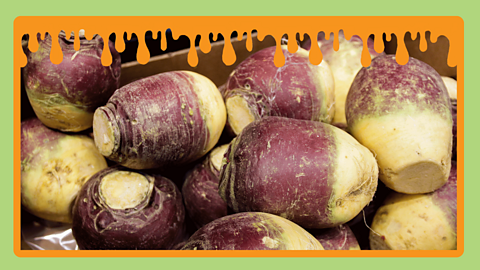
And people also started carving scary faces in vegetables like turnips, beetroots, and later, pumpkins, called Jack O’ Lanterns.
Eventually, All Hallows’ Eve became widely known as Halloween.
Although Halloween is rooted in the religious traditions of the past, for most people today it is simply an opportunity to have some fun.
Some people simply stay at home and watch scary movies or tell ghost stories.
Many people love getting dressed up in weird and wacky costumes to go trick or treating or attend Halloween parties.
“I’m really excited about what my costume is, because it’s quite scary.”
“Oh yeah, what are you dressing up as?”
“A grim reaper.”
Others celebrate Halloween by putting up cool decorations or carving pumpkins to make Jack-O’-Lanterns!
“The first thing you need to do is cut a lid and scoop the inside out.”
“The second thing you have to do is design a scary look for your pumpkin.”
“The third thing you’ve got to do is to get the best tools and start cutting.”
“And then you can show off your pumpkin.”
Whether you’re warding off ancient spirits, celebrating Saints, or simply having fun, Halloween continues to be an important event to many people.
Even our pets get involved from time to time!
Happy Halloween!
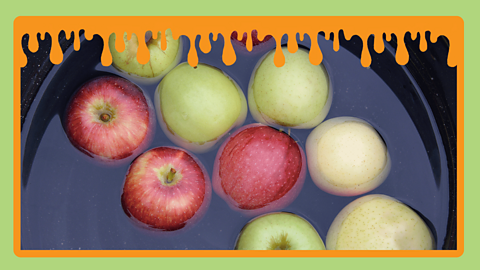
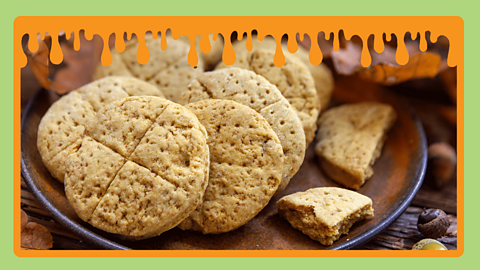
Traditional Halloween food
Have a look at this slideshow to learn about some old Halloween traditions with food.
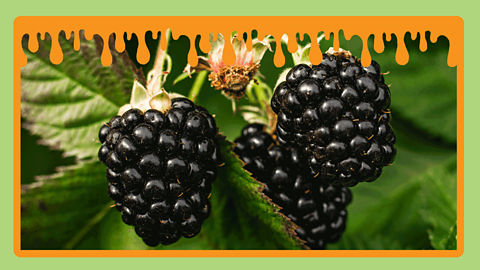
Image caption, Blackberries
People used to think it was a bad idea to eat blackberries after Halloween, because a goblin-like spirit called púca (Irish for ‘ghost’) was thought to come out on Halloween and crawl all over them, covering them in slime!
1 of 4
Discover more on KS2 History
Learn more about the life and traditions of people living in the UK throughout history.
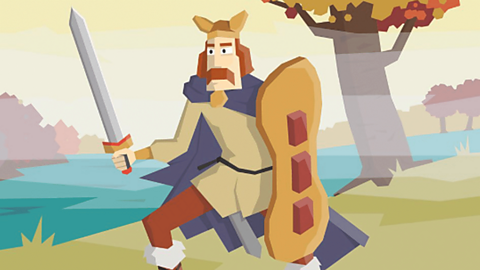
Who were the Celts?
KS2 History
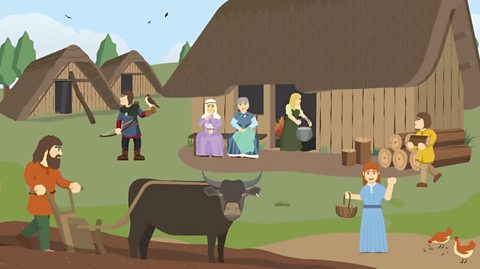
Who were the Anglo-Saxons?
KS2 History
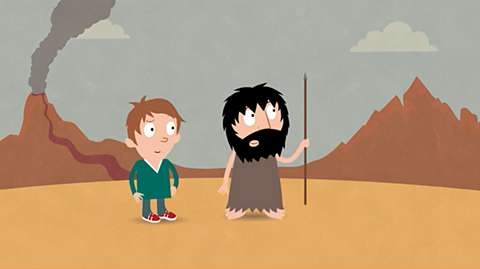
What do we know about prehistoric Britain?
KS2 History
English

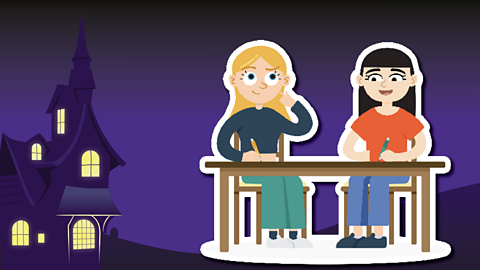
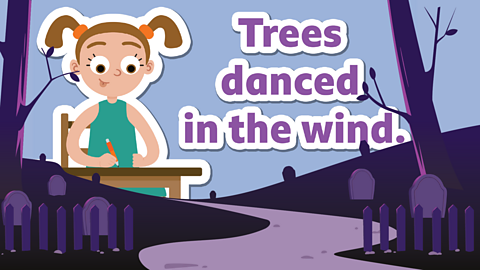
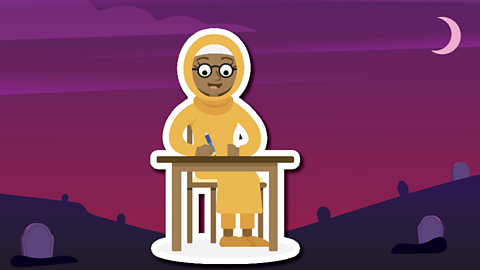
Halloween is a great time for telling or writing scary stories.
Vampires, ghosts and witches often feature in myths, legends and tales.
Have a look at the information and activities below to learn more.
Watch - Scary stories
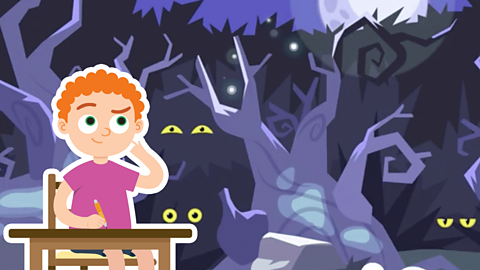
When writing a scary story, there are a few elements to think about that will help you to build up the suspense and frighten the reader.
Have a look at this video to learn what to think about when writing a scary story.
Scary stories are supposed to be, you guessed it, scary.
Watch what happens to these ducks for example.
Hey, not so fast ducks.
When you write a scary story you need to frighten the reader.
Sometimes this will be through suspense and atmosphere, or through shocks, I said through shocks!
Perfect.
Activity - Write a scary story
Why not have a go at writing your own scary story? Things to think about:
Setting: You could set the story in a familiar place, like a school or a playground, but with an eerie twist.
Characters: You could include some ghosts or monsters. They might be fierce and scary, or they might just be misunderstood.
Plot: You could make your story mysterious, with a big unexpected twist at the end.
Discover more on KS2 English
Have a look at these articles to learn more about different types of writing and ways to make your stories even better!
Art and Design

Halloween is a great time to get crafty and conjure up costumes and decorations.
Have a look at the videos and activities below to make some fun Halloween crafts.
Activity - Make your own pumpkin mask
Watch this Blue Peter video and have a go at making your own pumpkin mask.
Remember to ask an adult to help you when using scissors.
Activity - Halloween colouring
Grab your crayons, felt tips, or colouring pencils and get ready to dive into some Halloween colouring.
You can print off this colouring sheet or you can draw your own spooky scene.
Halloween colouring activity sheet
Topic packs
Discover more on KS2 Art and Design
Have a look at these articles to learn more about different types of art and famous artists.
What is Surrealism?
KS2 Art and Design
Who is Banksy?
KS2 Art and Design
Who is Lubaina Himid?
KS2 Art and Design
Maths
Maths can be fun at Halloween!
From monstrous measurements to spooky subtractions.
Have a go at these Halloween-themed maths activities and practise your maths skills.
Activity 1 - Creepy coordinates
Have a go at this fun maths activity. First watch the video to learn how to find coordinates.
Oof you’ve got a treasure map? That’s exciting. Right let’s have a look then…
Right, grids have two axes. The horizontal axis is called the ‘x-axis. And the vertical axis is called the ‘y-axis.These axes can be used to find a point on a grid.
You’re here and you need to get to there.
So, we just read the coordinates along the horizontal x-axis and then up the vertical y-axis.
Nope don’t worry so, A is two across the x-axis, and three up the y-axis. So we say ‘two-three’.
Point B has the coordinates ‘four-one’ so, to get to the treasure, you have to go two steps to the right, and then two steps down from where you’re standing.
So let’s go…
That’s your two steps to the right along the x-axis, and two steps down the y-axis.
Well do- Oh!
CIRCLE: Ta da!
NARRATOR: You drew the map then yeah? Thought so…
TRIANGLE: Phew!
Now look at the grid below.
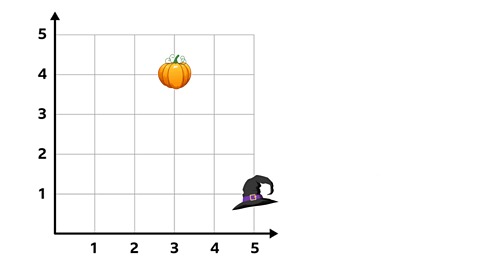
- Can you find the coordinates of the pumpkin?
- Can you find the coordinates of the witch's hat?
✓ The pumpkin is at 3, 4.
The witch's hat is at 5,1.
Activity 2 - Guardians: Defenders of Mathematica
Why not practise your maths skills and play Guardians: Defenders of Mathematica, now with a Halloween twist!
This special Halloween version is available until 4 November, and brings a ghostly atmosphere to the realm of Mathematica.
Guardians: Defenders of Mathematica
KS2 Maths game
Discover more on KS2 Maths
Have a look at these articles to learn more about maths and improve your skills.
What are fractions?
KS2 Maths
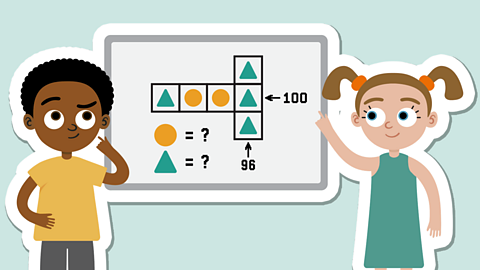
Solving maths problems
KS2 Maths
Solving problems with percentages
KS2 Maths
Go explore - Night creatures
Bats and most moths are nocturnal which means they are most active at night.
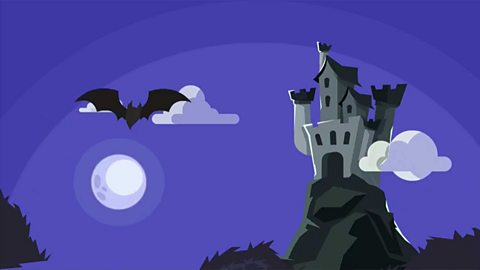
Bats are associated with Halloween because they come out in the dark and they also feature in vampire stories like Bram Stoker's Dracula.
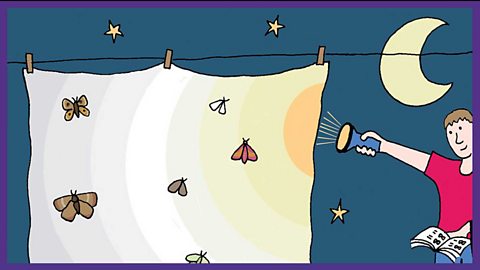
When it's dark, go outside and learn how to spot bats and attract moths, with Bitesize Parent's Toolkit and the Wildlife Trust.
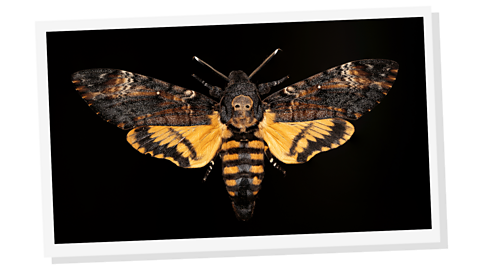
Maybe you'll spot the spooky death’s-head hawk-moth, which visits this country in autumn. It gets its name from the skull-like marking on its back.
Make sure to take an adult with you and remember to wrap up warm on those chilly evenings!
How to spot bats in the UK
Bitesize Parent's Toolkit
How to make a moth magnet
Bitesize Parent's Toolkit
Quiz - Halloween
Why not put your knowledge of Halloween to the test with this quiz?
More resources from the BBC
You can find many more amazing resources from around the BBC.
Follow the links below for more ideas on Halloween.
Bewitching bakes
BBC Food
Eco-friendly ideas for a very green Halloween
The Regenerators
Halloween Scientific Experiments
BBC Teach
Play Bitesize Primary games. game
Fun and educational primary games in science, maths, English, history, geography, art and design, computing and modern languages.