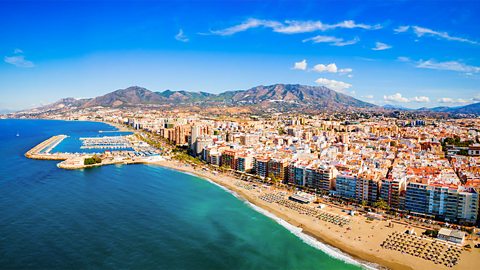
Key points about describing the environment in Spanish

Use Shows possibility, intent, ability, or necessity. Used alongside the infinitive form of the main verb of a sentence. Common examples of modal verbs include can, should, and must. to express what you are able to do, can do, have to do or must do to help the enviornment.
Use the different verb The verb formation that describes the time at which the action occurred, eg past, present or future. and time indications to talk about actions taken in the present, past or future to live more sustainably.
This guide contains a video as well as reading and listening practice.
Video - Environmental issues
Watch the video of Laura talking about the risk to the environment in her town in Colombia and suggesting some potential solutions.
Laura talks about the environment using present tense and conditional tense verbs
Hola, me llamo Laura y soy de Honda, una pequeña ciudad en Colombia.
Estudio agroecología en la universidad y me apasiona el medio ambiente.
Colombia es muy rica en biodiversidad y naturaleza.
Aquí en Honda vivimos en una zona volcánica, por lo que el suelo es muy rico y podemos cultivar mango, papaya, limón, entre otras muchas otras frutas y verduras.
Los pescadores en Honda son conscientes de cuidar al medio ambiente.
Laura: ¿Hola, cómo le ha ido en la pesca hoy?
Pescador: Pues bien, mira.
Los pescadores cuidan de los peces y si pescan uno muy pequeño, lo vuelven a echar al río.
Pescador: Claro, yo cuido el río porque vivo de él.
Yo trato de ser consciente del medio ambiente con acciones en mi casa, haciendo reciclaje.
Me gustaría tener más proyectos que cuiden mi ciudad.
Si pudiera cambiar algo, sería promover el uso de bicicletas. En mi opinión son mejores para el medioambiente.
Recepcionista: Hola.
Laura: Hola.
Recepcionista: Bienvenida al museo del río Magdalena. Te doy la bienvenida, adelante.
Tengo la suerte de vivir en un pueblo con zonas verdes, poco ruido y poca contaminación, a diferencia de las grandes ciudades.
Trato de hacer mi parte para cuidar del medioambiente.
¡Mira! Aquí está Honda en la pared.
Translation:
Hi, my name is Laura, and I am from the small town of Honda, in Colombia.
I am at university studying agroecology and I’m passionate about the environment.
Colombia is so rich in biodiversity and nature.
Here in Honda we live in a volcanic area so the soil is very rich. We can grow mango, papaya, lime, among many other fruits and vegetables.
Fishermen in Honda are environmentally conscious.
Laura: Hi, how is the fishing today?
Fisherman: Good, have a look.
The fishermen take care of the fish and if they catch a very small one, they return it to the river.
Fisherman: Of course, I take care of the environment because I make my living from it.
I try to be environmentally conscious with actions at home, recycling.
I would like to have more projects that take care of my city.
If I could change something, I’d like to foster the use of bicycles. In my opinion, they are better for the environment.
Receptionist: Hello.
Laura: Hello.
Receptionist: Welcome to the River Magdalena museum. Go ahead.
I am lucky to live in a town with green spaces, little noise and pollution, as opposed to big cities.
I try to do my bit to care for the environment.
Look! Honda is here on the wall.
Vocabulary - The environment and climate change
Useful vocabulary for describing environmental and climate change issues include:
| Spanish | English | Spanish | English |
|---|---|---|---|
| Check your connection, refresh the page and try again. | action, act | Check your connection, refresh the page and try again. | danger |
| Check your connection, refresh the page and try again. (feminine) | water | Check your connection, refresh the page and try again. | planet |
| Check your connection, refresh the page and try again. | climate | Check your connection, refresh the page and try again. | pollution |
| Check your connection, refresh the page and try again. | factory | Check your connection, refresh the page and try again. | risk |
| Check your connection, refresh the page and try again. | fire | Check your connection, refresh the page and try again. | noise |
| Check your connection, refresh the page and try again. | industry | Check your connection, refresh the page and try again. | nature |
| Check your connection, refresh the page and try again., Check your connection, refresh the page and try again. | environment | Check your connection, refresh the page and try again. | earth, land, ground |
Useful verbs for describing the environment and climate change include:
| Spanish | English | Spanish | English |
|---|---|---|---|
| Check your connection, refresh the page and try again. | to act | Check your connection, refresh the page and try again. | to manufacture, fabricate |
| Check your connection, refresh the page and try again. | to affect | Check your connection, refresh the page and try again. | to clean |
| Check your connection, refresh the page and try again. | to help | Check your connection, refresh the page and try again. | to fight, struggle |
| Check your connection, refresh the page and try again. | to change | Check your connection, refresh the page and try again. | to improve |
| Check your connection, refresh the page and try again. | to cause | Check your connection, refresh the page and try again. | to need |
| Check your connection, refresh the page and try again. | to drive | Check your connection, refresh the page and try again. | to prevent, forbid |
| Check your connection, refresh the page and try again. | to pollute, contaminate | Check your connection, refresh the page and try again. | to reduce |
| Check your connection, refresh the page and try again. | to have to, must | Check your connection, refresh the page and try again. | to breathe |
| Check your connection, refresh the page and try again. | to let, leave | Check your connection, refresh the page and try again. | to save |
Grammar - Modal verbs and how to use them
Modal verbs in English include 'can', 'should' and 'must'. They express the speaker’s feeling towards an action, such as to be able to/can or to have to/must. Modal verbs indicate modality, ability, necessity, possibility, obligation or permission.
Modal verbs can work on their own, or with another verb that is always in the Form of the verb that has not been conjugated. Usually translated with 'to' in English, eg to play.. For example:
Debo reciclar más. - I must recycle more.
Debemos coger el transporte público en vez de viajar en coche – We must take public transport instead of travelling by car.
Podemos reducir el agua que usamos – We can reduce the water that we use
Quiero evitar los fuegos en los bosques – I want to avoid fires in the woods
¿Sabes como ayudar a las especies en peligro? – Do you know how to help endangered species?
Modal verbs as impersonal verbs
Modal verbs also work as impersonal verbs in the third person Refers to only one object or person., followed by an infinitive. For example:
Se puede recoger basura en el parque. – You (one) can pick up rubbish in the park.
Se debe ducharse en vez de bañarse. – You (one) can have a shower instead of having a bath.
No se debe tirar basura en la calle. – You (one) must not throw rubbish in the street.
Have a look at the Impersonal verbs in Spanish guide to learn more about these verbs.
Key modal verbs include:
querer - to want
deber - to have to, must
poder - to be able to, can
saber - to know
Click or tap on Show more to see how to conjugate these four key modal verbs.
| querer (to want) | deber (to have to, must) | poder (to be able, can) | saber (to know) |
|---|---|---|---|
| quiero (I want) | debo (I must) | puedo (I can) | sé (I know) |
| quieres (you want) | debes (you must) | puedes (you can) | sabes (you know) |
| quiere (he/she wants) | debe (he/she must) | puede (he/she can) | sabe (he/she knows) |
| queremos (we want) | debemos (we must) | podemos (we can) | sabemos (we know) |
| queréis (you plural want) | debéis (you plural must) | podéis (you plural can) | sabéis (you plural know) |
| quieren (they want) | deben (they must) | pueden (they can) | saben (they know) |
Modal verbs - Mini quiz
Complete the following sentences:
_________ recoger basura en la calle.
I can pick up rubbish in the street.
Puedo recoger basura en la calle.
Puedo is the ‘I’ form of the modal verb poder and means ‘I can’.
_________ ayudar el medio ambiente.
We want to help the environment.
Queremos proteger el medio ambiente.
Queremos is the ‘we’ form of the modal verb querer and means ‘we want’.
_______ reducir la contaminación del aire en la ciudad.
You (one) must reduce air pollution in the town.
Se debe reducir la contaminación del aire en la ciudad.
Se debe is the impersonal verb meaning ‘you (one) must’.
__________ respirar el aire limpio.
You (one) can’t breathe clean air.
No se puede respirar el aire limpio.
This is a negative sentence and must start with no.
No should be followed by se puede, the impersonal verb meaning ‘you (one) can’.
Find out more about modal verbs and the infinitive in the Infinitives in Spanish guide.
Reading practice
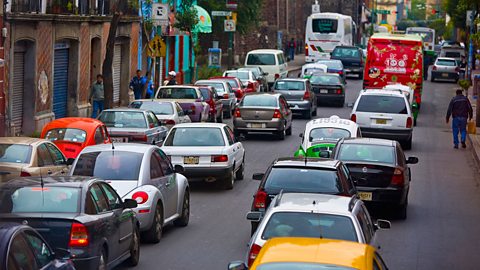
Read the text about pollution and water shortage in Mexico City and complete the activity below.
Un problema del medio ambiente en la Ciudad de México es la polución del aire. Esto se debe principalmente al aumento en el número de coches. Además, se han construido numerosas fábricas e instalaciones industriales. Como consecuencia, hay menos espacios verdes en la ciudad cada año, que afecta la salud de los habitantes.
Hay también un problema con la falta de agua limpia en la Ciudad de México. Las grandes empresas extraen agua del suelo para fabricar bebidas, y como resultado no hay bastante agua para la gente en la ciudad. El gobierno distribuye agua a la gente pero no es de buena calidad y es marrón.
Complete the gap in each of the following sentences using a word from the box below. There are more words than gaps.
| health | factories | wellbeing | quality |
| cars | drinks | lack | food |
- An increase in the number of ………………… has made air pollution in Mexico City worse.
- An increase in the number of cars has made air pollution in Mexico City worse.
Evidence from the text: Un problema del medio ambiente en la Ciudad de México es la polución del aire. Esto se debe principalmente al aumento en el número de coches.
An environmental problem in Mexico City is air pollution. This is mainly due to the increase in the number of cars.
- There are fewer green spaces every year, which affects the ………………… of the inhabitants.
- There are fewer green spaces every year, which affects the health of the inhabitants.
Evidence from the text - Hay menos espacios verdes en la ciudad cada año, que afecta la salud de los habitantes.
There are fewer green spaces in the city every year, which affects the health of the inhabitants.
- Another problem is the ………………. of water in Mexico City.
- Another problem is the lack of water in Mexico City.
Evidence from the text - Hay también un problema con la falta de agua limpia en la Ciudad de México.
There is also a problem with the lack of clean water in Mexico City.
- The reason for this is that large companies take water from the ground to make …………….…. .
- The reason for this is that large companies take water from the ground to make drinks.
Las grandes empresas extraen agua del suelo para fabricar bebidas.
Large companies extract water from the ground to make drinks.
Vocabulary - Reducing, reusing and recycling waste
Useful nouns for talking about reducing waste, reusing and recycling include:
| Spanish | English | Spanish | English |
|---|---|---|---|
| Check your connection, refresh the page and try again. (feminine) | water | Check your connection, refresh the page and try again. | paper |
| Check your connection, refresh the page and try again. | plastic bag | Check your connection, refresh the page and try again. | plastic |
| Check your connection, refresh the page and try again. | bottle | Check your connection, refresh the page and try again. | chemicals |
| Check your connection, refresh the page and try again. | harm | Check your connection, refresh the page and try again. | recycling |
| Check your connection, refresh the page and try again. | rubbish, waste | Check your connection, refresh the page and try again. | resources |
| Check your connection, refresh the page and try again. | energy | Check your connection, refresh the page and try again. | glass |
Useful verbs include:
| Spanish | English | Spanish | English |
|---|---|---|---|
| Check your connection, refresh the page and try again. | to turn off the taps | Check your connection, refresh the page and try again. | to reduce |
| Check your connection, refresh the page and try again. | to clean | Check your connection, refresh the page and try again. | to reuse |
| Check your connection, refresh the page and try again. | to protect | Check your connection, refresh the page and try again. | to throw away |
| Check your connection, refresh the page and try again. | to recycle | Check your connection, refresh the page and try again. | to use |
All Foundation Tier vocabulary listed in this guide can be found on the vocabulary sheet below.
Grammar - Verbs in the past, present and future tenses
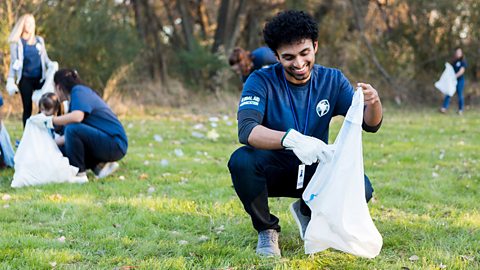
Use the different verb tenses to work out when actions took place, take place or when they will take place.
Actions in the past
Examples in the Form of the verb that describes completed actions in the past.
Reciclé el papel. - I recycled paper.
Recogí basura. - I picked up litter.
Examples in the Used to describe things in the past, actions that used to happen regularly or an incomplete action.
Reciclaba el papel - I used to recycle paper.
Recogía basura - I used to pick up litter.
Actions in the present
Riciclo el papel - I recycle paper.
Recojo basura - I pick up litter.
Actions in the future
Examples in the Used to describle what someone is going to do in the near future, eg I am going to watch, he is going to arrive. Formed with the present tense of 'ir' (to go), followed by 'a' and the infinitive.
Voy a reciclar el papel. - I am going to recycle paper.
Voy a recoger basura. - I'm going to pick up litter.
Examples in the Used to talk about actions that will take place in the future.
Reciclaré el papel. I will recycle paper.
Recogeré basura. - I will pick up litter.
Time indicators can also give clues as to whether the speaker is referring to past, present or future actions:
| Past | Present | Future |
|---|---|---|
| antes - before, previously | ahora - now | en el futuro - in the future |
| el año pasado - last year | este año - this year | el año que viene - next year |
| la semana pasada - last week | esta semana - this week | la semana que viene - next week |
| ayer - yesterday | hoy - today | mañana - tomorrow |
Listening practice
Mexican students Laura and Pablo are talking about actions they take to help the environment.
Listen to each person and work out what they say about:
what they have done in the past
what they are doing now
what they will do in the future
Complete the tables in English.
Laura
| Past | Present | Future |
|---|---|---|
| . |
| Past | Present | Future |
|---|---|---|
| Picked up litter in the park | Recycles glass and paper | Will walk to school |
Feedback
El año pasado at the start of the sentence and the imperfect ending on recogíamos indicate that 'picking up litter' happened in the past.
Ahora and the present tense ending of reciclo tell you that 'recycling glass and paper' is what Laura does now.
El año que viene and the use of voy a and the infinitive indicate that 'going to school on foot' is going to happen in the future.
Pablo
| Past | Present | Future |
|---|---|---|
| . |
| Past | Present | Future |
|---|---|---|
| Used to save water | Avoids using chemicals | Will only use rechargeable batteries |
Feedback
Listen to this item carefully as Pablo mentions the three activities in a different order from the table.
Ahora and the present tense ending on evito are the clues that 'avoiding the use of chemical products' happens in the present.
En el futuro and the future ending on utilizaré indicate that 'using rechargeable batteries' will happen in the future.
Antes and the imperfect tense of trataba de ahorrar indicate that 'saving water' was something he did in the past.
Click or tap on Show more to read the transcript and translation of what Laura and Pablo say.
Laura - transcript
El año pasado yo era miembro de un grupo de voluntarios y cada sábado recogíamos basura en el parque, pero tuve que dejarlo porque ahora tengo demasiado trabajo.
Sin embargo, siempre reciclo el vidrio y el papel.
El año que viene voy a ir al colegio a pie en vez de ir en coche.
¿Y tú, Pablo? ¿Qué haces tú?
Translation
Last year, I was a member of a group of volunteers and every Saturday we used to pick up litter in the park, but I had to leave it because I've got too much work now.
However, I always recycle glass and paper.
Next year, I'm going to walk to school instead of going by car.
And what about you, Pablo? What do you do?
Pablo - transcript
Pues, ahora siempre evito el uso de productos químicos y he decidido que en el futuro solo utilizaré pilas recargables.
Antes no hacía mucho, pero siempre trataba de ahorrar agua porque es un recurso muy importante.
Translation
Well, now I always avoid using chemical products/chemicals and I've decided that in the future, I will only use rechargeable batteries.
Previously I didn't do a lot but I always used to try to save water because it's a very important resource.
Vocabulary sheet
Click or tap on the image below for a list of useful vocabulary to use when talking about the environment.

Higher Tier - Vocabulary - Environmental issues
Useful Higher Tier vocabulary to help you to understand and describe environmental issues includes:
| Spanish | English | Spanish | English |
|---|---|---|---|
| Check your connection, refresh the page and try again. | threat | Check your connection, refresh the page and try again. | flood |
| Check your connection, refresh the page and try again. | rubbish, garbage | Check your connection, refresh the page and try again. | light |
| Check your connection, refresh the page and try again. | consequence | Check your connection, refresh the page and try again. | protest |
| Check your connection, refresh the page and try again. | harm, damage | Check your connection, refresh the page and try again. | landscape |
| Check your connection, refresh the page and try again. | species | Check your connection, refresh the page and try again. | danger |
| Check your connection, refresh the page and try again. | government | Check your connection, refresh the page and try again. | pressure |
| Check your connection, refresh the page and try again. | smoke | Check your connection, refresh the page and try again. | river |
| Check your connection, refresh the page and try again. | industry | Check your connection, refresh the page and try again. | traffic |
Useful Higher Tier verbs include:
| Spanish | English | Spanish | English |
|---|---|---|---|
| Check your connection, refresh the page and try again. | to save | Check your connection, refresh the page and try again. | to achieve |
| Check your connection, refresh the page and try again. | to switch off | Check your connection, refresh the page and try again. | to burn |
| Check your connection, refresh the page and try again. | to support | Check your connection, refresh the page and try again. | to collect, pick up |
| Check your connection, refresh the page and try again. | to increase | Check your connection, refresh the page and try again. | to suffer |
| Check your connection, refresh the page and try again. | to build | Check your connection, refresh the page and try again. | to survive |
| Check your connection, refresh the page and try again. | to care for, take care of | Check your connection, refresh the page and try again. | to fear |
| Check your connection, refresh the page and try again. | to destroy, ruin | Check your connection, refresh the page and try again. | to try to |
| Check your connection, refresh the page and try again. | to avoid, prevent | Check your connection, refresh the page and try again. | to use |
All Foundation and Higher Tier vocabulary listed in this guide can be found on the vocabulary sheet below.
Higher Tier - Vocabulary sheet
Click or tap on the image below for a list of useful Higher Tier vocabulary to use when talking about the environment.
Now you have revised the important vocabulary and key grammar points for talking about the environment why not have a look at the Talking about the local area in Spanish guide?
Careers advice and tips from BBC Bitesize
Future careers, further studies and the world of work - we're here to help with advice from experts and from young people who've found their path.

More on Life in my local area
Find out more by working through a topic
- count3 of 4

- count4 of 4

- count1 of 4