Key points about shopping in Spanish
Used to describe nouns and must agree with the nouns they are describing. can be used to add detail when talking or writing about items you buy.
Question forms are useful for asking about things you are interested in buying.
This guide contains a video comprehension and reading practice.
Vocabulary - Language to use when shopping
Useful phrases to use when shopping include:
| Spanish | English | Spanish | English |
|---|---|---|---|
| Quisiera/Me gustaría … | I would like … | ¿Puedo probarme… ? | Can I try …? |
| por favor | please | gracias | thank-you |
| Me queda bien | It suits me | Me queda mal | It doesn't suit me |
| ¿Cuánto es?/¿Cuánto cuesta? | How much is it? | ¿Tiene otro más grande/pequeño/a? | Do you have another bigger/smaller? |
Useful nouns include:
| Spanish | English |
|---|---|
| la caja | checkout, till, box |
| el color | colour |
| el dinero | money |
| la marca | brand, mark |
| el precio | price, cost |
| la talla | size |
| la tienda | shop |
Here are some useful verbs to use when shopping:
| Spanish | English |
|---|---|
| ir de compras | to go shopping |
| comprar (en línea) | to buy online |
| llevar | to wear |
| cambiar | to change |
| abrir | to open |
| cerrar | to close |
| pedir | to ask for |
| vender | to sell |
| escoger | to choose |
Useful adjectives to use when shopping:
| Spanish | English |
|---|---|
| barato/a | cheap |
| caro/a | expensive |
| cómodo | comfortable |
| corto/a | short |
| de marca | designer |
| de moda | fashionable |
| grande | big, large |
| largo/a | long |
| pequeño/a | small |

Remember
If you are describing the colour (el color) of an item of clothing, you can add vivo/a (bright), claro/a (light) and oscuro/a (dark) to add extra detail.
If you use the words claro or oscuro, the colour adjective does not agree with the noun.
For example:
los vaqueros azul claro - light blue jeans
la camisa verde oscuro - dark green shirt
Grammar - Adjective agreements
In Spanish, adjectives usually go after the noun.
For example:
Es un móvil (noun) caro (adjective). - It’s an expensive phone.
Carmen tiene una bolsa (noun) similar (adjective). - Carmen has a similar bag.
In Spanish, adjectives must agree with the noun. For regular adjectives, change the o to a when using it for a feminine noun, and add s for a plural noun.
For example:
| Masculine | Feminine | English | |
|---|---|---|---|
| Singular | caro | cara | expensive |
| Plural | caros | caras | expensive |
Adjectives that do not end in o, but end in a consonant, such as l or ,mark>r, do not change if the noun is masculine or feminine, but add es for a plural noun.
For example:
| Masculine | Feminine | English | |
|---|---|---|---|
| Singular | similar | similar | similar |
| Plural | similares | similares | similar |
Adjective agreement - Mini quiz
Complete the following sentences in Spanish.
Es un móvil _____.
It's a cheap phone.
Es un móvil barato.
Un móvil is a masculine singular noun, and barato needs to agree with it, so the ending is o.
Es una chaqueta _____.
It's an expensive jacket.
Es una chaqueta cara.
Una chaqueta is a feminine singular noun, and caro needs to agree with it, so the ending is a.
Los colores son _____.
The colours are pretty.
bonito = pretty
Los colores son bonitos.
Los colores is a masculine plural noun, and bonito needs to agree with it, so the ending is os.
Los vestidos son ________.
The dresses are traditional.
tradicional = traditional
Los vestidos son tradicionales.
Los vestidos is a masculine plural noun, and tradicional needs to agree with it, so the ending is ales.
Tradicional is an adjective ending in l and in the plural form it becomes ales.
Video comprehension
Watch the video and answer the questions.
Why does Rafa usually buy his clothes online?
| A | It's cheaper and quicker |
| B | It's cheaper and there is more choice |
| C | It's quicker and there is more choice |
The answer is B
Rafa says, Suelo comprar ropa por internet. Normalmente es más barata y hay más opciones.
I usually/tend to buy clothes online. It's usually cheaper and there's more choice.
Rafa prefers the jumper to the jacket. Give two reasons why.
He prefers the colour.
It's cheaper (it only costs €15).
Rafa says, Pero me gusta más el color de este jersey y es más barato que la chaqueta, solo cuesta 15 euros.
But I like the colour of this jumper more and it's cheaper than the jacket, it only costs €15.
Complete this sentence:
Rafa only has enough money to buy one item because last week he bought _________.
Rafa only has enough money to buy one item because last week he bought tickets for a concert.
Rafa explains, Solo tengo dinero para una cosa porque compré entradas para un concierto la semana pasada.
I only have enough money for one thing because I bought tickets for a concert last week.
Why does Rafa decide to buy the green jacket he tries on?
Give two reasons.
It's his favourite.
It's the most comfortable.
He says, Es mi favorita. Y además, es la más cómoda. Me encanta.
It's my favourite. And in addition, it's the most comfortable. I love it.
Rafa is surprised when he opens his wallet because he thought he had __________.
Rafa is surprised when he opens his wallet because he thought he had two €10 notes.
He says, Pensaba que tenía dos billetes de diez en mi cartera, pero parece que no.
I thought I had two €10 notes in my wallet, but it seems I don't.
Click or tap on Show more to read the transcript and translation.
Transcript
Hola, soy Rafa. Tengo un problema.
Un selfie antes de la fiesta.
Quiero vestirme bien. Por supuesto.
Suelo comprar ropa por internet, normalmente es más barata y hay más opciones. He comprado una chaqueta.Ha llegado, pero…
Es demasiado pequeña.
Así que tengo que ir a la tienda para comprar algo.
¿Me ayudas a decidir qué comprar? Vale. ¡Vamos!
Me gusta visitar las tiendas para probarme ropa.
¡Pero no me gusta hacer cola!
Bueno, ¡estoy buscando algo!
¿Cuánto cuesta? Esta chaqueta está en rebajas – tiene un descuento del veinte por ciento. ¡Qué guay! Cuesta veinte euros.
Pero me gusta más el color de este jersey y es más barato que la chaqueta, solo cuesta quince euros.
También me gustan estos zapatos, y no son caros…. cuestan nueve euros!
Y estas gafas….
Es tan difícil elegir. Solo tengo dinero para una cosa porque compré entradas para un concierto la semana pasada…
Voy a probar este.
Otra vez…
Creo que necesito una talla más grande para estar más cómodo…
¿Me queda bien? ¿Te gusta?
Vale, me llevo esta. Es mi favorita. Y además, es la más cómoda. Me encanta.
Ahora tengo que hacer cola. ¡Qué rollo!
Ahora a pagar. Son veinte euros. Pensaba que tenía dos billetes de diez en la cartera, pero parece que no. Ok, entonces voy a pagar con tarjeta.
Tengo el recibo por si hay algún problema con la chaqueta. ¡Espero que no!
¡Genial! Creo que me queda bien. Gracias por ayudarme.
¿Un selfie antes de la fiesta?
Translation
Hi, I’m Rafa. I have a problem.
I have a birthday party tonight.
I want to look good. Of course!
I usually buy clothes online. It’s normally cheaper and there’s more choice. I’ve bought ajacket.
It’s arrived, but…
It’s too small.
So I have to go to the shop to buy something.
Will you help me decide what to buy? Ok, let’s go.
I like visiting shops to try on clothes.
But I don’t like queuing!
Well, I’m looking for something.
How much does it cost? This jacket is on sale – it has 20 percent discount. Cool! It only costs 20 euros.
But I like the colour of this jumper more and it’s cheaper than the jacket. It only costs 15 euros.
I also like these shoes and they’re not expensive… they cost 9 euros!
And these glasses…
It’s so hard to choose. I only have enough money for one thing because I bought tickets for a gig last week.
I’m going to try this one.
Again…
I think I need one size bigger to be more comfortable.
Does it suit me? Do you like it?
Right, I’m buying this one – it’s my favourite. And, besides, it’s the most comfortable. I love it.
Now I need to queue. What a nuisance!
Now, to pay. It’s twenty euros. I thought I had two ten euro notes in my wallet, but it seems I don’t. Ok, then I’m going to pay by card.
I have the receipt just in case there’s a problem with the jacket. I hope not!
Great! I think it suits me. Thanks for helping me.
A selfie before the party?
Vocabulary - Items you can buy
Here are some vocabulary items that you might buy, including clothes.
| Spanish | English | Spanish | English |
|---|---|---|---|
| Check your connection, refresh the page and try again. | bag | Check your connection, refresh the page and try again. | mobile phone |
| Check your connection, refresh the page and try again. | camera | Check your connection, refresh the page and try again. | souvenir, memory |
| Check your connection, refresh the page and try again. | shirt | Check your connection, refresh the page and try again. | present, gift |
| Check your connection, refresh the page and try again. | t-shirt | Check your connection, refresh the page and try again. | magazine |
| Check your connection, refresh the page and try again. | wallet | Check your connection, refresh the page and try again. | clothes, clothing |
| Check your connection, refresh the page and try again. | jacket | Check your connection, refresh the page and try again. | dress |
| Check your connection, refresh the page and try again. | skirt | Check your connection, refresh the page and try again. | video game |
| Check your connection, refresh the page and try again. | (sun) glasses | Check your connection, refresh the page and try again. | shoes |
| Check your connection, refresh the page and try again. | jumper | Check your connection, refresh the page and try again. | trainers |

All Foundation Tier vocabulary listed in this guide can be found on the vocabulary sheet below.
Grammar - Asking questions in Spanish
The questions words in Spanish are:
| Spanish | English | Spanish | English |
|---|---|---|---|
| Check your connection, refresh the page and try again. | what | Check your connection, refresh the page and try again. | how, what like |
| Check your connection, refresh the page and try again. | who | Check your connection, refresh the page and try again. | which |
| Check your connection, refresh the page and try again. | when | Check your connection, refresh the page and try again. | how much/how many |
| Check your connection, refresh the page and try again. | why | Check your connection, refresh the page and try again. | where |
Notice that the question words all have accents. This indicates that that syllable needs to be emphasised when speaking.
For example:
¿Cómo es la camiseta? - What’s the T-shirt like?
¿Por qué te gusta la chaqueta? - Why do you like the jacket?
¿Cuánto cuesta? - How much does it cost?
¿Dónde está la tienda de deporte? - Where’s the sports shop?
How to say how much or how many in Spanish
¿Cuántos? - meaning how much/how many? - is used when the word following it is masculine plural.
¿Cuántas? Is used when the word following it is feminine plural.
For example:
¿Cuántos euros tienes? - How many euros do you have?
¿Cuántas camisas tienes? - How many shirts do you have?
Using declarative sentences
You can ask questions by making a declaration of what you want. When stating what you would like, you should use, ‘quisiera’ which means ‘I would like’.
For example: Quisiera un nuevo móvil por favor - I would like a new mobile phone please.
However, when asking if you can have something, you would be more likely to use podría plus an infinitive.
For example:
¿Podría pedir una hamburguesa por favor? - Can I order a burger please?
Common declarative question phrases include:
| Spanish | English |
|---|---|
| quisiera… | I would like… |
| podría tener…. | could I have… |
| me gustaría… | I would like… |
| puedo ir… | can I go… |
| puedo pedir… | can I order… |
For example:
Me gustaría un helado de fresa por favor. - I would like a strawberry ice cream please.
¿Podría tener el cambio por favor? - Can I have the change please?
Mini quiz - Asking questions
Complete the following question sentences.
¿____ color es la camiseta?
What colour is the T-shirt?
¿Qué color es la camiseta?
Qué means ‘what’.
¿____ cuesta?
How much does it cost?
¿Cuánto cuesta?
Cuánto means ‘how much/many’.
¿_______ pesos tienes?
How many pesos do you have?
¿Cuántos pesos tienes?
Cuántos is used when the word following it, in this case pesos is masculine plural.
¿_____ ______ una bolsa por favor?
Could I have a bag please?
¿Podría tener una bolsa por favor?
Podría tener means ‘could I have’.
To find more about asking questions have a look at the Asking questions in Spanish guide.
Reading practice
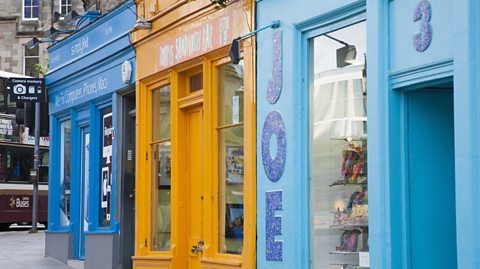
Read this blog post about a new shop that is going to open.
Alana abrirá su nueva tienda en el centro de Sevilla el próximo miércoles a las diez. La nueva tienda creará más de 250 empleos. Habrá tres plantas y la tienda ofrecerá la ropa de moda para mujeres, hombres y niños, incluyendo zapatos.
Los clientes se encontrarán con 50 cajas, tres cafeterías y acceso gratuito a conexión wi-fi. Alana tiene 75 tiendas en España que ofrecen la moda a buen precios.
Complete these sentences. Choose the letter for the correct option.
The shop will open …
| A | next Tuesday |
| B | next Wednesday |
| C | next Thursday |
The answer is B – the shop will open next Wednesday.
The text says, Alana abrirá su nueva tienda en el centro de Sevilla el próximo miércoles a las diez.
Lola will open its new shop in the centre of Seville next Wednesday at 10 o'clock.
There will be more than …
| A | more than 50 new jobs created |
| B | more than 75 new jobs created |
| C | more than 250 new jobs created |
The answer is C – 250 new jobs created
The text says, La nueva tienda crearará más de 250 empleos.
The new shop will create more than 250 jobs.
In the shop you can buy …
| A | clothing |
| B | household goods |
| C | plants |
The answer is A – clothing
The text says, … la tienda ofrecerá la ropa de moda para mujeres, hombres y niños …
… the shop will offer fashionable clothing for women, men and children …
Customers will have accesss to …
| A | fast wi-fi |
| B | free coffee |
| C | free wi-fi |
The answer is C - free w-ifi.
The text says, Los clientes se encontrarán con 50 cajas, tres cafeterías y acceso gratuito a conexión wi-fi …
Customers will find 50 tills, three cafeterias and access to free wifi …
The shop's prices are …
| A | expensive |
| B | reasonable |
| C | mid-range |
The answer is B - cheap.
The text says, … ofrecen la moda a buen precios …
… they offer fashion at reasonable prices …
Click or tap on Show more to read a translation of the text.
Alana will open its new shop in the centre of Seville next Wednesday at 10. The new shop will create more than 250 jobs. There will be three floors and the shop will offer fashionable clothing for women, men and children, including shoes.
Customers will find 50 tills, three cafeterias and access to free wifi. Alana has 75 shops in a Spain that offer fashion at reasonable prices.
Vocabulary sheet
Click or tap on the image below for a list of useful vocabulary to use when talking about shopping.

Higher Tier - Vocabulary - Shopping
Items you can buy
| Spanish | English |
|---|---|
| Check your connection, refresh the page and try again. | design |
| Check your connection, refresh the page and try again. | plant |
| Check your connection, refresh the page and try again. | beauty products |
| Check your connection, refresh the page and try again. | suit, costume |
Verbs
| Spanish | English |
|---|---|
| Check your connection, refresh the page and try again. | to spend (money) |
| Check your connection, refresh the page and try again. | to try |
| Check your connection, refresh the page and try again. | to offer |
Adjectives
| Spanish | English |
|---|---|
| claro/a | clear, light |
| oscuro/a | dark |
All Foundation Tier vocabulary listed in this guide can be found on the vocabulary sheet below.
Higher Tier - Vocabulary sheet
Click or tap on the image below for a list of useful Higher Tier vocabulary to use when talking about shopping.
Now you have revised the important vocabulary and key grammar points for talking about shopping, why not have a look at the Describing healthy habits in Spanish guide.
More on Life in my local area
Find out more by working through a topic
- count1 of 4
- count2 of 4

- count3 of 4