The National Health Service is a free medical and healthcare funded by the Compulsory financial contribution to the government that is spent on maintaining services. that people pay.
Video - The NHS
The NHS – what is it exactly? We’ve gone from this … to this.
This is the history of the National Health Service and our thanks goes to two Welshmen. One, was Aneurin 'Nye' Bevan, and the other was his colleague, Jim Griffiths.
When Aneurin Bevan became health minister in 1945, at the end of World War Two he thought that the government should take responsibility for the health of the British people, and that the services provided should be free of charge. Jim Griffiths, Labour MP for Llanelli, thought that this should be a lifelong service too, agreeing with William Beveridge that it should be a service from cradle to grave. Fortunately for us, this is still the case today.
Did you know that World War Two was one of the main reasons for change in our health system? Because so many soldiers were wounded, the government stepped in to help and created the Emergency Hospital Service. The soldiers weren’t the only ones who needed medical care. The long war affected the health of the British people in general. Thanks to Aneurin Bevan, Jim Griffiths and other pioneering government members, the NHS was born on 5 July 1948.
It’s hard to believe that before the summer of 1948 it was only those with money who could afford to use the health services. Aneurin Bevan and Jim Griffiths didn’t want to discriminate against those with no money and for the first time everyone had access to the health service.
Over the years, it’s seen many changes, developments and improvements. It is a free health service for all in the UK. In many countries you still have to pay to see a doctor. Thanks to the NHS we are healthier and living for longer.
Establishing the National Health Service
The Beveridge Report
In 1941, the A government formed of more than one political party. commissioned Sir William Beveridge to look at ways of rebuilding Britain following the Second World War.
In 1942, Beveridge published his report, and it contained a series of recommendations. His report noted the need to beat ‘five giants’ to rebuild the country following the war, namely:
- want – adequate income for all
- disease – access to healthcare
- ignorance – a good education
- squalor – adequate housing
- idleness – gainful employment
One of its recommendations to address these was the establishment of a welfare state.
Aneurin Bevan
The Labour party won the election in 1945, and Welshman Aneurin Bevan was appointed Minister of Health – and he was responsible for establishing the National Health Service.
Aneurin Bevan was inspired by an existing health system in Tredegar, the town where he was born.
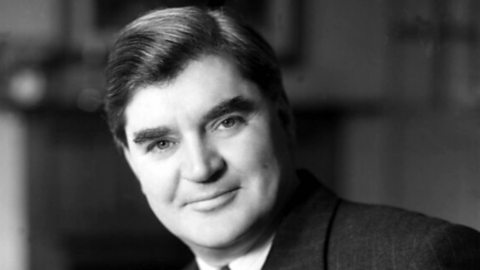
Tredegar Medical Aid Society had established a free medical care service in return for financial contributions from its members.
Aneurin Bevan saw the success of this scheme, as the society was addressing the medical needs of 95% of the local population in Tredegar by 1933. This is the model that he used to establish the National Health Service.
The government created 1,000 new operating theatres and tens of thousands of extra beds during the Second World War. People that were injured in the war also received free hospital treatment. This therefore proved that it was possible to run a national health service. The National Health Act was passed in 1946, and the National Health Service was established in 1948. It was part of a series of changes that were put in place that used money to provide Support for a person from birth to death. support.
What did the National Health Service include?
- Free medical treatment for the public.
- Prescriptions for drugs, dental care and optical care.
- One state system that co-ordinated voluntary and local hospitals under the control of health boards.
Why did some object to the National Health Service?
The British Medical Association, the professional body of the doctors, was of the opinion that they would lose money as a result of the service.
They didn’t want their members to work solely for the government and fought to keep their independence.
In January 1948, the association held a vote for its members to see whether or not they agreed with the decision to join the NHS.
40,814 voted against joining, and 4,735 voted in favour.
However, following further discussions, Bevan decided that some consultants would be allowed to work in the health service while continuing to treat private patients at the same time, earning high fees.
Bevan said he had ensured the start of the service by ‘stuffing the mouths of the doctors with gold’.
What were the successes of the NHS?
- By 5 July 1948, three quarters of the population had registered with doctors under the new health scheme.
- Two months later, 39,500,000 people, or 93% of the population, were registered with the service and over 20,000 GPs were part of it.
- It ensured that everyone had access to free healthcare.
What challenges did the NHS face?
- In its first year, the NHS cost £248 million to run, nearly £140 million more than the original estimate.
- A sum of £2 million had been set aside to pay for free glasses over the first nine months of the NHS, but the amount was spent in a matter of weeks.
- The government estimated that the NHS would cost £140 million a year to run by 1950, but by the beginning of 1949 the cost reached around £400 million.
- In 1951, the Labour government introduced a fee for some dental treatment and prescriptions and Aneurin Bevan resigned because of this.
The NHS in Wales today
In 1969, the powers over the NHS in Wales were conferred on the Secretary of State for Wales. Since Welsh The transfer of some powers from a central government to a more local level, eg from the UK Government to the Welsh Government. in 1997, the powers are now under the control of the Welsh Government and the Minister for Health and Social Services.
Over the years, the cost of providing care has increased, putting pressure on the service, and not all elements of the NHS are now free, eg eye tests. The population is also ageing as a result of the care and therefore places more stress on the service.
Since the Covid-19 pandemic, which started in March 2020, the NHS has faced huge pressures. Sections such as mental health services and GPs have been under strain since the pandemic due to staff shortages, increased demand and long waiting lists, for example.
However, healthcare is still free to all members of society and there is an increase in the life expectancy of people in the UK.
Quiz - The NHS
More on Change and movement
Find out more by working through a topic
- count3 of 3
- count1 of 3