All about Lunar New Year
Celebrated across Asia and beyond, the Lunar New Year sees numerous events and festivities taking place worldwide. Centred around removing the old and bad and welcoming the good and new for the year ahead, many communities and cultures have both similar and different traditions.
The term Chinese New Year is commonly used; however, Lunar New Year has become more widely used as an inclusive term to represent the various nations that also celebrate at the same time of year. But how much do you know about the Lunar New Year and how it is celebrated worldwide?
Here, BBC Bitesize takes a closer look at just 10 fascinating facts surrounding Lunar New Year that you may not know. Focusing primarily on how it is celebrated in Chinese culture and customs, you can find out more below.
1. It falls on a different date every year
In 2026, the Lunar New Year begins on February 17. But you may have noticed that it doesn’t occur on this exact date every year.
While celebrations and traditions take place annually, the exact date of the Lunar New Year changes every year as it begins with the arrival of a new moon, which signifies the start of a new month. Instead of using the Gregorian calendar traditionally used in the UK, which starts on 1 January, it follows the traditional lunisolar calendar, adapted across various cultures, which is based on the moon’s cycles.
Every year, the date will fall sometime between 21 January and 20 February, on the second new moon after the December solstice.
2. It is also known as the 'Spring Festival'
Celebrated across the world, particularly throughout East Asia and China, the Lunar New Year is one of the most important holidays in the calendar. But to many, it is also known as the Spring Festival.
This is because it marks the beginning of the spring season and the end of winter in the traditional lunisolar Chinese calendar. The 15-day festival is about saying goodbye to the past year and, like the season of spring itself, symbolises renewal.
The Spring Festival also symbolises good fortune, new opportunities, happiness, prosperity and more.
3. It concludes with the Lantern Festival
As mentioned, the Lunar New Year is also called the Spring Festival in China and marks the beginning of the spring season. But if you have ever heard of the Lantern Festival, it’s important to note that there is a distinction between the events.
The Lantern Festival, a traditional Chinese festival, marks the final day of the 15-day Spring Festival celebrations. Falling on the 15th day of the first month in the lunar calendar, this year in 2026, it falls on 3 March.
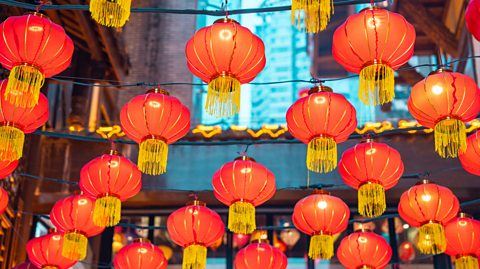
Symbolising letting go of the previous year and welcoming in the next, the red lanterns not only decorate households and streets for the celebrations, but it is also tradition for people to write riddles on them for others to solve.
4. There is a new zodiac animal every year
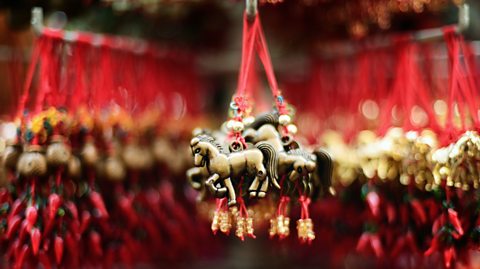
In many cultures, the new year is also associated with a different animal from the zodiac. The Chinese Zodiac, also known as Sheng Xiao or Shu Xiang, assigns an animal to each year in a 12-year cycle – and these are Rat, Ox, Tiger, Rabbit, Dragon, Snake, Horse, Goat, Monkey, Rooster, Dog, and Pig.
According to the traditional legend of The Great Race, it was the Jade Emperor who organised a race which saw the 12 species take part. All animals were invited, but as a reward, the 12 who arrived and took part had a year named after them in the zodiac, with the race determining in which order the animals would be placed.
The animals of Chinese astrology, similarly to the star signs of the zodiac, are thought to dictate different personality traits and in 2026 it is the year of the Fire Horse – which symbolises independence, ambition, energy and more. But the animals in the zodiac can slightly differ in other countries, like the Boar replacing the Pig in the zodiac in Japan and the dragon being substituted for a mythical creature, known as Naga, in Thailand.
5. The red envelope tradition
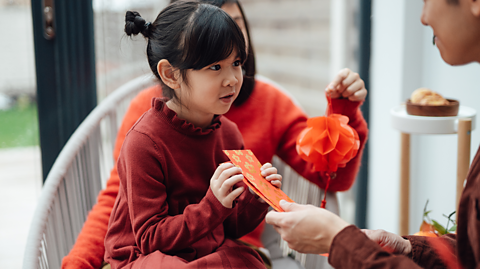
Another long‑standing tradition is passing red envelopes, known as Hóngbāo, to friends and family. Usually gifted to younger generations or children, the decorated envelopes contain money.
But the tradition has a much deeper meaning. The red envelopes are a token of good fortune and symbolise good luck.
The colour red is believed to bring positivity and happiness and also ward off evil spirits.
6. There are superstitions
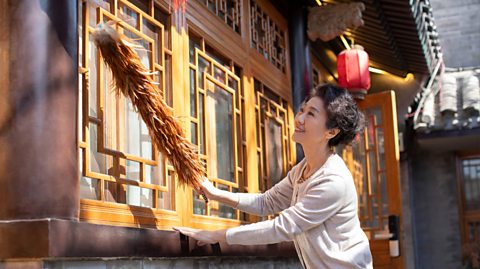
As much as the Lunar New Year is full of tradition, there are also a number of superstitions. These may vary across different Asian cultures, but here are just a few from Chinese culture that you may have heard of.
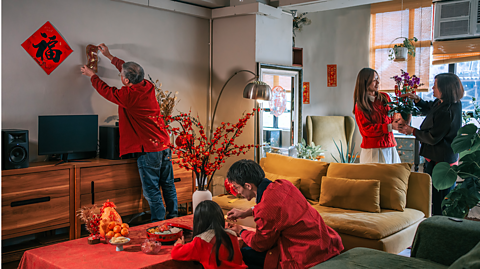
One is that you shouldn’t clean at the start of the holiday, as it is believed you could remove any fortune or luck that you have at home from the new lunar cycle. This is why many people clean their homes before the celebrations, as many clean to remove any misfortune or bad luck lingering ahead of the new year.
Another is wearing red in some form to ward off evil spirits.
7. The fireworks and firecrackers tradition
We’ve mentioned a lot about the colour red in the celebrations and what it symbolises. But where does this come from?
Primarily in traditional Chinese culture, the colour red originates from the myth of a monster called Nian. The beast is said to have terrorised people every year, until he was defeated due to his fear of red, loud noises and fire.
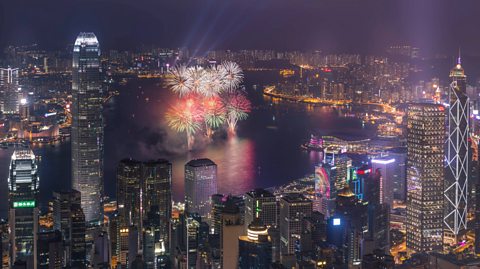
This is why fireworks and firecrackers are a huge part of the celebrations that take place across the globe.
8. Dragon and lion dances
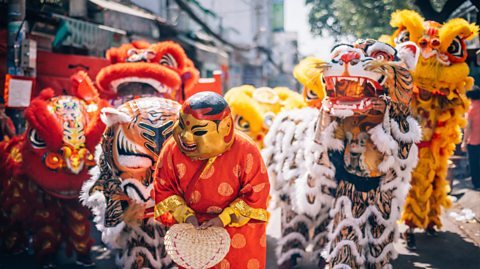
If you’ve ever attended a Lunar New Year or Chinese New Year celebration, or have even seen photographs, you’ll likely have seen a number of extravagant costumes and dancers. But often at the heart of the events, you’ll spot a dragon and a lion.
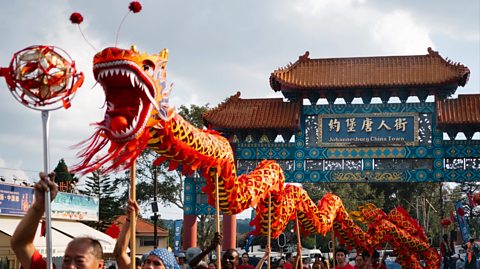
The traditional dances are known worldwide and are often accompanied with loud drums and the cheers of a crowd. When it comes to the dragon, dancers use poles to create movement for a large colourful dragon puppet as they weave through the crowds.
Weas the lion usually sees two performers as they imitate the movements of a lion, through a lion's head and its tail. The animals and performances are believed to bring good fortune.
9. Reunion dinners on New Year's Eve
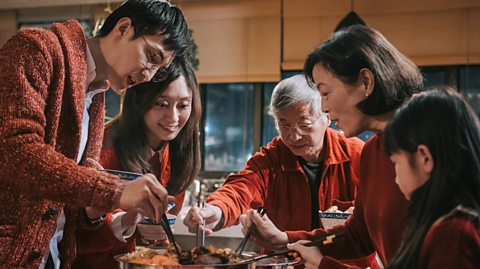
At the heart of Lunar New Year is family and togetherness. Throughout the celebrations, families and loved ones reunite to partake in traditions and share wishes of health and prosperity for the upcoming year.
In Chinese culture, it is tradition to have “reunion dinners” on Lunar New Year’s Eve. This sees families feast together on auspicious dishes and it is a hugely important part of the Spring Festival.
Reunion dinners also take place on Lunar New Year.
10. Traditional foods loved by generations
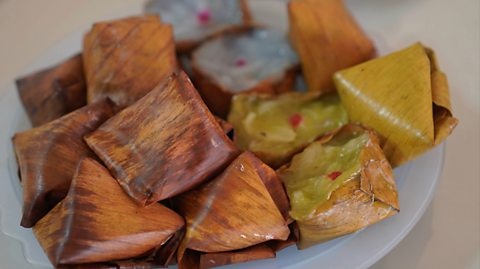
A huge part of Asian culture is not just family and togetherness – but incredible food. There are so many dishes famous and loved around the world and when it comes to Lunar New Year, a number of them are at the centre of the celebrations.
When it comes to traditional Chinese foods, different food represents different things. And this time of year, families can be seen enjoying the likes of fish, which represents fortune, as well as dumplings that symbolise wealth and glutinous rice balls, marking family reunion.
For Lunar New Year, different communities have different foods and traditions. For example, in Vietnam, the likes of savoury sticky rice cakes are enjoyed whereas in Malaysia, pineapple tarts are eaten and symbolise wealth and prosperity.
This article was written in February 2026
