Sign up to the BBC Bitesize newsletter! External Link
For home education news and stories plus updates on the latest Bitesize content, register for our newsletter today.

Top tips for giving your child pocket money
Ah, pocket money. It can be a confusing issue in parenting: should you give your child pocket money, how much should you give, and when? If this all sounds familiar, fear not!
There is no right answer but BBC Bitesize has some tips on how to get started or change tack, and how giving pocket money can be a form of financial education for your child, as well as a fun way of learning at home.
Why should kids get pocket money?
“The earlier we can get our children used to having money, budgeting, saving and spending, the better!” – Mrs Mummypenny
Kids don’t have to get pocket money. However, Lynn Beattie, aka Mrs Mummypenny, a personal finance writer, broadcaster and mum of three, believes it's good to familiarise children with budgeting, saving and spending as early as possible.
Senior Policy and Propositions Manager at the Money and Pensions Service, Lisa Davis, says: “Children who’ve been taught about money are more likely to feel confident when managing it and will save more regularly in later life."
She adds: "Giving pocket money is a good opportunity for them to learn how to save and manage their money, make mistakes with small amounts of money and learn the value of things.”
Whether that’s a six-year-old learning how many sweets they can buy with one pound, or a ten-year-old saving up each month until they can afford a toy or game they want.
How can I teach my child about the value of money?
“The most important thing is to talk to them about money, so they understand the value of it.” – Lisa Davis, Money and Pension Service
Lisa Davis says younger children can learn about money through play: “You could start by using coins and playing shop, adding price tags to items in their shop, using real coins and notes, maybe a toy till."
Lisa suggests: “Between the ages of five and six you can explain how money works, the difference between wants and needs, and why we save. This is the age you might consider giving small amounts of pocket money to help them save for something they want. Talk to your child to help them decide what to use it for, such as: all their treats, toys, books and magazines or just a few extras. From the ages of eight to 11, you can start talking to children about the banking basics, paying bills, budgeting and how credit works.”
Lynn Beattie adds: “Always have the conversation about saving up for things your children might want to buy, and encouraging them to not spend as soon as they receive the money.”
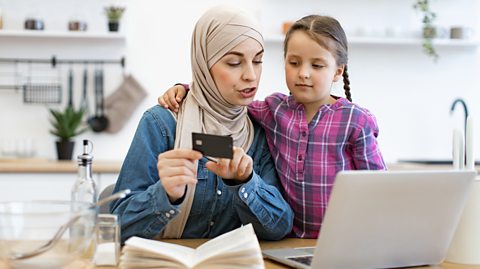
You’ll also need to think about whether you give your child cash or pay directly into a bank account. Younger children may more easily understand the value of physical money, ie coins and notes, where older children may need to practice how to use a debit card and how to understand things like bank statements.
Whatever you decide, Lisa says: “The most important thing is to talk to them about money, so they understand the value of it.”
How much pocket money should I give my child?
How much pocket money to give is the million dollar question… pardon the pun! According to a recent analysis of more than 350,000 children aged six to 17 who use Natwest Rooster, children earn on average £9.13 per week.
Lynn Beattie has three boys aged 17, 15 and 12: “I give them £20 each a month. I am a single mum so assume they get similar from their father. I also give them money for more difficult jobs and chores they help with around the house, ie cutting back the garden trees, weeding the driveway, etc.”
Parent Mike increases the amount his children get by their age, so his nine-year-old gets £9 a month and his 12-year-old gets £12 a month.
Lisa Davis says: “When children are younger, giving them a small amount of pocket money every week gets them used to making their own decisions about how to spend their money. As they get older, giving them a monthly allowance teaches them to budget for longer, for example, preparing them to manage a bigger expense.”

To decide how much pocket money to give your child, ask yourself:
- What is your budget?
- What feels age-appropriate?
- Why are you giving them pocket money?
- How will you be clear what the money is for eg food, snacks, entertainment, clothes, holidays, etc?
- How often will you pay it eg weekly, monthly)?
- Will it be dependent on certain chores or behaviour?
- Will you give them cash or pay into a bank account?
It’s also difficult, but important, not to sub your child if they run out of money before their next ‘payday’.
Should pocket money be tied to chores?
Whether or not to link pocket money to chores is another decision for you to weigh up. The benefits can be that children learn the concept of ‘working’ to earn money, chores get done around the house and there are fewer arguments as everyone knows their ‘job’.
The downside can be if your child fails to learn that as adults we don’t get paid to do the housework, and they may start to expect rewards for other basic tasks.
Lynn Beattie says her boys’ pocket money is linked to doing basic chores: “Keeping bedrooms tidy, putting washing away, the dishes, etc. I really think pocket money should be linked to chores to establish the practice that things don’t come for free, and if you work you can get paid.”
What other ways can I teach my child about money?
There’s maths involved in pocket money too of course! You can use money to teach your child addition, subtraction or multiplication at home, and they can use money to learn how to calculate change, whether an amount is greater or smaller than, and how to estimate amounts.
If giving pocket money doesn’t suit your family set-up, there are other things you can do, at home and when out and about. Use role play: pretending to go to the cinema or theme park and budgeting for things they want to do there or buy in the gift shop.
Board games such as Monopoly and Game of Life can help too, or sometimes TV programmes can show how different households manage a budget.
Another tangible way to show your children how to save for something is to use jars for different things. For example, you could put £1 a day in a jar on the kitchen worktop and save up for a special treat that the family agrees on, whether that’s ice creams in the park or a day at a waterpark once you’ve saved up enough.

It’s also important to talk to children about the impact of influencers and advertisers, and things like in-app purchases. Lynn Beattie says: “Interestingly, it’s a good lesson to let them sign up to recurring subscriptions. Then they realise it does actually cost them every month, even though it was a free offer to start off with. My children have learned the hard way with [a music streaming service] and now won't sign up for monthly subscriptions.”
Lisa Davis says it’s also okay if you don’t feel confident with money: “You don’t have to manage your own money perfectly to be able to teach your children good habits… It’s important to be open about your money and talk to your children about where it comes from and what you use it for, how to make good choices and learn from mistakes.”
Where to find more on teaching your child about money
If you lack confidence in talking to your child about money, use this glossary of finance-related words to help you. BBC Teach also has a range of financial literacy videos that you and your child can watch together.
The Space Shoppers game teaches five to seven-year-olds about spending money. For children aged 11-14, they can read about looking after their finances and finding the best deal, and this GCSE content teaches 14-16-year-olds about managing their ins and outs.
Where can I find more support for home education and parenting?
The BBC Bitesize home education collection is designed to support you and your child’s learning at home with free downloadable resources, advice articles and videos for children aged two-to-five years old, five-to-11 years old and 11-to-16+ years old.
Bitesize Parenting is the go-to place for the whole parenting community to find stories, expert advice and fun activities.
If your child has special educational needs or disabilities, be sure to check out the Parenting SEND collection. Bitesize has a collection of Sensory Stories, an immersive video series of unique sensory adventures for children with additional needs.
For more information about home education, this BBC News article covers the rise in families deciding to educate their children at home.
