Cast your mind back to the summer of 2025 – England have just pulled off an incredible victory to claim back-to-back European Championships.
Post-game, defender Lucy Bronze is interviewed and casually reveals that she played the whole tournament with a fractured tibia.
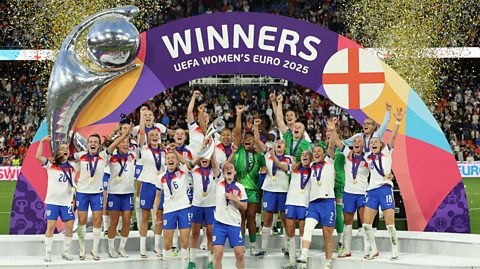
The England and Chelsea full back was rightly lauded for her bravery and commitment – but one thing that wasn’t spoken about as much during the month-long competition was the impact of the menstrual cycle on the women representing the 16 nations.
From periods, to PE kits and modesty considerations – women and girls in sport face barriers that their male counterparts don’t.
Girls in PE: Breaking Down the Barriers is a new three part strand series from BBC Bitesize – looking to explore why so many young women quit sport.

Beth Mead: I mean, I have actually won the Euros while on my period and probably half the team probably were as well. So, win things while you're on your period—who cares?
Tess Howard: I said, I want to go to the Olympics in shorts. A very bold statement. Get picked and change the policy. But they came back and said, yes.
Khadijah Mellah: I'm a Peckham girl from a Muslim background and I felt completely out of my depth. But we won the race.
Tess Howard: 64% of girls drop out before 16, and when you find out that a third of those girls drop out because of kit, that's an easy fix. Why don't we just fix the kit?
Olivia Smith: Being young, it's scary at first. Like you don't know what really to expect. Everyone has a different experience with their periods.
Khadijah Mellah: Hijabs are girls with an article of clothing on their head. There's talent there. There's still so much that we have to offer.
Tess Howard: It's not your fault that you don't know what sports bra to go and get. There's not the resource there.
Prof Kirsty Elliott-Sale: Bleeding once a month—it has some challenges associated with it. You know, we can't lie about that.
Prof Joanna Wakefield-Scurr: Why do we need a bra? What are they? How do they work?
Dr Norah El-Gohary: If I introduce the sports hijab to the girls, it's going to transform their sports experience.
Beth Mead: Being on your period isn't weird. It's okay. It's normal. It happens. It's life. It's a good thing that it's happening.
Tess Howard: But you know what? You're going to go and change it. The future is brighter.
"Success can happen at any time and I happened to be on my period with that success”
Arsenal and England striker Beth Mead has had an incredible career to date – and she’s nowhere near finished yet.
The 30-year-old is a two-time European Championships winner with England where she has a record of a goal every other game for her country.
She’s also a Champions League winner with Arsenal and won the Women’s Super League (WSL) in 2019.
Mead is definitely a role model to young footballers. So when she speaks about playing at the highest level while on her period – she hopes to inspire the England players of the future.
“I've had pains in the past which have nearly stopped me from training or being able to perform at my best but, I mean, I have actually won the Euros while on my period and probably half the team probably were as well.
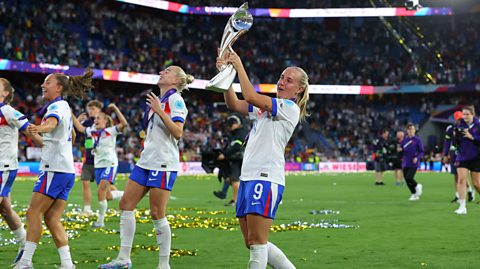
"Success can happen at any time and I happened to be on my period with that success.
"We're very lucky here at Arsenal that we have a very good support system. We're at elite level, but how can we help someone who's at grassroots, to give every girl every opportunity to play whatever sport it is they want to play, whatever time of the month it is."
We know that the menstrual cycle has a clear impact on the body – it can affect mood, sleep and emotions as well as causing tiredness, headaches and cramps.
But it’s still considered a taboo subject in sport, even at the highest level. And if some professional sports people don’t feel as if they can always bring it up – imagine how that teenage girl still exploring their sporting journey might feel?
"I want to go to the Olympics in shorts. Get picked and change the policy"
It’s a similar story when it comes to kit. So many options for sport are leftovers from the men’s game, with things like female-specific football boots and cricket bats relatively recent additions.
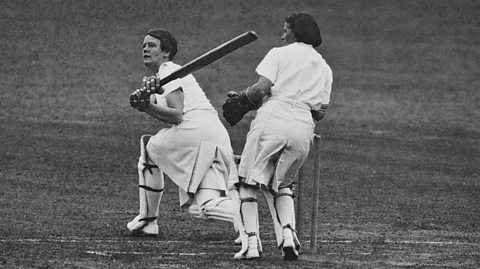
The kits themselves have also caused a problem throughout the years, with women taking to sporting arenas often in less practical attire.
The England women’s cricket team won the World Cup for the second time in their history in 1993 – wearing skirts while they did so. It wasn’t until five years later that players were allowed to wear trousers, like the male counterparts.
Netball Super League team London Mavericks recently announced that players would be given the choice to switch from traditional netball dresses to shorts or leggings. While some players have said they want to stick with the dresses – the choice has been a long time coming.
The Mavericks are following in the footsteps of Team GB hockey player Tess Howard, who successfully fought for the right to choose between skirts and shorts.
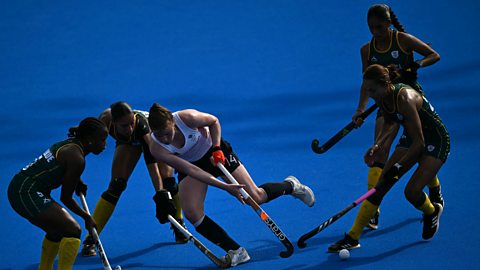
“I said, I want to go to the Olympics in shorts. A very bold statement. Get picked and change the policy. But they came back and said, yes.
“64% of girls drop out before 16, and when you find out that a third of those girls drop out because of kit, that's an easy fix. Why don't we just fix the kit?”
Another of those kit concerns comes back to the menstrual cycle again. Beth Mead was part of the England team who voted to permanently switch from white shorts for the home kit, to navy. Several WSL teams, including Everton and Manchester City have also chosen to jettison traditional white shorts.
As Mead said at the time, “It is very nice to have an all-white kit but sometimes it's not practical when it's the time of the month.“
Mead was part of the Arsenal squad given a similar choice about their traditional white shorts – but this time, she’d had a change of heart. She said the majority of the team felt comfortable and didn’t want to change – but the fact they’d been given the choice and had the conversation was the important part.
It’s opening up and talking about things like kit concerns, periods and modesty considerations that feature throughout this brand new BBC Bitesize series.
Following on from the incredible women’s summer of sport in 2025, Girls in PE: Breaking Down the Barriers takes a look at why so many teenage girls continue to drop out of PE at school.
Mead and Howard are joined by Olivia Smith, Khadijah Mellah, industry experts and teenage girls to look at the challenges they faced and continue to face and the steps being taken to overcome them, in order to take part in the sports they love.
This article was published in December 2025
Women's Euros: What was the first ever final like?
Former players Kerry Davis and Pia Sundhage on the first Women's Euro final in 1984
25 years of the Women’s Ashes trophy: A brief history of England vs Australia
How did the sporting rivalry between England and Australia begin? BBC Bitesize takes a look at the story behind the Women’s Ashes.