Parents spend much of their time and mental load remembering and facilitating their child’s appointments, social lives and education – remembering PE kits, driving to classes, and making dental appointments. But 1.4 million people in the UK are also taking on similar caring responsibilities for elderly relatives, sandwiching them between two dependent generations.
We spoke to a carer in this situation as well as getting advice from charity Carers UK on getting support if you're in the same boat.
Who might be a sandwich carer?
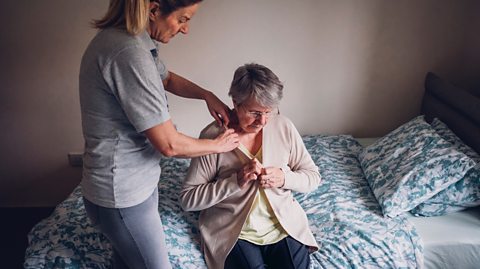
While men can often be involved in juggling care responsibilities, “The majority of these Sandwich Carers are women,” says Helen Walker, who is Chief Executive of charity Carers UK. “When our organisation was founded 60 years ago it was actually called The National Council for the Single Woman and Her Dependants!
“Back then society assumed that single women would give up their careers to care for their parents should that be required. We’ve come a long way since 1965 – there’s more legal and financial support available for people with caring responsibilities, but it’s still a huge burden that’s being carried by individuals, often at cost to their young families, financially and emotionally, to say nothing of the personal burn-out.”
What's it like to be caring for parents and kids?
“The worst thing about being a Sandwich Carer is the guilt,” says Kim, who has two teenagers and has spent the last few years supporting her parents. “You’re exhausted physically and emotionally, and you just can’t be there for your children in the way you’d want to be – there’s nothing left by the time you get home.
“It was especially hard when my Dad was dying at home and I spent long days there supporting him and my Mum, and some nights towards the end. I’d feel bad that I wasn’t there for my daughter in particular who was anxious about her exams as well as dealing with the emotion of losing her grandad. We spoke on FaceTime but it’s not the same. I just felt I couldn’t be there properly for anyone.”
She continues, “The situation with my parents had slowly been growing more complex. They lived independently but didn’t drive, so when it became difficult for them to walk or get the bus I started taking them shopping. I live about half an hour from them and I’d go once a week and help them with shopping, going to the bank, and sorting out any other issues. I’d drive them to regular appointments too – the GP, optician, dentist, physiotherapy or chiropody. With two of them, that could be quite often.”
I just felt I couldn’t be there properly for anyone.” Kim, a carer
“My sister helps as much as she can but she works and has her own family. I worked part-time for a while, but now I don’t do any paid work – I don’t know how my parents would have got to all their appointments if we both had full-time jobs.”
“When my Dad was dying, my sister’s employer let her have time off so we could both be there. It was important for her, emotionally, to spend that time with him, so we were lucky.”
What's the toll of caring on work-life balance?

When people are facing medical problems, appointments can dominate the carer’s schedule. “A one-hour appointment at the hospital could take four to five-hours out of my day,” explains Kim. “By the time I’d driven to my parents’ house, got to the hospital with enough time to drop them and park, have the appointment, and do it all in reverse.”
Kim continues, “it makes it really difficult to also be there for your kids. Thank goodness mine are teenagers and don’t need me to physically do things for them so much. For people with younger children who can’t be left alone, it must be so hard. And what happens if you’re also trying to work or you have a child with additional needs?”
“600 people a day give up work in order to care,” says Helen. “Many people reach a tipping point and have to reduce their hours or give up work. It could be due to inadequate social care, their employer not being flexible, or their job just being too consuming in terms of time or energy – it’s very hard to do both. Add in a family and it can be overwhelming.”
“Many of these people end up in part-time work or shift work to fit around their various caring responsibilities. For example, in the NHS staff survey, one in three employees were also unpaid carers. In the general workplace it’s one in seven.”
Getting recognition as a carer
“For years I didn’t even think of myself as a carer,” says Kim. “It wasn’t until I was taking my parents for their Covid-19 jabs and my sister, who works in the NHS, suggested I was entitled to one too, because I was spending so much time helping them. That’s when the GP practice marked me in their notes as a carer.”
Helen says this is quite common. “Carers often take a long time to realise that’s what they are and then to seek support. On average, it takes two years for people to self-identify as a carer.”
This is a problem: people need to know they might be entitled to support – whether financial or practical, in order to ask for it. Also the person you’re caring for may take some time to come to terms with allowing you to take over some of their responsibilities.
Legal hurdles of caring
“It’s always good to start having difficult conversations before you reach crisis point,” says Helen. “There are some small things that make life easier such as being a named person on your parent’s utility bills account so you can help them manage that, or being named as a carer at their medical practice so you can be involved in their care.”
“But all of us, whatever our age, could lose capacity through illness or accident and so it’s a good idea to get Lasting Power of Attorney (LPA) in place. This names trusted people as being able to make decisions about your health and your finances – you have to prepare two different documents. Lots of people assume that close relatives can make decisions about your healthcare or your finances if you’re unable to, but that’s not the case.”
Helen continues, “We’re launching Power of Attorney Day on Wednesday 22nd April 2026 to help educate people about the process.” Similar legal frameworks exist in Scotland and Northern Ireland and there are details of all of them on Carers UK’s special website, <www.powerofattorneyday.org.uk>.
“We need to normalise things like this and talk about it. Make it a positive thing and have those difficult conversations before crisis point. The LPA is not enacted until it is needed. Just have it in place. It can take several weeks, if not months, to finalise it and if there are multiple siblings to sign it can take longer as everyone has to sign in a particular order.” says Helen.
Communicating and sharing the load
Having lots of people involved in caring sounds like it should be a positive thing – spreading the load amongst siblings, friends or neighbours. But it can add time to an already overwhelming schedule if you have to inform multiple people of every event to avoid jobs being done twice.
“Sometimes you’re a distance carer – living far away from the person who needs help, or you’re the one on the spot and need to keep other relatives informed.”
“The average carer spends 40 hours a month on NHS admin alone,” says Helen. “We realised that it was an issue for lots of carers, so we’ve launched an app called 'Jointly' – to help people stay on top of the admin of caring.”
“It works quite a lot like a WhatsApp group, but you can flag certain messages to different individuals – called a Circle of Care. For example, you can let the neighbour know what time the online grocery delivery is expected and the paid carer can log what time medication was given.”
Messages can be copied to siblings who can’t visit often, so they know what’s being done. It’s useful to have all the admin recorded in one place too, especially if you share the care with others. You can take photos of the medication boxes, for example, so it’s easy to show to clinicians at appointments, no matter who is accompanying the person.
How do you get support as a sandwich carer?

Helen says, “There is help available for people who care. Carers UK has a telephone helpline to provide signposting to other forms of support, and for benefits, our email support line is useful, as you might need quite detailed help on what’s available.
“We also have online meet ups for carers to connect with others in the same situation and our forum is particularly good if you need somewhere to talk at unusual hours. Carers quite often reach out for support around 3am, having just got off a shift or getting up to help someone in the night. It can help to know you’re not alone.”
All these support pathways are found on the Carers UK website.
Sandwich Carer’s Checklist:
• Have the difficult conversations before you’re in crisis
• Get Lasting Power of Attorney – one for Health decisions and one for finances
• Be a named contact so you can help – utility bills, GP and other NHS
• Realise you’re a carer and get support – benefits, support groups, tell your employer
• Use technology to help coordinate care – NHS App, Jointly App

For more help and information:
BBC Action Line has this page for carers featuring organisations who can offer support.
Carers UK's website, including information on the 'Jointly' app, is available here.
More information on lasting power of attorney is here.
Bitesize Parenting
Fun activities, real-life stories, wellbeing support and loads of helpful advice - we're here for you and your child.
Six ways to manage loneliness as a parent
Expert advice from experts at the Marmalade Trust to help you understand loneliness as an emotion in your family and yourself.

Gemma and Gorka: Tag team parenting
Gemma Atkinson and her partner, Strictly Come Dancing's Gorka Marquez, share their parenting journey and tips for on-the-go parents.
How to recognise and treat parental burnout
BBC Bitesize spoke with an expert to find out how to identify and treat parental burnout.
How to sort out family rows: An expert guide
Family dynamics can cause friction, arguments and bad feelings. Expert advice from a psychologist on why rows happen, steps to calm tension and tips to resolve the issues.

How to help your child understand upsetting news
Advice for parents wanting to explain worrying news - like natural disasters, the death of a public figure, violent crime, or war - to a child.