By Dr Charlotte Armitage, a Psychologist & Psychotherapist specialising in parenting, device use & child development.
Family arguments happen in every household. Whether it’s a clash over devices, disagreements about a household task, or simply the stresses of everyday life, rows can leave the family unit feeling upset and disconnected.
The good news is, with the right approach, it’s possible to resolve family conflicts in a way that strengthens relationships, facilitates healthy development and helps everyone feel heard.
Why do families fall out?

There are lots of reasons that families fall out with each other. Here are some typical causes of disagreement in a family unit:
Different perspectives: Each member of the family unit has their own thoughts, feelings and needs, which can sometimes clash.
Stress and tiredness: Naturally, when we’re stressed or exhausted, we’re more likely to snap or misinterpret each other. When we feel safe and secure, we’re more likely to process how we’re really feeling, and maybe say so, this is normal but can cause arguments and tension in a family unit.
Unspoken expectations: There’s nothing more damaging for our mental health and ability to get one with each other than not saying how we really feel. However, for many reasons people may not be able to fully communicate their needs. When we don’t say how we feel or what we want, this can lead to frustration and misunderstandings.
To be able to communicate how we feel, we first need to have enough self-awareness to recognise what we are feeling. It is rarely the things that we’re consciously aware of that cause dysfunction in a family unit, it’s usually the truths and behaviours about ourselves that we haven’t yet realised.
Change and transitions: Major life changes add an additional layer of stress which can make it harder to manage daily life stresses. Events such as moving house, exam stress, or new routines can put everyone on edge. At times like this, where an additional stress is being placed upon the family unit, perhaps consider allowing yourselves to let go of a different source of pressure for a short period of time so not to overwhelm the family unit.
How to help your child say sorry - and mean it
Five tips to support the after-school ‘meltdown’
Would they lie to me? What parents can do when children aren’t truthful
The impact of unresolved rows
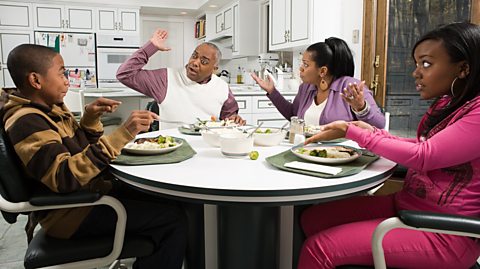
Unresolved arguments can build resentment, create distance, and make it harder to communicate in the future. That’s why it’s so important to take time to talk, process and resolve issues, rather than sweeping them under the carpet. How a family manages emotion and disagreement is deeply rooted and highly complex.
Each adult in the family unit brings their own unconscious dynamics into the family environment without realising it. How we behave in our adult relationships is strongly linked to our own childhood environment. We bring behaviours from our own upbringing into our adult family lives whether we consciously recognise this or not. How conflict is dealt with in a family environment is not a simple matter.
If you have a family argument, try to follow these steps below:
1: Step away
If tempers flare, it’s easy to say things we don’t mean. If you feel yourself getting angry or overwhelmed, take a break.
- Walk away calmly, let others know you need some space and will return to talk when you’re ready.
- Use this time to breathe, go for a walk, or do something that helps you calm down.
2: Reflect before you react
- Ask yourself: What am I really upset about? Is it the situation itself, or is something else bothering me? Are there other factors going on in your life which might be contributing to this.
- Try to see the argument from the other person’s perspective. What might they be feeling or needing?
3: Come back together when calm
- Once everyone’s had time to cool off, agree to meet and talk. This might be after an hour, or it might be later that day. This may not happen in such a structured fashion, but at some point the family will come back together, whether that’s for a meal that evening or when getting ready for the next day.
- If it’s possible, choose a comfortable space to talk, perhaps the kitchen table, the sofa or a family walk.

4: Listen to understand
- Take turns to speak. Each person should have a chance to explain how they feel, without being interrupted.
- Use phrases like “I feel…” and “What I need is…” rather than phrases that blame like “You never…” or “You always…”.
- Actively listen to each other, show you’re paying attention by nodding, making eye contact, and summarising what you’ve heard.
5: Find common ground
- After everyone’s had their say, look for areas where you agree. What does everyone want? For example - more peace, respect, or family time.
- Discuss solutions together. Could you set new family rules, is there a different way of dealing with this kind of disagreement in the future, do you need to agree on device-free times, or share household tasks differently? What was the catalyst for the argument and can that be addressed.
- Be willing to compromise. No one gets everything they want, but everyone should feel heard and valued.
6: Make a plan
- Decide together what changes you’ll make. Write it down if it helps.
- Check in with each other to make sure that everyone is doing their bit to help repair the situation.
7: Repair and reconnect
- After a row, it’s important to reconnect. Do something enjoyable together such as watch a film, go for a walk, cook a meal or something that you and your family enjoy.
- Small acts of kindness and forgiveness go a long way in rebuilding trust.
When issues don’t get resolved:
Some problems might take longer to sort out, and that’s OK. Keep talking and checking in with each other. If arguments keep happening or get worse, it might help to talk to someone outside the family such as a trusted friend, teacher, or a psychological professional.
Tips for healthy family communication

Schedule regular family check-ins: talk about what’s going well, what isn’t and what could be better. Even if this isn’t done via a scheduled check in, try to do this as part of normal conversation.
Model calm behaviour: children and teens learn how to handle conflict by watching how adults do it. Model healthy ways of dealing with challenging situations. We all fall short of the bar sometimes but when you do, ensure that you repair the situation. Showing that you can accept when you’ve made an error will be helpful for your children. It shows them that it’s OK to make mistakes and how to take accountability.
Acknowledge emotions: it’s OK for everyone to feel upset sometimes. Validate and acknowledge how each person is feeling. Being heard helps to build a relationship.
Celebrate progress: notice and praise the times when you work things out together. This reinforces positive behaviour.
Family rows are a normal part of life, and they can be an opportunity for healthy development and learning. By taking time to resolve issues, and working together for solutions, you can turn conflict into an opportunity for growth and connection.
A healthy family will argue at times, what’s important is learning from those arguments and showing your kids how to repair things and move forward together.

If your child reveals to you that they're having issues - BBC Action Line has information aimed at young people and if you have concerns about their mental wellbeing
For advice on looking after your family’s mental health, there are some useful tips in this series of animations Families Under Pressure, developed by King’s College London, South London and Maudsley NHS Foundation Trust and The Maudsley Charity.
There are other helplines, textlines and online services available that you and your child can look at together:
- The Mix – offers support to anyone under 25
- Youth Wellbeing Directory – can help families locate local support services
- Tellmi – a peer support forum for young people, which is moderated and anonymous
- The BBC Mental Wellbeing campaign and the BBC Action Line both have links to lots of helpful content and services.
This article was published in December 2025
Bitesize Parenting
Fun activities, real-life stories, wellbeing support and loads of helpful advice - we're here for you and your child.

Five tips to support the after-school ‘meltdown’
Expert advice on how to cope with after-school restraint collapse as a parent.

Would they lie to me? What parents can do when children aren’t truthful
Learn what to do when your child tells lies, when to challenge their behaviour and how to help them be truthful in this BBC Bitesize guide for parents.

How to manage your child’s online world without clashing
Children and teens spend lots of time online for school and leisure, which can be a worry for parents. Here's some advice on managing your child’s screen time.

How to manage school group chats? A guide for parents
What's App, Snapchat, Messenger, Instagram and more - as a parent it's hard to track your own online chats - let alone what your child might experience online. We've tips on managing both.

How to help your child say sorry - and mean it
For parents - knowing their child understands the value of saying sorry and how important a genuine apology can be, are a very important part of their child's development.