Concerns are growing in the inner city areas of Birmingham where there are a large proportion of young people from black minority ethnic (BME) communities experiencing, high levels of social exclusion through poor education, lack of formal qualifications, criminal activities, poor health and lack of employment opportunities. Our voices needed to be heard First Class Youth Network (FCYN) was set up in 2004 by five young people in their 20's who have grown up and live in the inner city areas of Birmingham. The group felt that there was a need for a Black Youth Forum and network in Birmingham where their voices could be heard, as existing organisations were making decisions at the top instead of asking affected young people what they felt would help them to achieve in life. Through agency networks and forums held around Birmingham, First Class Youth Network are hoping to change the mind sets of young black people and get them more involved in contributing to the benefit of Birmingham and the UK. An interview with First Class Youth Network The BBC Birmingham website caught up with Nkrumah and Joanna to ask them their views on the concerns and issues they feel are affecting young black people living in Birmingham’s inner city and how they hope First Class Youth Network can help to tackle them. Q: Tell us more about the five young people who set up FCYN? Nkrumah:- "First Class Youth Network was set up in the early part of 2004 by Melissa Shervington, Joanna Grant, Nathan Dennis, Leon Moses and myself, Nkrumah Sinclair. 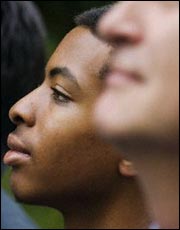 | | First Class Youth Network |
"Melissa works for a housing organisation and sees the affects that housing issues have on the black community. Joanna has attended schools both here in the UK and abroad and has seen the difference in the education system as well as the mentality of young people both in the UK and abroad. "Nathan works for a community organisation and sees that local authorities and Government weren’t doing the best for young black people and ethnic minority people. Leon works as a mentor in inner city schools and is seeing the growing levels of street crime and young school/area gangs on the streets. "I have worked in the private sector of banking and saw the lack of diversity in higher level positions in the bank such as Managers and Directors. "We all live in the inner city areas of Birmingham and have felt the affects of drugs, guns, depravation and racist police in our area for many years of our life. Some of us have previously had negativity in our life and were doing things such as drugs, shop lifting and violence. "First Class Youth Network do not aim to re-invent the wheel, we want young people to make a positive difference to society." Q: As young black people what are your main concerns regarding the issues effecting young people in the black minority ethnic community? Joanna: - "Our main concerns are the socially deprived communities, poor education and minimal opportunities for young people. Also the education system needs to be more glamorised. Just like any product you sell there has to be an incentive, this is the same with education. "The bonus of been educated is clearly being successful and to empowered. But black minority ethnic (BME) young people are not achieving as they should and lack of achievement, plus constant negativity results in youths being branded – negatively. But FCYN endeavours to support and help youths to reach positive outcomes by turning negativity into positive." Nkrumah:- "Our main concerns for young black people, is under achievement in the education system, drugs and anti-social behaviour, also the under-representation of black people in the Home Office and Parliament. In the community there is no organisation besides us that looks out for the needs of the young black people and the lack of funds being put into the deprived communities by the government." Q: Why do you think there has been a rise in problems such as, gun crime, gang related violence, teenage pregnancies etc... in Birmingham’s inner city BME communities? Nkrumah: - "A euro centric education system which doesn’t work on reducing the number of young black children getting expelled. Stop and search which degrades young black people and make us feel inferior - as black people are 8 times more likely to be stopped compared to white counter parts. "Unemployment, poor skills, low incomes, poor housing, high crime environments, bad health, family breakdown and boredom all add to young people getting involved in anti-social behaviour and lives of crime." Joanna: - "Gun violence and some gang crime is a result of feuds in drug wars. Boredom results in petty crime which turns innocent youths to lives of crime. "Also the lack of support for single parent families where fathers are not around, can add to the problems. If a single parent finds it hard to financially, emotionally and mentally cope to provide for the family, it can sometimes affect their children. Young people grow up with a heart made of stone and have no remorse or conscience for society." Q: Recent media reports have highlighted issues such as young black boys not achieving in schools, also rap and garage music being the cause of the rise of gang violence within the UK's BME communities.... what are your views on reports like these? Nkrumah: - "I feel the media likes to blame everything on rap and garage music, when that’s not the real problem. The real problem is most young people from inner city areas suffer from social inclusion and stereo typing by society as drug dealers. "It’s like the Labour MP Diane Abbott says; “Lyrics don't kill people”. Plus gun crime can not be blamed on rap music as guns are also shown on TV and on the big screen." Q: What changes are you hoping young black people can achieve in their community? Joanna: - "SUCCESS, UNITY and PEACE because that is all we need." Q: What are young people already doing to help themselves and make a difference e.g. working with local authorities, speaking to local MP’s, cooperating with the local police, etc...? Joanna: - "A lot of young people are interested in making a change and would like to change themselves, but they are unaware of the services that are available to them to make this change." Nkrumah: - "As a young people we have set up First Class Youth Network to help young people meet with people in authority to discuss issues they face. We hold forums in which young people can discuss what affects them and how we can go about changing it." "We also mentor young people and advise government agencies how to engage with the youth. In the past we have met with the Head of Birmingham Youth Service, local MP’s, West Midlands Police and other community organisations to discuss ways of making my community and Birmingham a better place to live for all young ethnic minorities." Q: What do you think is the way forward to achieve peace in the inner city communities? Joanna: - "To achieve peace you need to establish why has there not been peace in the community. There is no peace due to lack of financial support, poor education and social deprivation which is leads to a person finding peace of there own, whether this drugs, violence or crime, they may find mental peace for themselves but this is not always for others." Nkrumah: - "The way forward towards peace is justice for all people who are disadvantaged; this can be done by governments putting resources into reducing social inclusion in inner city areas where mostly ethnic minorities live. Further more all people seeing each other as equals no matter of race, age, religion and gender." - Interview end - More about FCYN For more information about the First Class Youth Network visit their website: www.fcyn.co.uk |