| 13 November 2014 |

| |
| BBC Homepage | | |
| |||
| Contact Us | | |
Faith in your communityYou are in: Birmingham > Faith > Faith in your community > One love in the community 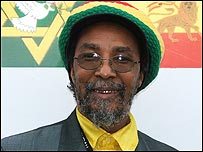 Itabarica Napthali One love in the communityPeace officer and president of the Haile Selassie Peace Foundation, Itabarica Napthali, talks to the BBC Birmingham website about the work they do in the community. 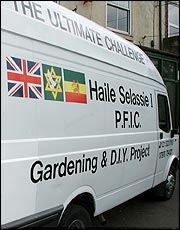 Haile Selassie Peace Foundation Based in Handsworth, the Haile Selassie Peace Foundation is a non government funded, multi-cultural organisation. Founded in January 2000, the foundation has been built on core Rastafarian beliefs and principles. Itabarica Napthali explains: “We're a charity dedicated to helping people in our community. Our work includes DIY, maintenance and gardening - helping pensioners, single parents and people with disabilities. We also do mentoring and lectures in schools across Birmingham. "The foundation is made up of members and volunteers from every background, not just Rastas. Haile Selassie Peace Foundation is for everyone of all nations” 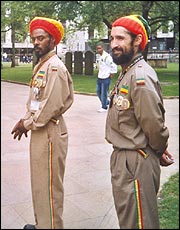 Haile Selassie Peace Foundation Rastas on patrolA partnership patrol scheme in the inner city areas of Birmingham with West Midlands police, is an initiative that has been developed, in an effort to break down barriers and build good relations between the police and the community. Rastafarians from the foundation accompany the police on dual patrols, but instead of becoming special constables they have designed and wear their own uniform to be distinct from the police. The uniform is khaki in colour and has the Ethiopian and British flag on it. The scheme has received international media coverage and positive feedback from the community. “Part of our work is to assist the local police force. We go on patrol with the police to build bridges and break down barriers in the community. We are known as the peace officers and we go around in our own uniform. We’re not police and we don’t arrest people. We just help keep people out of trouble.  Lion of Judah - flag “Our aim is to assist the police in negotiations and the making of arrests to make sure everything is done in the correct manner. In certain situations if we’re not there, guaranteed the person may be arrested for assault or resisting arrest. The crime rate in Handsworth has dropped drastically.” Rastafarian lawsRastafarianism is not a religion; it is a group of people who go under the name of Rastafari. The wearing of dreadlocks and covering the head is not central to being a Rasta but is commonly seen as a distinctive Rastafarian feature. With the help of the peace foundation there are now certain laws for Rastafarians living in the UK. The foundation regularly work with the government which takes them all over the UK. 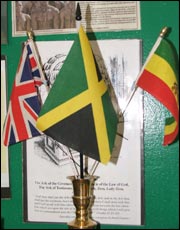 British, Jamaican and Ethiopian flags “We’re asked to go into the prisons and help deal with any issues concerning Rastafarians. With the help of the peace foundation there are now certain laws for Rastafarian prisoners. For example they are now allowed to observe Rastafarian public holidays. “Significant days in the Rastafarian calendar include: 5th May - the return of His Majesty, Halie Selassie I, back to Ethiopia; 23rd July - the birthday of Halie Selassie I, and the coronation of His Majesty is on the 2nd November. Those that are in prison don’t have to work on them days. “Rastafarians can also wear their head covers which they weren’t allowed to do at one stage, but we have now made that a law in the UK.” 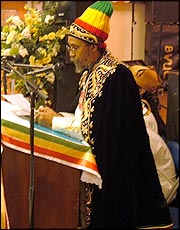 Itabarica Napthali One loveThe name Rasta comes from a shortend version of Rastafarian, being one of the names of His Imperial Majesty Haile Selassie I, who is the foundation of the Rastafarian faith. Emperor Haile Selassie I directs his people to follow the biblical teachings of Jesus Christ. Rastafarians live by loving thy neighbour as loving oneself and doing unto others as you'd have them do unto you, irrespective of race colour or creed. “The work that we do comes under our faith and our beliefs. We believe in morality, helping those in need that cannot help themselves and putting something back into the community. We read of these things in the bible,” adds Itabarica Napthali Unity in the communityItabarica Napthali explains that the organisation is dedicated to the enrichment and empowerment of Birmingham's inner city communities that are dealing with the problems of teenage gangs and increased crime and gun violence. They have become known and respected internationally for their work. 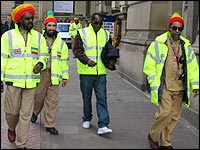 Rastas on patrol “What we need in the black communities is more centres for our young people especially here in Handsworth. Without sufficient youth centres the young people gang up on the streets and end up doing things that they shouldn’t be doing. If “Community leaders also need to take more of an active role in helping the community. Our community is responsible for its own youth and so the problems are on our own shoulders. “Nothing else would make me happy than to achieve unity in our community.” - Itabarica Napthali last updated: 11/08/2009 at 16:11 SEE ALSOYou are in: Birmingham > Faith > Faith in your community > One love in the community 
Podcast[an error occurred while processing this directive] |
| | About the BBC | Help | Terms of Use | Privacy & Cookies Policy |