LONE STAR STATE OF MIND
A Brief History of Texan Music 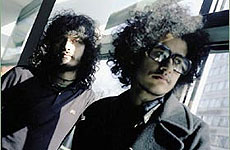 
Although Austin is the hub of the Texas music scene, the state's musical heritage draws from a deep well of disparate influences, including singer-songwriters, bluesmen, skewed acid-rockers, Tex-mex accordionists and every shade between.
Texas only became part of the USA in 1845, and its music is often characterized by an independence of spirit and approach and a multitude of influences, not least that of its large Chicano community. Tejano music, or Tex-Mex, remains hugely popular and has various styles, such as Conjunto, a fast paced, accordion led dance music exemplified by the work of musicians such as Flaco Jiminez.
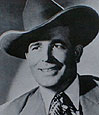
In the 1930s Texas gave birth to Western Swing, an amalgamation of country, jazz and blues typified by the legendary Bob Wills and his Texas Playboys. It was enormously popular in the late 30s and early 40s, not least at dances throughout the state. Latter day revivalists such as Asleep at the Wheel and Hot Club of Cowtown keep the Bob Wills flame burning today.
TEXAS COUNTRY
Although Nashville emerged as the dominant force in country music throughout the 40s and 50s, Texas had plenty of homegrown country talent to draw upon. Ernest Tubbs was the first big star of Texas Honky Tonk, scoring a national hit with 'I'm Walking the Floor Over You' in 1941 - his success drew other singers in his wake, such as Lefty Frizell, Johnny Horton and George Jones.
Always a much rougher and readier proposition than its Nashville counterpart, Texas country music would re-emerge in the 1970s, this time focused around Austin. Drawn by its more liberal attitudes, hippies congregated on the city and started listening to country music at such celebrated venues as the Armadillo World Headquarters, now sadly demolished. Willie Nelson became the focus of the so-called Outlaw country movement, but Texas also spawned a plethora of talented singer songwriters.
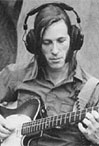
Foremost among these were Guy Clarke and Townes Van Zandt, whose poetic narratives owed much to the folk tradition and who proved enormously influential on such artists as Nanci Griffith and Steve Earle (from Austin and San Antonio respectively). Most of them would be drawn by the lure of Nashville, but by and large would fail to match their critical standing in commercial terms.
TEXAS BLUES
It's a story familiar to most Texan blues musicians, many of whom found fame in Chicago or Memphis. However, the roll call of talent is remarkable. In the 30s there was Lightnin' Hopkins and Blind Lemon Jefferson, and in the 40s T-Bone Walker revolutionized blues guitar. He was followed by such luminaries as Albert Collins. Freddy King was another great Texan blues player whose fame was largely built outside of the state, although he did die onstage in Dallas 1976.
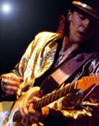
Texas remains a hotbed for bar-band blues - the epitome of this style is ZZ Top, the self styled 'little old band from Texas' who rose to ubiquity in the 1980s with a series of iconic videos and a merging of synthesizer pop and gritty blues rock. Austin was also home to Stevie Ray Vaughan, the white blues prodigy so revered by his native city that a statue of him was erected there after his untimely death in 1990. Stevie's brother Jimmy also found fame with The Fabulous Thunderbirds.
TEXAN ROCK
Perhaps the most famous Texan rocker remains Buddy Holly, who galvanized popular music in the late 50s before the fateful plane crash. Other notable Texan rockers included Bobby Fuller, who recorded the definitive version of I Fought the Law, and rockabilly legend Ronnie Dawson.
One of the most influential of Texan rock musicians was Doug Sahm, who, as leader of the Sir Douglas Quintet in 1965 released the classic garage rock stomper She's About a Mover. Sahm would flit between genres and bands over the years, alternating between Tejano, roots-rock and straightforward country, before his early death in 1999.
Texas also spawned its own peculiar brand of psychedelia, in particular Austin's deranged acid evangelists The 13th Floor Elevators, led by Roky Erickson. This fine tradition was upheld in the 80s and 90s by Austin's Butthole Surfers, whose mix of sludge metal riffs and surreal, twisted humour could be truly terrifying. Lately, Texas' reputation for rock has been upheld by the thunderous Lift to Experience and the neo-prog rock of The Mars Volta.
Texas, particularly Austin, still maintains a thriving live music scene. All of the above influences can be heard somewhere in Texas on any given Saturday night. Who knows, the Texan music sensations of tomorrow could be limbering up in a back street bar even now…
Mick Fitzsimmons
|