
|
 |
 | | | | | | |||||||||||||||||||||||||||||||||||||||||||||||||||||||||||||||||||||||||||||||||||||||||||||||||||||||||||||||||||||
| | | You are in: UK: Scotland | |||||||||||||||||||||||||||||||||||||||||||||||||||||||||||||||||||||||||||||||||||||||||||||||||||||||||||||||||||||||
|
| | Thursday, 12 December, 2002, 15:07 GMT Cancer project enters second phase 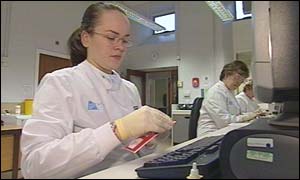 The samples are sent to a Dundee hospital The first pilot scheme to screen Scottish men for cancer has entered its second phase after encouraging initial results. It is hoped that the programme, which targets people in Tayside, Grampian and Fife, will lead to a national screening programme for bowel cancer - the country's third biggest killer. The pilot project is based at Dundee's Kings Cross Hospital. Almost 300,000 men and women aged between 50 and 69 have been targeted in the three health board areas since scheme was first launched in March 2000.
About 3,300 cases of colorectal cancer are diagnosed in Scotland each year and the disease kills approximately 1,500 people annually. Deputy Health Minister Mary Mulligan, who visited the project on Thursday, said the survival rate was poor. "This is often because patients' symptoms are ignored by the individual, leading to delayed diagnoses by the doctor," she said. "Research has already shown that screening for bowel cancer can save lives and I am keen to ensure the pilot is fully evaluated." Independent evaluation The aim of the pilot project is to establish whether a national screening programme would be feasible, acceptable and practical. The independent evaluation of the first round of screening will be considered by the National Screening Committee next year. However, the initial findings from the pilot project have proved encouraging. The Scottish Executive has provided �2.5m to continue the scheme until a decision on a national screening programme is taken. This second round of the scheme is now under way in Fife and Tayside, with Grampian due to follow next month. Reduce deaths Speaking after her visit to the Dundee hospital, Ms Mulligan said: "Colorectal cancer is the third most common cause of cancer in men and women in Scotland and, indeed, the incidence among men is increasing. "Evidence from major studies indicate that screening may reduce deaths from colorectal cancer by around 15%. "We know that early detection is vital - the potential of cancer screening to find cancer at an early or pre-cancerous stage improves a person's chance of successful treatment." An English pilot project is running in Coventry and Warwick. | |
See also:  29 Oct 02 | Health 11 Apr 02 | Health 10 Apr 02 | Health 01 Mar 02 | Health 31 Jan 02 | Health Internet links: The BBC is not responsible for the content of external internet sites Top Scotland stories now: Links to more Scotland stories are at the foot of the page. | |||||||||||||||||||||||||||||||||||||||||||||||||||||||||||||||||||||||||||||||||||||||||||||||||||||||||||||||||||||
| |
|  E-mail this story to a friend E-mail this story to a friend |
| |
| Links to more Scotland stories |
| | | ||
 | ||||
 | | Back to top
| ||
| ---------------------------------------------------------------------------------- To BBC Sport>> | To BBC Weather>> | To BBC World Service>> ---------------------------------------------------------------------------------- © MMIII | News Sources | Privacy |




 Research has already shown that screening for bowel cancer can save lives and I am keen to ensure the pilot is fully evaluated


