|
 |
 | | | | | | ||||||||||||||||||||||||||||||||||||||||||||||||||||||||||||||||||||||||||||||||||||||||||||||||||||||
| | | You are in: UK: Scotland | ||||||||||||||||||||||||||||||||||||||||||||||||||||||||||||||||||||||||||||||||||||||||||||||||||||||||
|
| | Saturday, 16 November, 2002, 01:27 GMT Forces 'to be trained on engines' 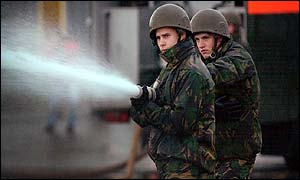 Army personnel will train on modern equipment Military personnel in Scotland are to be trained on modern fire engines in preparation for the next scheduled firefighters' strike, it has been announced. Deputy First Minister Jim Wallace said two machines were being made available to the armed forces immediately. Four more engines will be taken from the Scottish Fire School if an eight-day strike goes ahead as planned next Friday.
The first firefighters' strike in 25 years ended at 1800 GMT on Friday when crews went back to work after their 48-hour industrial action. There were no fire fatalities north of the border during the stoppage. A number of fire crews did leave their picket lines to attend incidents where people were trapped in buildings. Six police officers suffered smoke inhalation in one incident in Glasgow after rescuing a woman from the 15th floor of a blazing tower block. Rescue capability The fire was extinguished by Army personnel using hand-held extinguishers before the regular fire crews - who stopped their strike more than an hour early - arrived to help dampen down the fire. Mr Wallace congratulated the armed forces for their work at a meeting of the Scottish Ministerial Group on the Fire Dispute in Edinburgh. He also outlined "further steps" to improve the military's rescue capability. Until now armed forces personnel have been using 50-year-old Green Goddess fire tenders. "I have asked that engines from the Scottish Executive's stock which is used for training at the Scottish Fire School be made available, while not disrupting recruit firefighter training.
"Others will follow if the next strike goes ahead and the school has to close as a result. This will provide a fleet of up to six machines." However, John McDonald, FBU executive member for Scotland, said: "It is not red fire engines which put out fires, it is the trained professionals who operate them. "Ministers should be spending their time and energy on looking at ways of resolving this strike so that firefighters can claim a professional wage." He added that military personnel had been "under-resourced and under-staffed" during the strike. "The military have been barely able to cope over the last two days when there has been situations where human life has been threatened," he claimed. | |
See also:  15 Nov 02 | Scotland 15 Nov 02 | Scotland 15 Nov 02 | Scotland 14 Nov 02 | Scotland Internet links: The BBC is not responsible for the content of external internet sites Top Scotland stories now: Links to more Scotland stories are at the foot of the page. | ||||||||||||||||||||||||||||||||||||||||||||||||||||||||||||||||||||||||||||||||||||||||||||||||||||||
| |
|  E-mail this story to a friend E-mail this story to a friend |
| |
| Links to more Scotland stories |
| | | ||
 | ||||
 | | Back to top
| ||
| ---------------------------------------------------------------------------------- To BBC Sport>> | To BBC Weather>> | To BBC World Service>> ---------------------------------------------------------------------------------- © MMIII | News Sources | Privacy |