
|
 |
 | | | | | | ||||||||||||||||||||||||||||||||||||||||||||||||||||||||||||||||||||||||||||||||||||||
| | | You are in: UK: Scotland | ||||||||||||||||||||||||||||||||||||||||||||||||||||||||||||||||||||||||||||||||||||||||
|
| | Saturday, 27 July, 2002, 00:22 GMT 01:22 UK Bid to save black grouse 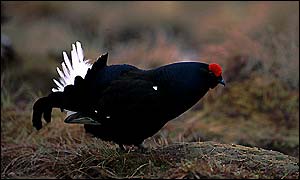 Numbers have been in decline in Scotland A campaign has been launched in an effort to prevent the black grouse from dying out in Scotland. Changes in land use have been highlighted as one of the main reasons for the decline in numbers. It is thought that the UK's black grouse population has fallen by more than 60% in some of its former strongholds north of the border.
The project has been supported by the Forestry Commission, Scottish Natural Heritage, RSPB Scotland and ScottishPower. Work on monitoring the numbers of black grouse is already under way, along with moves to co-operate with land owners to protect leks - the birds' courting sites. The aim is eventually to create safe and managed areas for the public to watch the birds' unique behaviour. Their demonstrative courting displays at leks have long fascinated wildlife enthusiasts and conservationists. A project officer has been appointed to lead a programme which will start by finding out the exact numbers of black grouse in the area. Loss of habitat Forestry minister Allan Wilson admitted that no accurate local figures were available. However, he said: "The UK population is estimated to have declined from 25,000 males in 1990 to about 6,500 by 1996, giving us cause for concern about their future. "The main reason for the decline has been loss of habitat - the kind of environment they need to live in. "Black grouse need a patchwork of long and short heather, sparse woodland cover and wet, boggy areas, which have been largely lost from Argyll and Bute as a result of changes in land use." Tourist attraction Numbers in Tayside are believed to have declined by 66% since 1990. Mr Wilson said Argyll and Bute was once a stronghold of the "enduring symbol of Britain's great outdoors". "In the long term we would like to see the black grouse become a tourist attraction in the area, so that visitors can get up-close and personal with them in camouflaged hides, or watch them on closed-circuit television from cameras hidden in their lekking areas. "This means that the project would have a spin-off for local businesses and jobs, with benefits for people as well as for the birds," he added. | | See also:  02 Jul 02 | England 11 May 02 | Wales 12 Aug 01 | UK 24 Aug 99 | Science/Nature Internet links: The BBC is not responsible for the content of external internet sites Top Scotland stories now: Links to more Scotland stories are at the foot of the page. | ||||||||||||||||||||||||||||||||||||||||||||||||||||||||||||||||||||||||||||||||||||||
| |
|  E-mail this story to a friend E-mail this story to a friend |
| |
| Links to more Scotland stories |
| | | ||
 | ||||
 | | Back to top
| ||
| ---------------------------------------------------------------------------------- To BBC Sport>> | To BBC Weather>> | To BBC World Service>> ---------------------------------------------------------------------------------- © MMIII | News Sources | Privacy |





