|
 |
 | | | | | | |||||||||||||||||||||||||||||||||||||||||||||||||||||||||||||||||||||||||||||||||||||||||
| | | You are in: UK: Scotland | |||||||||||||||||||||||||||||||||||||||||||||||||||||||||||||||||||||||||||||||||||||||||||
|
| | Thursday, 25 July, 2002, 21:50 GMT 22:50 UK Bones found in trawler wreck 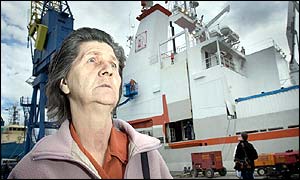 The families want to know what happened Bones from "a number of people" have been found on the wreck of a fishing vessel which sank in mysterious circumstances. Max Gold, a solicitor for most of the families of the 36 crew who died, said a team surveying the wreck of the Gaul off the northern coast of Norway had completed its work. The Hull-based trawler sank in mysterious circumstances in February 1974 and relatives of the men, including two Scots, have been involved in a campaign to discover the cause.
"These are from a number of people and were found in different locations in the wreck. "It's too early to say who they might be and, indeed, we won't get final answers to that question until DNA examination is carried out and that may take two or three months. "But if, as we expect, they are the men from the Gaul then at long last the relatives will know for certain the fate of the men and that's something they've waited for for nearly 30 years." Mr Gold's firm, which has been representing 34 of the 36 families involved, said he would not give any further details about the "human and forensic remains".
Mr Atkinson, whose father Raymond is one of the missing sailors, said: "From a personal point of view rather than as chairman I would love for some of the remains to belong to my father so we can have something to scatter or bury, if that is possible. "I have been thinking about my father so much recently. He is in my head all the time. "We will never forget those 36 men." The Department of Transport confirmed human remains had been found and said the Seisranger survey ship was heading back to Aberdeen. Answer questions It said the data would be analysed in preparation for the hearings of a reopened public inquiry next summer. Shipping Minister David Jamieson said: "Thanks to the expertise of the investigating teams and the data they have retrieved we now have a huge amount of evidence that we hope will answer all of the questions that surround the fate of the Gaul." There have been a number of theories about what happened to the vessel, which went down with no distress signal.
Earlier this year, Deputy Prime Minister John Prescott gave the go-ahead for a new survey team to investigate the wreck. This was conducted by remotely-operated vehicles this summer. However, Mike Spurgeon, whose father Maurice was the first mate of the Gaul, said he did not think any important questions had been answered by the discoveries. Mr Spurgeon, 46, from Hull, said: "I don't see how it helps answer any of the main questions surrounding how she went down. "I always thought something untoward happened and I still believe that. Exact location "I suppose it will be a comfort to some of the families if they found out it is their father or son, though. "If one turns out to be my father it will be a relief but it still doesn't get to the truth." When the Gaul went down, the only wreckage recovered was a small buoy and the exact location of the wreck was not discovered. A formal investigation in 1974 concluded that the vessel capsized and foundered in heavy seas. However, the investigation found no direct evidence of how the tragedy happened. | | See also:  24 Jun 02 | Scotland 06 Jun 00 | UK 03 Aug 98 | UK 11 Aug 98 | UK 15 Aug 98 | UK 16 Apr 99 | UK 07 Aug 99 | UK 11 Aug 98 | UK Internet links: The BBC is not responsible for the content of external internet sites Top Scotland stories now: Links to more Scotland stories are at the foot of the page. | |||||||||||||||||||||||||||||||||||||||||||||||||||||||||||||||||||||||||||||||||||||||||
| |
|  E-mail this story to a friend E-mail this story to a friend |
| |
| Links to more Scotland stories |
| | | ||
 | ||||
 | | Back to top
| ||
| ---------------------------------------------------------------------------------- To BBC Sport>> | To BBC Weather>> | To BBC World Service>> ---------------------------------------------------------------------------------- © MMIII | News Sources | Privacy |