|
 |
 | | | | | | ||||||||||||||||||||||||||||||||||||||||||||||||||||||||||||||||||||||||||||||||||||||
| | | You are in: UK: Politics | ||||||||||||||||||||||||||||||||||||||||||||||||||||||||||||||||||||||||||||||||||||||||
|
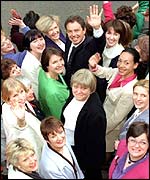
| | Wednesday, 22 January, 2003, 14:58 GMT Tory selection process under review  Theresa May wants more women to be selected The Conservatives have denied they have suspended the selection of would-be MPs out of frustration at too few women being chosen. Instead, Tory chairman Theresa May said it was always intended to select candidates for the 60 top target seats and then review the process.
Only one candidate with an ethnic minority background has been chosen, despite Mrs May's appeals last year for the party to look more representative of modern Britain. The news comes after the party brought in a psychologist to help out its problems recruiting women candidates. 'Cutting edge' Mrs May said Professor Jo Sylvester had devised a list of skills needed to become an MP in the hope of boosting the number of female parliamentary hopefuls. That put the party at the "cutting edge", she told BBC Radio 4's Today programme. Mrs May said it had been announced last year that the first 60 seats would be chosen before a gap to allow time to concentrate on the May local elections.
"We have not suspended our selection process because not enough women have come forward," she said. Mrs May argued the sparse number of women so far chosen was in part because many of the top target seats had chosen the same male candidates who came close at the last election. "We have made some progress," she said. "At the same stage in the selection in the previous Parliament, we had only selected three women." Slowing progress? When David Davis was Tory chairman in early part of Iain Duncan Smith's leadership, six out of the 24 candidates chosen were women. Under Mrs May's tenure, three out of 36 people chosen were women. But she rejected the suggestion progress had slowed and said the timetable had been set before she took up her post. Only 18-20% of the current central candidates list are women. In the past year Professor Sylvester has worked on the party's assessment boards which decide whether people would make suitable candidates. She has trained the people who are making the assessments to make sure they ask the right questions of potential candidates. Existing MPs have also had their say in the process, as have other Tory party members, resulting in a list of the key skills for members. 'As good as men' They include public speaking, social skills, the ability to listen and a talent for campaigning. Mrs May said that it was clear from the consultation that women are as good as men when it comes to ability. Mrs May has told the BBC in the past: "Getting more women and ethnic minorities involved is absolutely crucial but it's about getting a more diverse range of candidates in general." There was a call at the Tory party conference in Bournemouth in October for at least half of candidates on shortlists to be women. And Mrs May has refused to rule out any quota system but any moves towards "positive discrimination" are likely to be resisted by the traditionalist arm of the party. Selection dilemma The problem of how to attract women to politics is not restricted to the Conservative Party. The Liberal Democrat conference, who have just five women MPs out of 53, rejected all-women shortlists in 2001, despite appeals from its front bench. But they did back the creation of a Gender Balance Task Force and last year decided one in three of the top places on its European elections list should go to women. Half of Lib Dem candidates for the 1999 European elections were women. In July, the Labour Party decided to adopt women-only shortlists in half of their winnable seats for the next general election. There are currently 118 women MPs in the House of Commons of a total of 659 members. | | See also:  07 Oct 02 | Politics 07 Oct 02 | Politics 05 Oct 02 | Politics 18 Dec 02 | Politics 23 Jul 02 | Politics 29 Dec 02 | Politics Internet links: The BBC is not responsible for the content of external internet sites | ||||||||||||||||||||||||||||||||||||||||||||||||||||||||||||||||||||||||||||||||||||||
 | |
|  E-mail this story to a friend E-mail this story to a friend |
| |
|
| | | ||
 | ||||
 | | Back to top
| ||
| ---------------------------------------------------------------------------------- To BBC Sport>> | To BBC Weather>> | To BBC World Service>> ---------------------------------------------------------------------------------- © MMIII | News Sources | Privacy |




 We have made some progress