|
 |
 | | | | | | ||||||||||||||||||||||||||||||||||||||||||||||||||||||||||||||||||||||||||||||||||||||||||||||||||||||||||||||
| | | You are in: UK: Politics | ||||||||||||||||||||||||||||||||||||||||||||||||||||||||||||||||||||||||||||||||||||||||||||||||||||||||||||||||
|
| | Tuesday, 26 November, 2002, 16:48 GMT The fire strike media spin battle 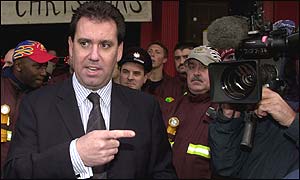 Gilchrist took his message to the media
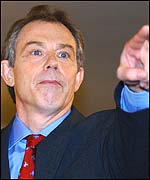
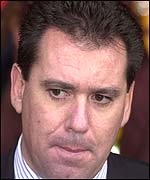
In an astute move on Tuesday, he decided to match Tony Blair in the propaganda stakes and take his message to where it was guaranteed to make the maximum impact. The FBU leader held a briefing with political journalists in the House of Commons.
Downing Street, even the prime minister himself, was propagating lies and spin about the dispute, he declared. In an assured performance, he attempted to pick apart the government's assertions about the dispute. Attention grabbing For example, he declared that the idea the government could not afford to pay the firemen because it would ruin the economy was nonsense. If that had been the case, the millennium dome should have bankrupt the country, he said. Never mind the rights and wrongs of that statement, or the others he made, it was a clever piece of attention grabbing.
That is easy for the prime minister. He only needs to call an emergency press conference, as he did on Monday, and the room is packed with political editors who may expect to command their front pages. Since the demise of industrial correspondents, whose jobs became redundant after Margaret Thatcher defeated the unions in the 1980s, union leaders have no such ready made audience. It's one thing having the prime minister on his feet at a press conference talking to the nation, but an entirely different event when a union leader stands on a picket line to make his case. Mud slinging Mind you it is interesting to note that industrial correspondents are starting to make a bit of a comeback under the New Labour government. So Mr Gilchrist, or one of his advisers, decided to address the same media audience as the prime minister. It was a small room but, to his clear surprise, was packed with pretty much the same journalists who had been at the prime minister's conference the previous day. And Mr Gilchrist made the most of it. He gave a calm and considered explanation of his case and did his best not to get embroiled in mud slinging. The result was far more coverage than he could otherwise have expected. He had moved into the prime minister's arena. Just a few hours later, deputy prime minister John Prescott was making a statement in the Commons which saw him referring to Mr Gilchrist's press conference. It is impossible to be certain, but it appeared Mr Gilchrist's tactic had produced some effect - even if only to make Mr Prescott angrier than usual. It's a pretty fair bet this is not the last time we will see union leaders using this conduit. | |
See also:  26 Nov 02 | UK 26 Nov 02 | Politics 25 Nov 02 | Politics Internet links: The BBC is not responsible for the content of external internet sites | ||||||||||||||||||||||||||||||||||||||||||||||||||||||||||||||||||||||||||||||||||||||||||||||||||||||||||||||
| |
|  E-mail this story to a friend E-mail this story to a friend |
| |
|
| | | ||
 | ||||
 | | Back to top
| ||
| ---------------------------------------------------------------------------------- To BBC Sport>> | To BBC Weather>> | To BBC World Service>> ---------------------------------------------------------------------------------- © MMIII | News Sources | Privacy |