|
 |
 | | | | | | ||||||||||||||||||||||||||||||||||||||||||||||||||||||||||||||||||||||||||||||||||||||||||||||||||||||||||||||||||||||||||||||||||||||||||||||||||||||||
| | | You are in: UK | ||||||||||||||||||||||||||||||||||||||||||||||||||||||||||||||||||||||||||||||||||||||||||||||||||||||||||||||||||||||||||||||||||||||||||||||||||||||||||
|
| | Tuesday, 26 November, 2002, 13:26 GMT Fresh attempt to solve fire dispute 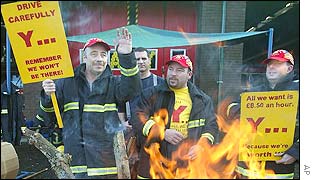 Firefighters say they have proposed changes Frantic efforts are being made to bring an end to the firefighters' dispute, as the latest strike enters its fifth day. Officials for the Deputy Prime Minister, John Prescott, are meeting representatives from the firefighters' local government employers to discuss how to fund any increase in pay.
Mr Prescott will make a statement to the Commons this afternoon, but he has no plans to meet the Fire Brigades Union (FBU). Union leader Andy Gilchrist said the government has a job cuts agenda, but Downing Street has refused to speculate whether modernisation might lead to job losses. Instead it is stressing the need to end what it calls firefighters' "archaic working practices". In the latest talks employers are expected to say they need an extra �95m over two years to fund the 16% pay offer which almost halted the latest strike action. But the government says it will not sign a blank cheque and insists such a deal would have to be paid for by modernisation of the fire service. Troops in action The talks follow a tough statement from the prime minister on Monday in which he said the FBU's pay claims could not be met and negotiation was the only way forward. The governor of the Bank of England Sir Edward George agreed the firefighters' pay demands were unaffordable. Speaking on Tuesday, he warned that a "double-digit" settlement could drive up inflation and risked triggering higher pay demands across the public and private sectors. It had been hoped negotiations with the FBU and the government could resume on Tuesday, but BBC correspondents say that is unlikely to happen before the end of the eight-day strike.
The government has brought in pensions minister Ian McCartney to help with negotiations when they restart. Mr Blair has said that giving in to the FBU's pay claim would have "dire" economic consequences and any deal over 4% would have to be funded by modernisation. His modernisation demands included sharing control centres with other emergency services, reduced night cover and full and part-time firefighters working together. National Officer of the FBU John McGhee, told the BBC on Tuesday that modernisation has been taking place over the last 25 years, but the changes expected by the government were not practical. Mr McGhee said fire control operators had particular skills for the job and full and part-time firefighters already worked together. He said reducing fire cover at night, when most of the fire deaths happen, posed a risk to the public. Mr McGhee said the FBU was willing to discuss other areas of modernisation, but after 20 years under the Tories, the fire service was already "cut to the bone".
"Therefore to make any significant cuts can only be through the loss of jobs and we are not prepared to put up with that." Mr McGhee said the FBU had put forward a modernisation programme of its own which showed quite clearly savings could be made to the economy if there was initial investment. Public service union Unison reacted angrily to government suggestions that firefighters should also be trained as paramedics. Senior national officer Maggie Dunn said: "It takes three years to become a fully trained paramedic for what is a highly skilled and specialised job. It is not practical to expect firefighters to do this training in addition to their own." | |
See also:  26 Nov 02 | Scotland Internet links: The BBC is not responsible for the content of external internet sites Top UK stories now: Links to more UK stories are at the foot of the page. | ||||||||||||||||||||||||||||||||||||||||||||||||||||||||||||||||||||||||||||||||||||||||||||||||||||||||||||||||||||||||||||||||||||||||||||||||||||||||
| |
|  E-mail this story to a friend E-mail this story to a friend |
| |
| Links to more UK stories |
| | | ||
 | ||||
 | | Back to top
| ||
| ---------------------------------------------------------------------------------- To BBC Sport>> | To BBC Weather>> | To BBC World Service>> ---------------------------------------------------------------------------------- © MMIII | News Sources | Privacy |