|
 |
 | | | | | | ||||||||||||||||||||||||||||||||||||||||||||||||||||||||||||||||||||||||||||||||||||||||||||||||||||||||||||||||||||||||||||||||||||||||||||||||||||||||
| | | You are in: UK: Politics | ||||||||||||||||||||||||||||||||||||||||||||||||||||||||||||||||||||||||||||||||||||||||||||||||||||||||||||||||||||||||||||||||||||||||||||||||||||||||||
|
| | Monday, 26 August, 2002, 20:45 GMT 21:45 UK UK team starts summit talks 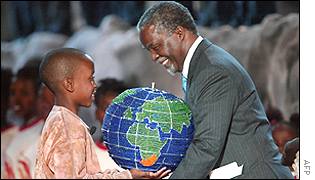 President Mbeki spoke of hope as the summit started UK ministers are trying to put strong criticism of their record on green issues behind them as they get down to work at the World Summit on Sustainable Development. The 70-strong UK Government team is among more than 60,000 delegates in Johannesburg trying to agree a package to combat poverty and protect the environment.
The summit opened on Monday after Prime Minister Tony Blair was accused of "lacking leadership" on green issues by his own environmental adviser, Sir Jonathon Porritt. Environment Secretary Margaret Beckett has countered that attack, arguing the summit could provide a "step change" in the world's approach to improving people's lives while conserving natural resources. The 10 days of talks will centre on five key areas: water, energy, health, agriculture and biodiversity. Hard talks Delegates are trying to settle disputes between rich and poor nations over issues such as trade, which environmentalists say are a distraction from the real business of the summit. Negotiators are still said to be far apart on a plan of action to present to the heads of state and government arriving next week. British officials have underlined their concern that the US is refusing to sign up to clear targets on providing sanitation and clean energy, as well as cutting pollution from chemicals.
"But it's the programme of action that concerns me and it's the partnership work that is linked to that programme of action," she said. Such partnerships could bring water charities or companies together with local government in smaller townships on projects to provide clean water with help from governments in countries like the UK. "This is something that does not come out of ordinary summits and it is something new and it genuinely has great potential," Mrs Beckett said. 'Step change' The minister argued the success of the summit would be judged on whether agreement could be forged on making the right progress. "It is the potential for a sort of step change in how we approach these issues, putting sustainable development are the heart of the processes that government and companies and other organisations carry out."
The absence of US President George Bush in Johannesburg has prompted fears about how seriously America is taking the talks. Mrs Beckett admitted it was "disappointing" the president was not there, but the forthcoming American Labour Day and the first anniversary of the US terror attacks had made it difficult for him. Tony Blair, like many heads of government, is only going to the summit for one day - next Monday. Blair defended That fleeting visit has prompted criticism but Mrs Beckett said it was not the prime minister's job to oversee the detailed talks, and he would be there to give the "final seal". Mr Blair had been "actively involved" in sustainable development policies, she added. On Sunday, Sir Jonathon Porritt, who chairs the UK's Sustainable Development Commission, told BBC One's Breakfast with Frost that the government's leadership on green issues was "patchy and piecemeal". "If you compare that leadership with the kind of leadership we have seen from this government on Northern Ireland, on health issues and on public services in general, we are talking about a different league of leadership," he said. Agenda concerns There are fears of clashes between anti-globalisation protestors and the police at the summit. And leading environmental pressure group Greenpeace has warned the summit agenda is too much geared around trade when it should focus on the environment. The 1992 Earth Summit set goals for protecting the planet, ranging from curbing emissions of the polluting gases blamed for global warming to preventing the spread of deserts. This conference is looking at making progress on those targets, as well as on the Millennium Goals, which were signed in 2000 to reduce poverty. | |
See also:  26 Aug 02 | Politics 26 Aug 02 | Africa 11 Aug 02 | Politics 25 Aug 02 | Africa Internet links: The BBC is not responsible for the content of external internet sites | ||||||||||||||||||||||||||||||||||||||||||||||||||||||||||||||||||||||||||||||||||||||||||||||||||||||||||||||||||||||||||||||||||||||||||||||||||||||||
| |
|  E-mail this story to a friend E-mail this story to a friend |
| |
|
| | | ||
 | ||||
 | | Back to top
| ||
| ---------------------------------------------------------------------------------- To BBC Sport>> | To BBC Weather>> | To BBC World Service>> ---------------------------------------------------------------------------------- © MMIII | News Sources | Privacy |